
Amy McAuley
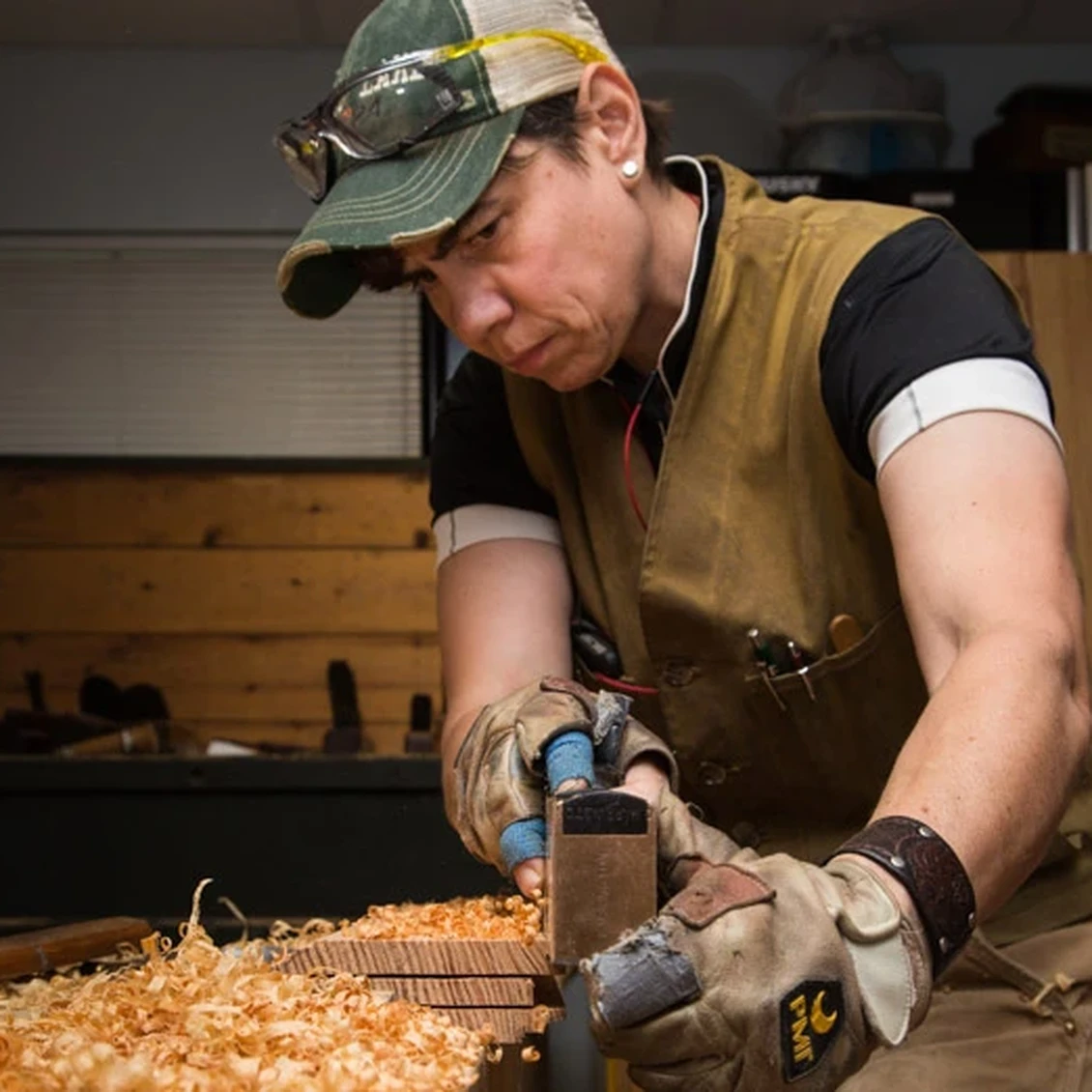
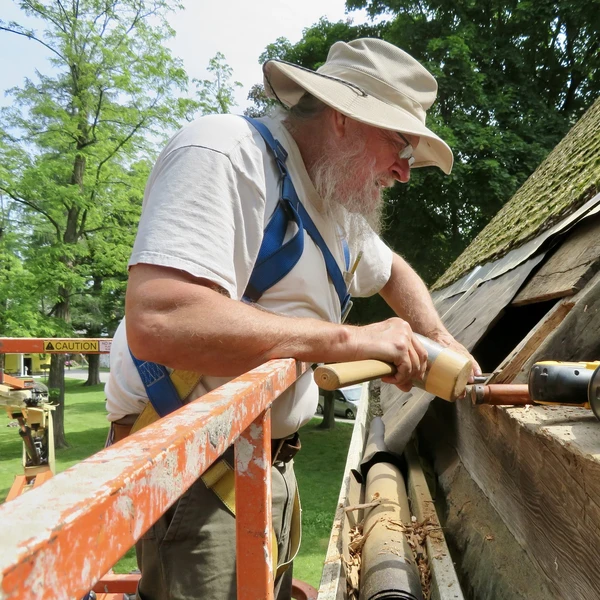
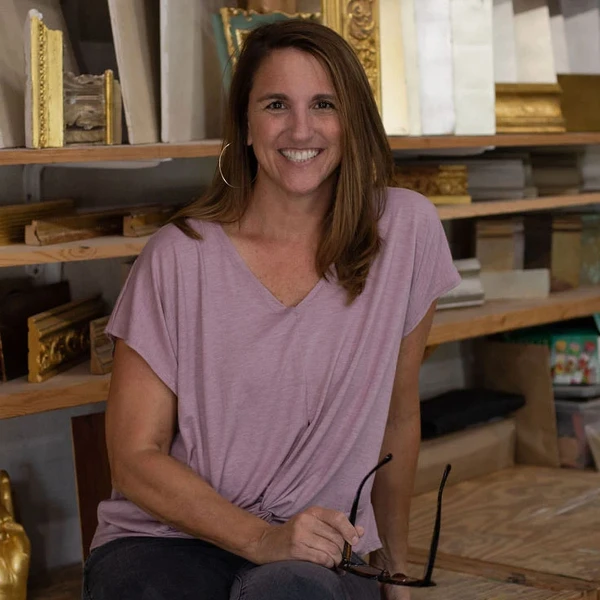
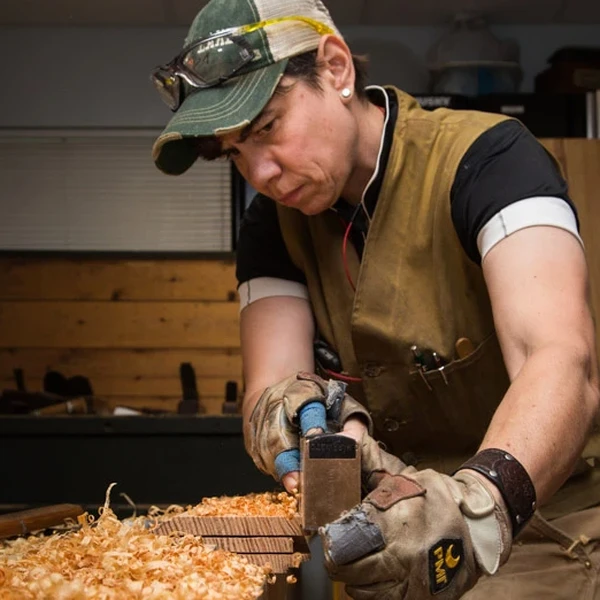
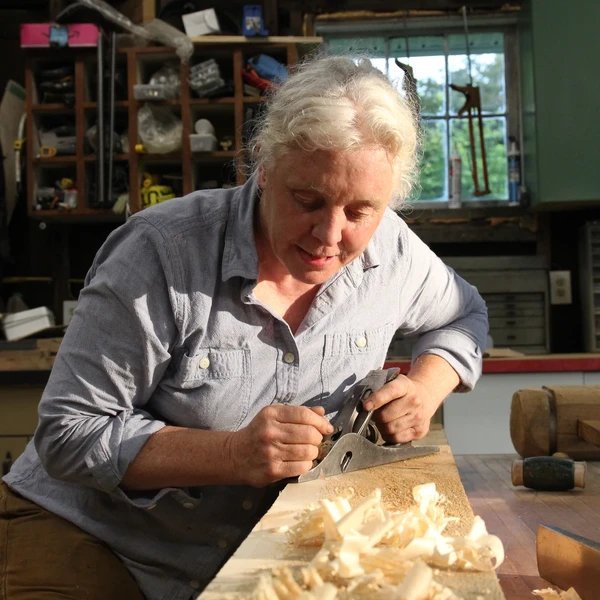
Preservation joiner Amy McAuley is the restoration manager at George Washington’s Mount Vernon, where she works to repair, restore, and preserve the historic estate’s original windows and doors using traditional hand tools and construction methods. She is responsible for helping to maintain the architectural fabric and history of one of the nation’s most famous houses while simultaneously striving to keep the skills and techniques of a centuries-old craft tradition alive.
Before joining the architectural preservation team at Mount Vernon in 2019, McAuley owned and ran Oculus Fine Carpentry in Portland, Oregon, where she specialized in restoring and constructing nineteenth-century windows and doors for private homes and for historic lighthouses, military forts, and house museums in Oregon and Washington. She is widely admired and respected in the world of historic trades for her emphasis on using traditional hand tools and methods and for her generosity in sharing her mastery of the craft with others.
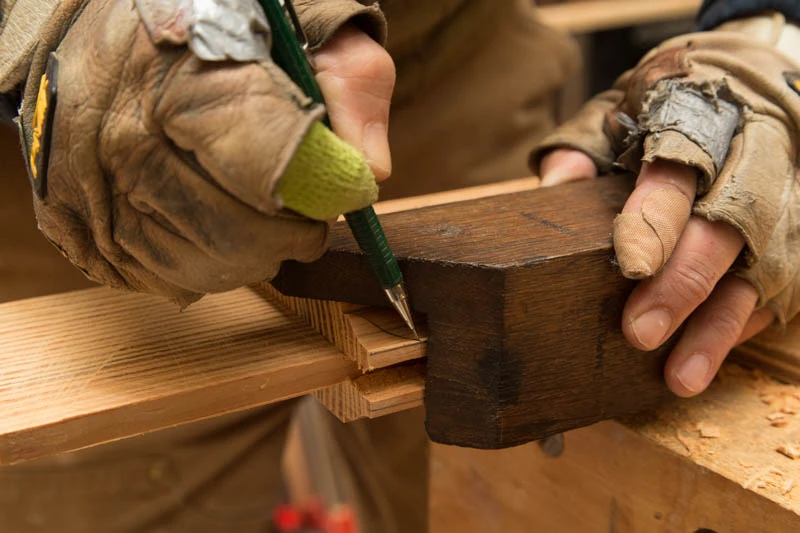
McAuley describes her path to preservation joinery as a “long crooked journey.” She first began working with her hands as a young girl helping on her grandparents’ sheep farm in Oregon, where she grew up learning about her family’s heritage from her grandmother. “I was raised with a love for history,” she says, citing her grandmother and great-grandmother as strong women who greatly influenced her formative years. After graduating from the University of Oregon, McAuley worked for a general contractor in Portland, where she was exposed to the field of historic preservation and found herself increasingly drawn to the restoration and preservation of old buildings. In 2002, she started Oculus Fine Carpentry to pursue her growing passion for working on historic structures.
For McAuley, learning the craft involved a combination of trial and error and scouring old books and the internet for anything she could find written on traditional sash joinery. “There were no masters in window restoration to go to,” she says, noting that this knowledge had largely been lost over time with the advent of modern construction methods. A pivotal moment came when a timber framer encouraged her to create replacement windows for a historic house using only hand tools, and in the process help keep the skills and techniques of a dying craft alive. It was an “aha” moment for McAuley. She sold her power tools and became an impassioned ambassador for rescuing craft knowledge and techniques on the verge of disappearing. “I became so obsessed with learning how historic windows were made by hand that I started amassing hand tools and learning how to use them through trial and error,” she says. Today she has an extraordinary collection of historic planes, chisels, and saws, plus wooden planes she made herself.
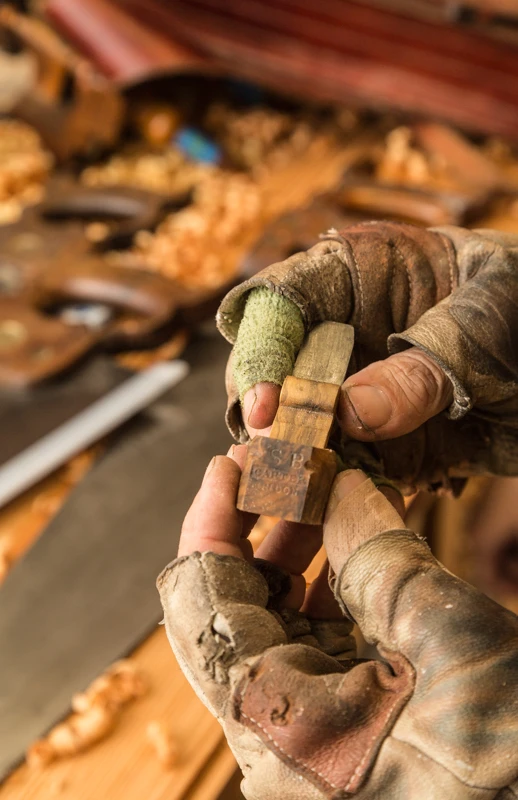
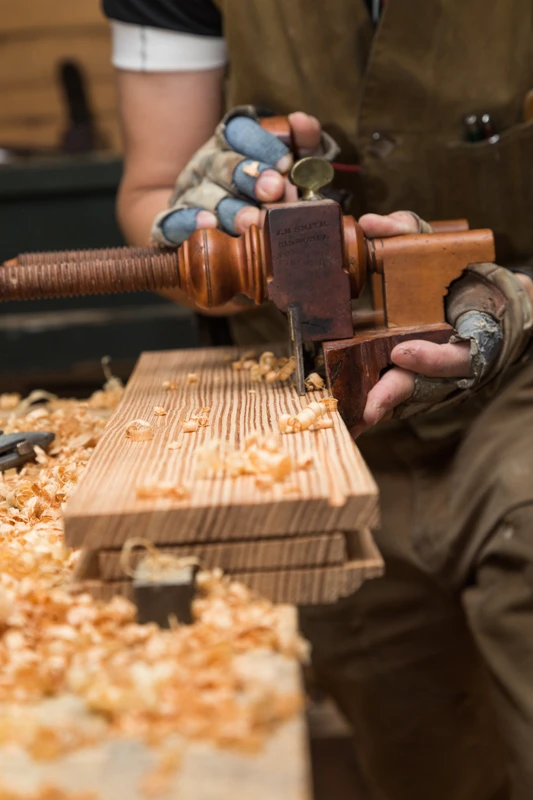
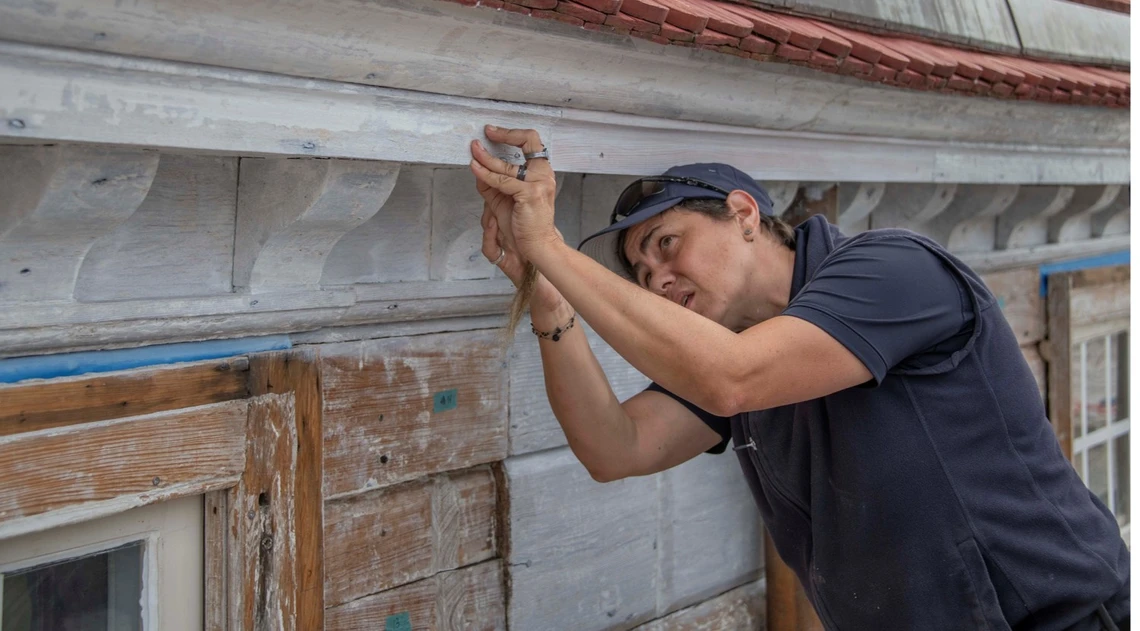
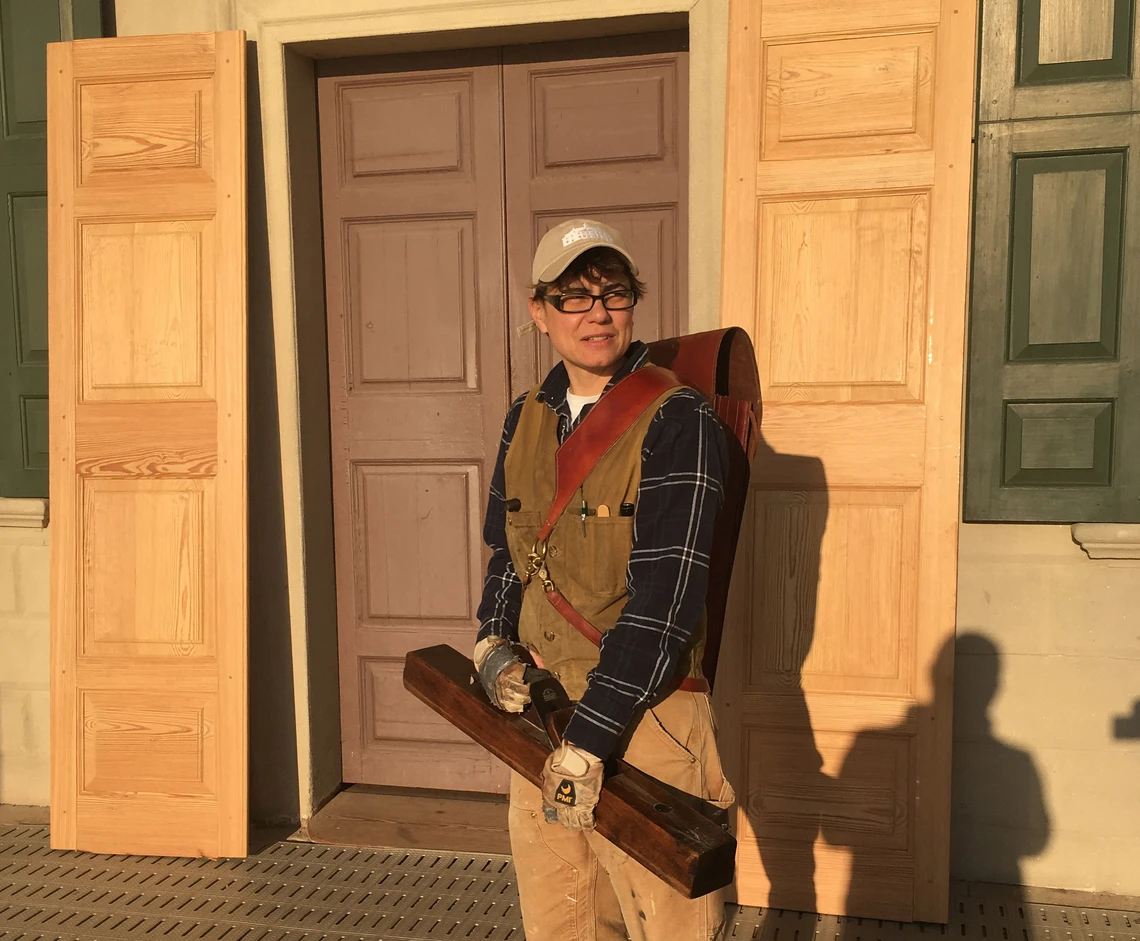
At Mount Vernon, McAuley’s focus is on the research, documentation, and restoration of the eighteenth-century windows and doors of the historic estate. She conducts research in Mount Vernon’s extensive architectural study collection to determine original materials, finishes, and tools used, and carefully investigates and documents the windows and doors through detailed drawings and microanalysis of the wood. One of her notable projects involved crafting replacement doors for Mount Vernon’s central passage out of old-growth yellow pine using only the hand tools available to an eighteenth-century craftsman. Her expertise enabled Mount Vernon to reconstruct the doors as they appeared in George Washington’s time, creating a portal to the past and giving the knowledge and skills of a fading craft a chance to thrive in the process.
McAuley stresses the importance of garnering interest in the historic crafts, especially among young people. She is proud of Mount Vernon’s commitment to training the next generation of artisans through a robust internship program: students learn the philosophy and skills of preservation through on-the-job experience alongside Mount Vernon’s master craftspeople. “There are people out there who are gifted with their hands, and we need those people to take up the preservation trades.”
Learn More
-
Next Generation Artisans in the Traditional Building Trades (2025 Festival)
-
“The Monumental Work of Historic Preservation in the Building Trades” (Festival Blog)
-
Oculus Fine Carpentry
-
North Bennet Street School
-
Architectural Preservation at Mount Vernon
-
“Piecing Together 18th-Century Doors” (Mount Vernon)
-
“Repairing, Restoring, and Preserving with Master Craftsperson Amy McAuley” (PreserveCast)