
Karina Roca
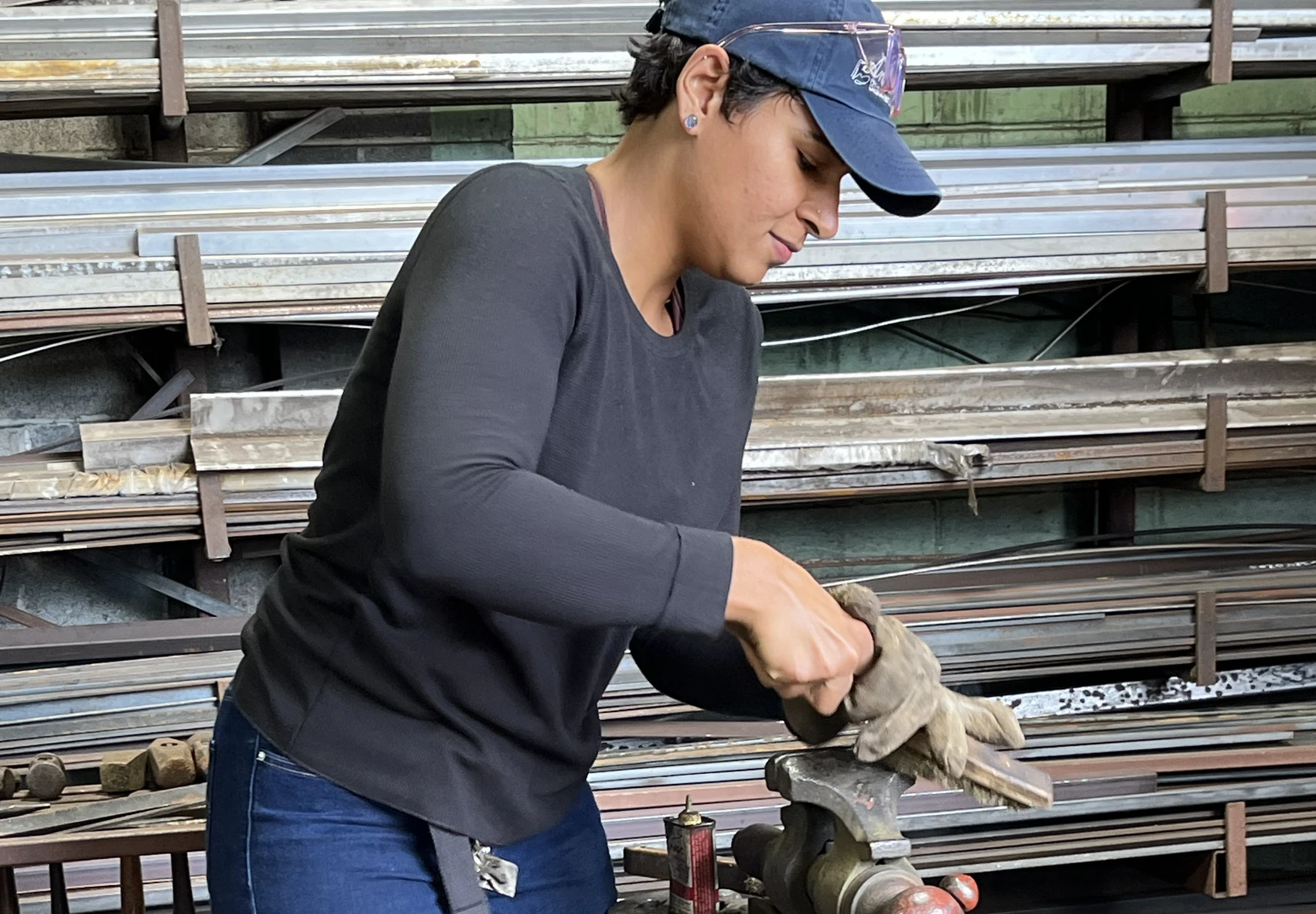
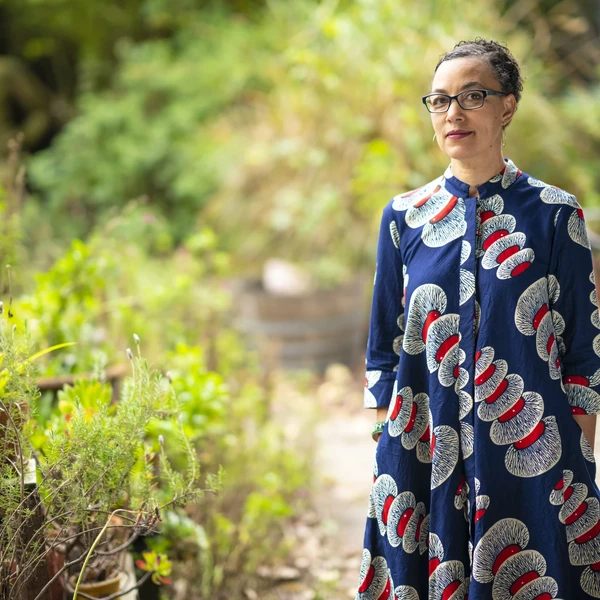
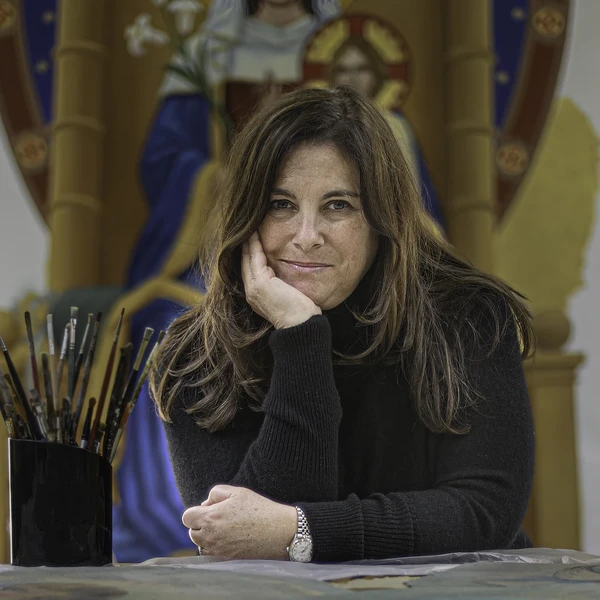
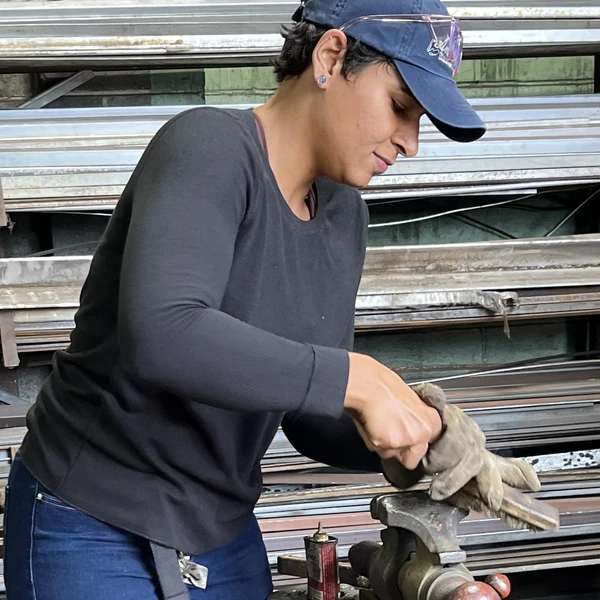
Many of us have childhood dreams of becoming —an astronaut, a princess, the president. For Karina Roca, it was blacksmithing. Born in the Greater Boston area, Roca is a craftsperson and preservationist whose work moves and inspires. Since 2020, she has worked as an apprentice at Andrews’ Blacksmith and Welding Shop in New Orleans’ Seventh Ward, learning new fabrication and historic restoration techniques as part of an innovative trades training program spearheaded by the New Orleans Master Crafts Guild. An academic, advocate, and apprentice, she is part of the next generation of artisans carrying forward the knowledge and legacy of master craftspeople who came before them.
Like many other artisans in the trades, Roca’s journey to the forge did not happen on the straightened path. Her professional journey began in food sovereignty, with a double major from Pace University in peace and justice studies and political science. However, her dream of working at the anvil remained. “I’ve always wanted to be an ironworker. It was this little secret dream of mine,” she says. “What led me into my love of ironwork was stewarding the fire—a love for the alchemy of fire. My mother taught me this through cooking.”
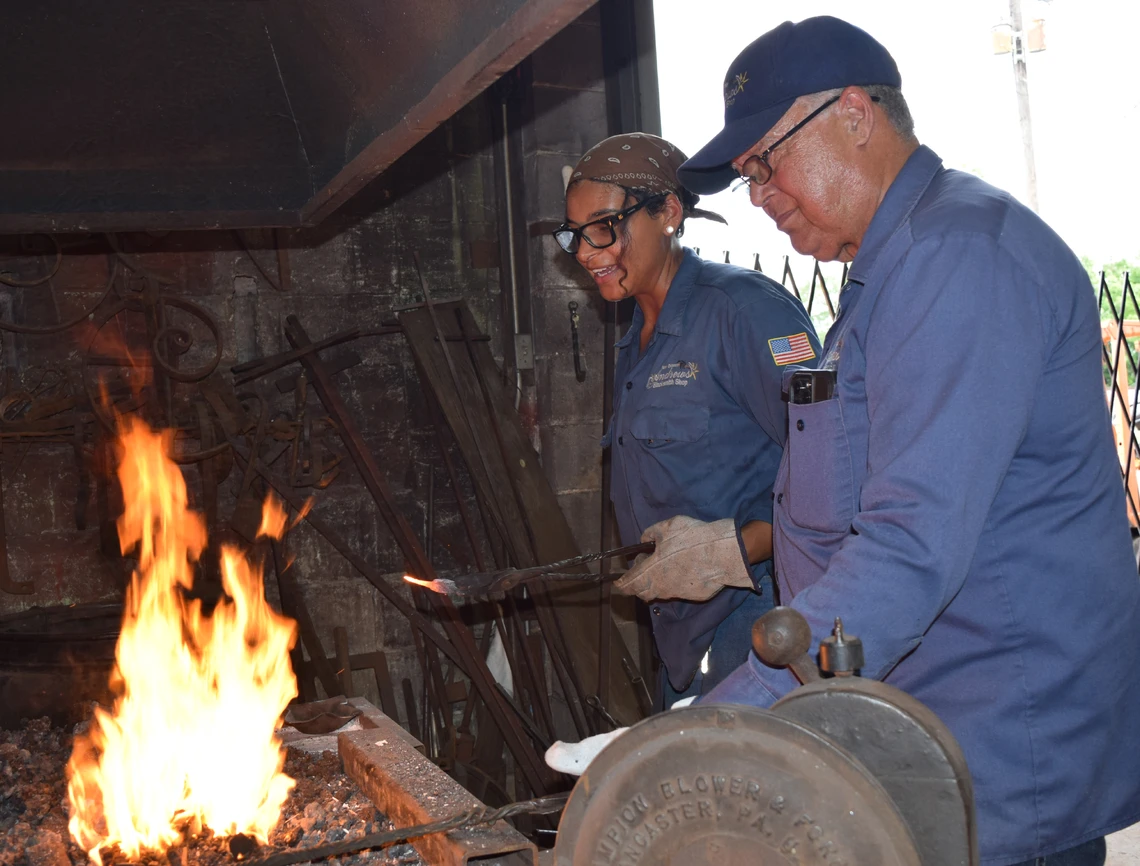
In 2010, Roca saw a PBS documentary featuring New Orleans restoration blacksmith Darryl Reeves. “I had always banked it in my mind that if it was something I was serious about pursuing, he would be the first person I would knock on the door of.” It was not until the world stopped during the COVID-19 pandemic that Roca had the opportunity to pursue this dream, and she chased it with a passion that continues today. With a one-way ticket, she traveled to New Orleans, enrolled in the Louisiana Green Corps, and upon completion of the program marched to Reeve’s shop in the Seventh Ward. “I went right to his shop with my resume and just begged him to take me on.”
Roca began her apprenticeship by sweeping the shop, getting a feel for the craft and the daily round of work. “You need to really observe it before you can be hands-on with it,” she says. “If not, you’re just being sort of aimless, and you can’t be aimless with something as dangerous as hot steel. Every move needs to be intentional.” Gradually, with time and practice, her knowledge and abilities at the forge and anvil grew. “The moment I learn something, I realize there are three other things I don’t know. You’re always learning,” she stresses.
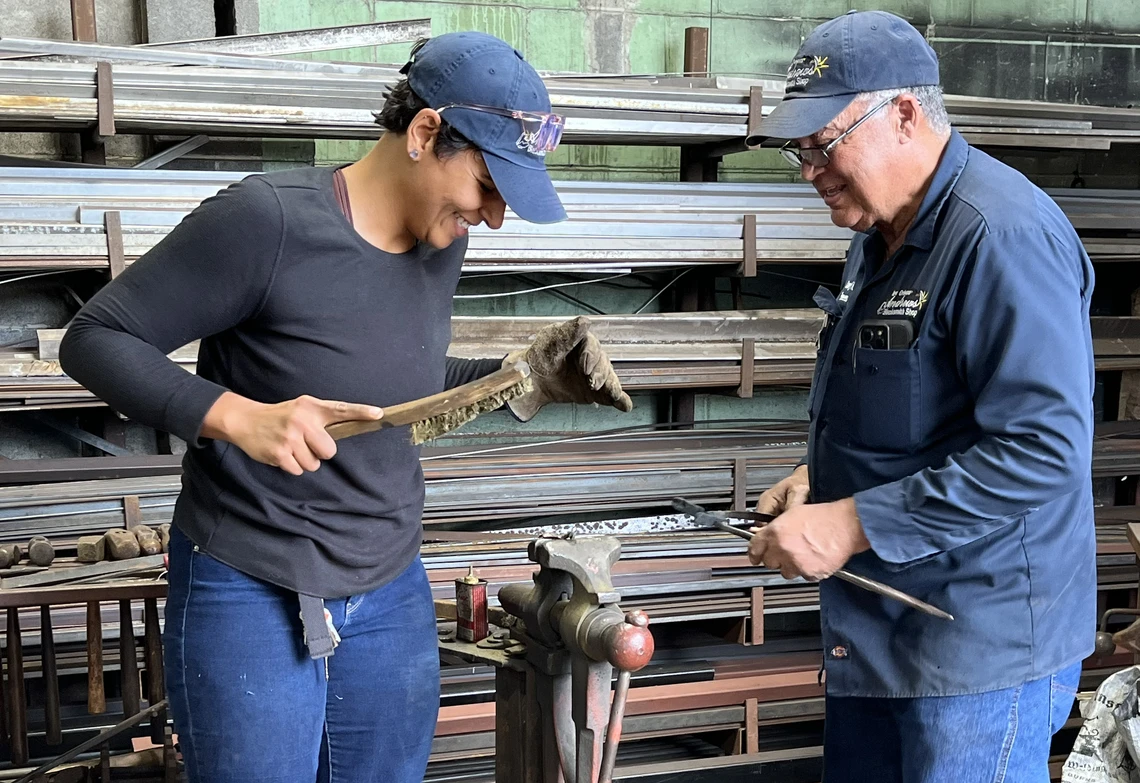
Her blacksmithing work in New Orleans includes the 1863 fence at St. John the Baptist Church, the iron cross at St. Augustine Church, and fencing at the historic Cabildo in the French Quarter. “Ironwork leads me into such deeper intimacies with the whole built environment of New Orleans,” she says. Now, Roca continues to learn the trade under Reeves while pursuing a master’s degree in historic preservation at Tulane University to better document the stories of those who came before. She is proud to be an “adopted child in the trade,” learning in a landscape distinguished for its ancestral ties to the building arts.
“You learn so much about what it means to be a craftsperson with integrity, with compassion for others and what it means to grapple with what it means to keep these trades alive.”
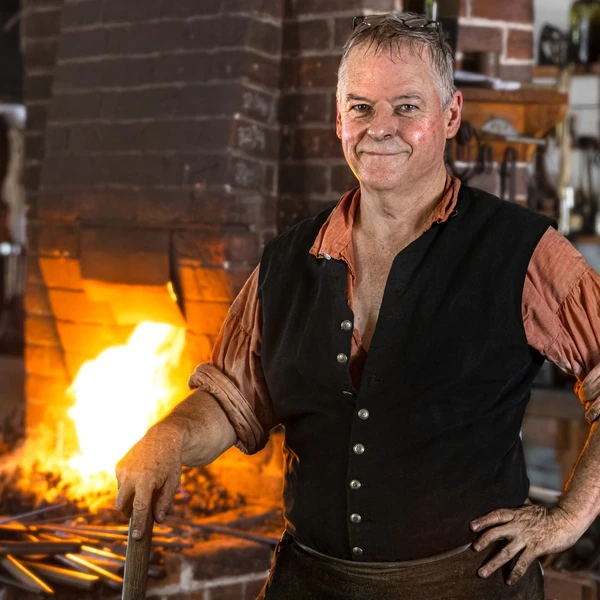
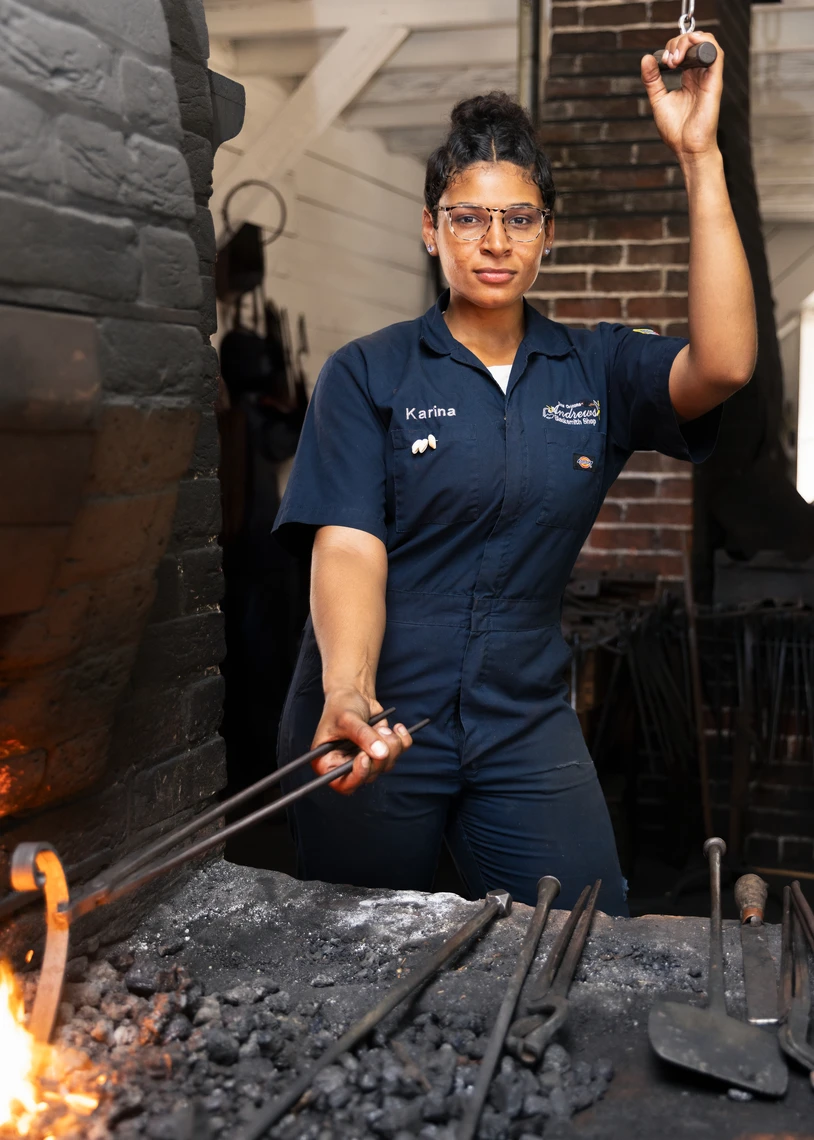
In 2025, Roca completed a practicum at the James Anderson Blacksmith Shop in Colonial Williamsburg, working with master blacksmith Kenneth Schwarz and learning eighteenth-century blacksmithing techniques on a coal-fired forge. “By the end of the summer, it was a beautiful moment of realizing that I am finding my own rhythm and am en route to having my own style. It was eye-opening.”
Learn More
-
Next Generation Artisans in the Traditional Building Trades (2025 Festival)
-
“We Have Always Been Here: Six Young Women in the Building Arts” (Festival Blog)
-
New Orleans Master Crafts Guild
-
Ancestral Artistry: The Influence of Africans and Creoles of Color in Louisiana Architecture (film)
-
“Top Blacksmith Forges Metal Masterpiece for Disney’s Tiana’s Bayou Adventure” (Disney Parks Blog)