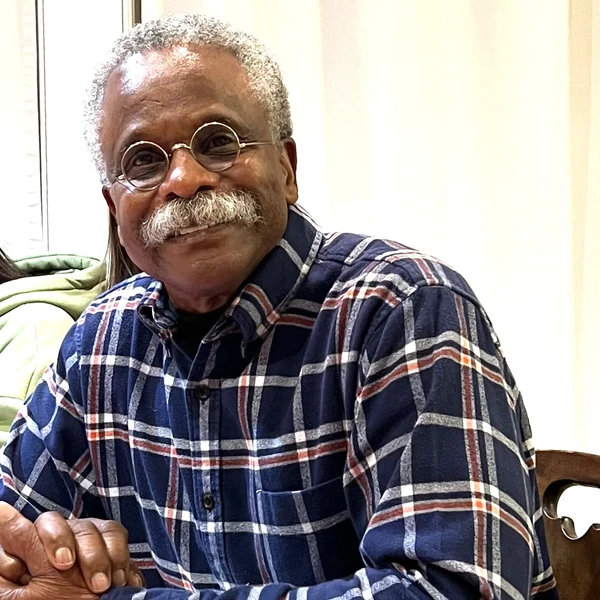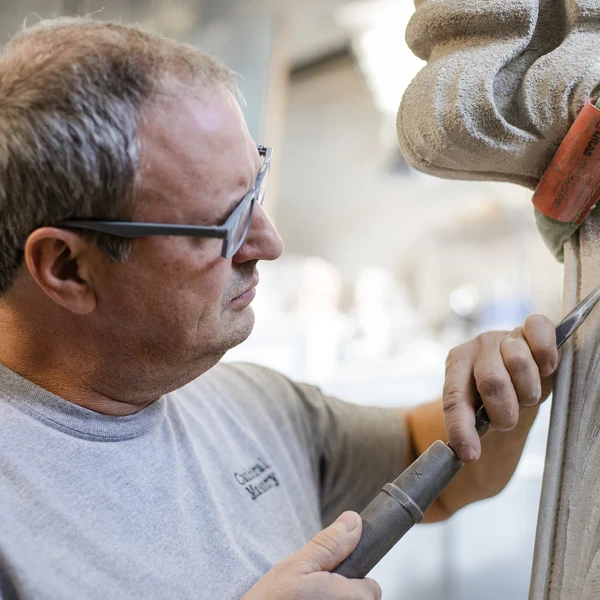

Joe Alonso
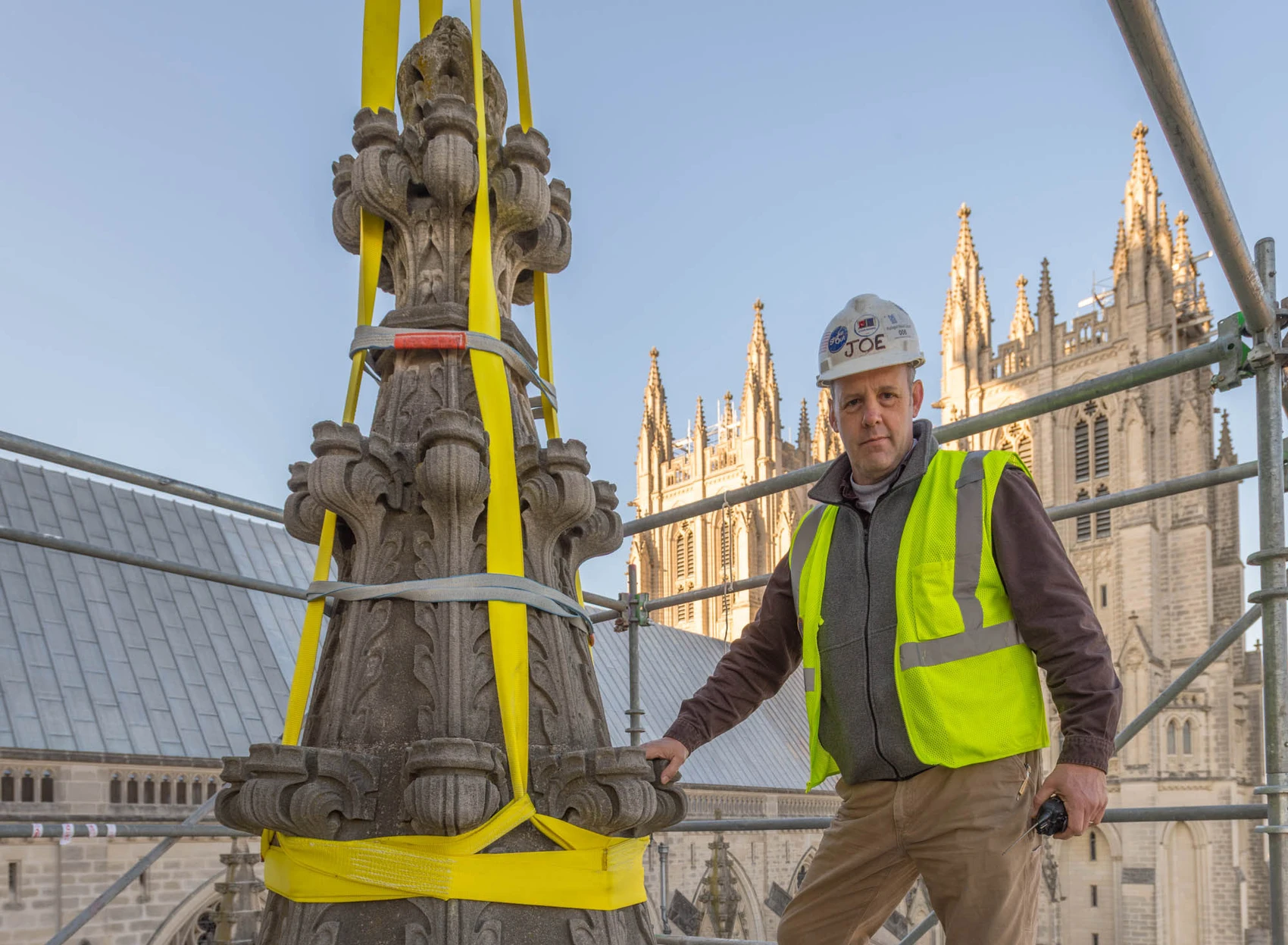
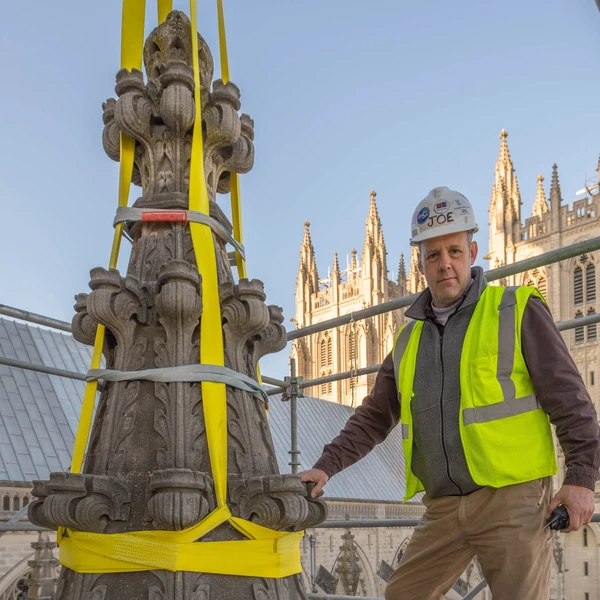
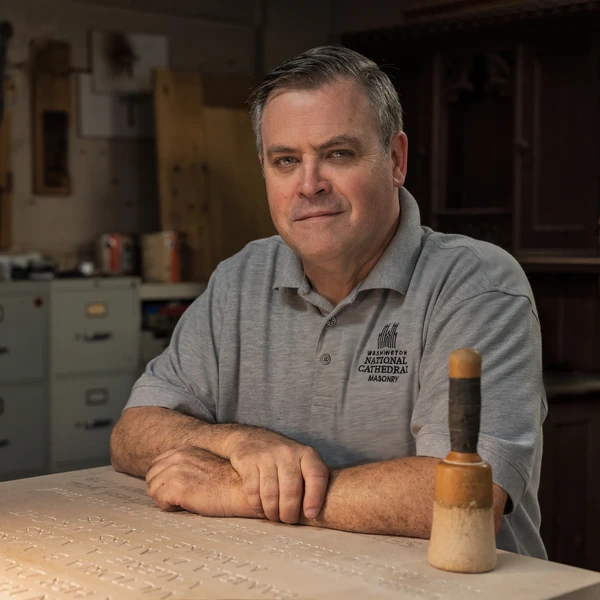
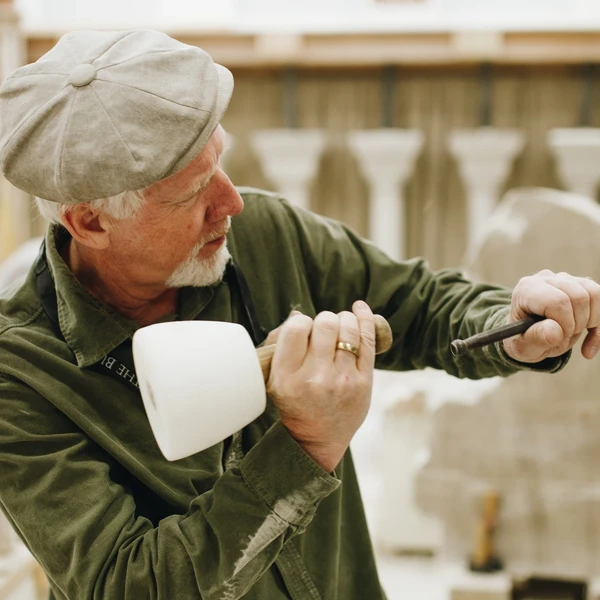
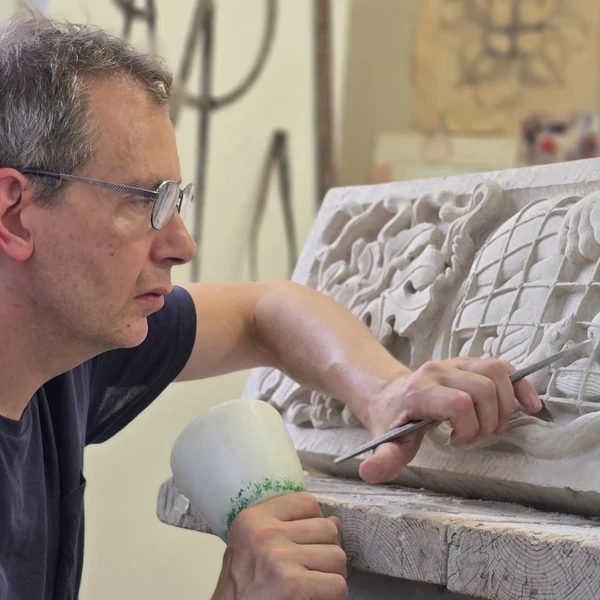
Joe Alonso is a master builder who has devoted forty years of his life to Washington National Cathedral, first as a stone mason helping to construct this monumental fourteenth-century-Gothic-style building, and then as the head mason in charge of caring for the Cathedral’s century-old stonework, preserving the fine craftsmanship of generations of masons and carvers.
Alonso grew up with stone masonry as part of everyday life. His parents were immigrants from northern Spain, and although his father’s primary work was in the railyards and steel mills of Gary, Indiana, he had been a mason by trade in Spain and continued to work on brick and stone jobs on the side. Alonso helped his dad in the summers and on weekends and found that he liked the work. “There was something about the trade that appealed to me,” he says. After high school, he worked in construction as a laborer and mason’s helper, went on to serve a three-year apprenticeship with the Stone and Marble Masons Union Local 2 in Washington, D.C., and was sworn in as a journeyman stone mason in 1983.
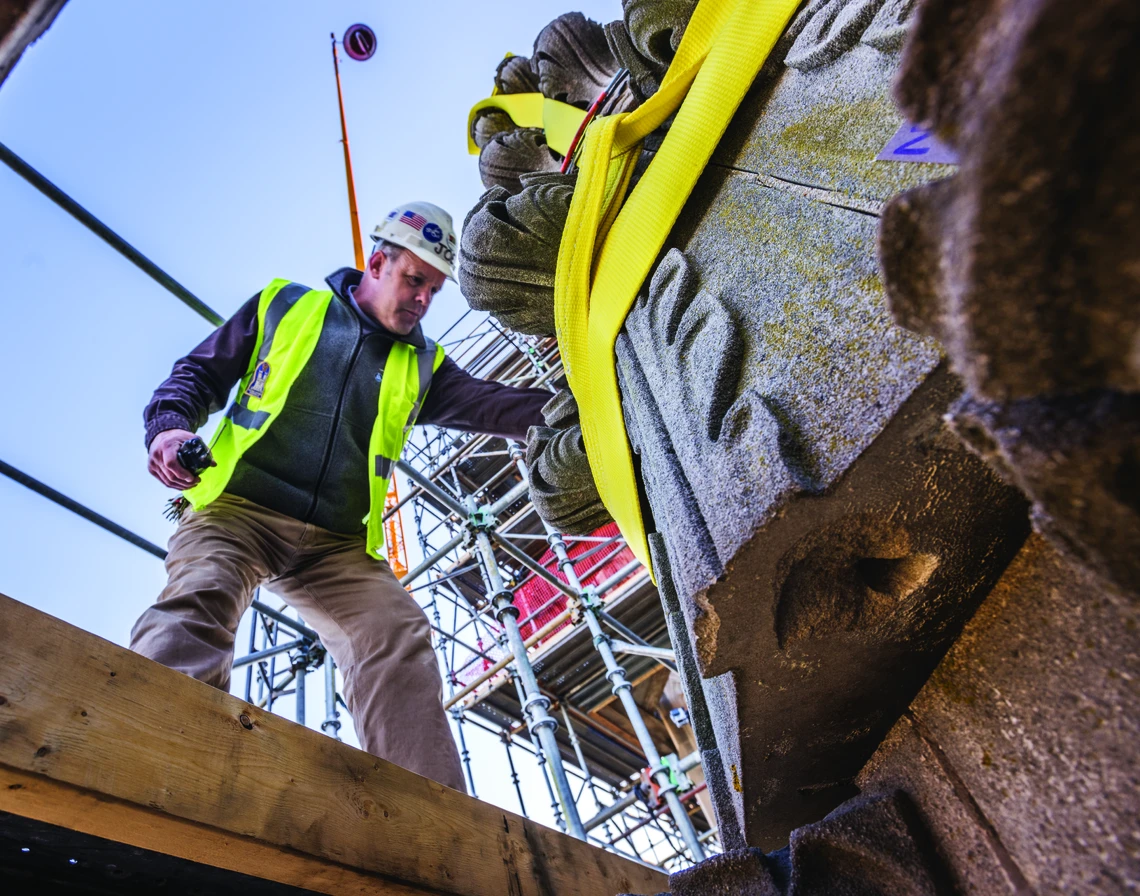
When Alonso first came to the Cathedral in 1985 to help craft the rising west towers, he was already an accomplished mason, but, as he is quick to point out, “I almost had to start from scratch. No one builds fourteenth-century Gothic stonework anymore—these thick, load-bearing masonry walls, arches, tracery. It was like learning the trade all over again, this style of stonework.”
He had the benefit of learning on the job from legends in the trade like master mason Billy Cleland, “a true gentleman and patient teacher,” and longtime dedicated workers like Isidore Flaim and Otto Epps, all of whom generously shared the knowledge and skills they had learned from the craftsmen who came before them. “They were great teachers,” Alonso said, acknowledging the time and care they spent showing him different techniques, tools, and methods required for properly handling and setting the Cathedral’s large, heavy, intricately decorated stones. “Billy expected perfection. He expected the best. The standards have always been so high on this building, the craftsmanship, from day one. So that’s ingrained in you working here, knowing that you need to keep it going, step it up.”
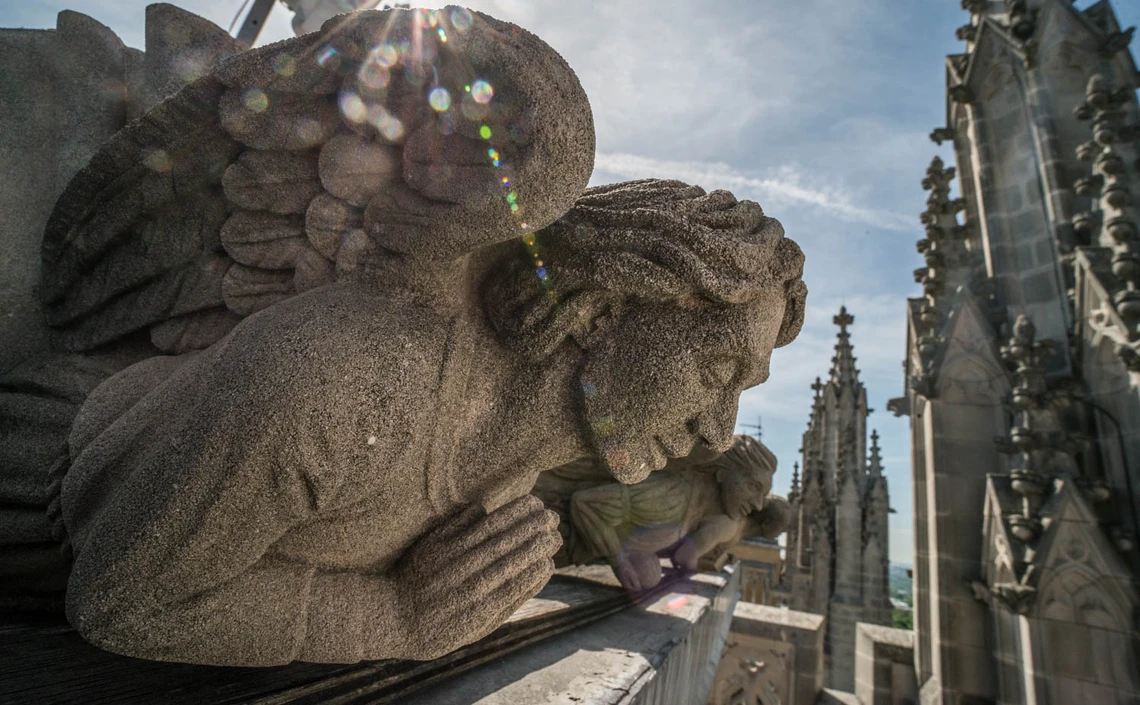
The construction of the Cathedral began in 1907 and took eighty-three years to complete. Over the course of nearly a century, hundreds of artisans—stone masons, stone carvers, woodworkers, stained-glass artisans, ornamental blacksmiths, and many others—built its soaring towers and flying buttresses and crafted the many gargoyles, grotesques, angels, and countless other decorative details that are integral to Gothic design. Heir to the accumulated knowledge of generations of craftspeople, Alonso not only brings his specialized skills but a commitment to excellence and a deep sense of connection to the masons who came before him.
“Just seeing their work, the work itself speaks to me,” he says. “When you’re walking way back on the apse, or the great choir, built back in the 1910s and ’20s, and seeing the work they did, they actually set the standard for us as we were building the last portions of the Cathedral. At least I felt that when I was up there. It had to be as good as their work.”
On September 29, 1990, exactly eighty-three years after the laying of the foundation stone, Alonso was given the great honor of setting the Cathedral’s last stone: the final grand finial on the southwest tower. He says it felt like all the other masons were up there with him, “maneuvering that big finial into position, checking it, making sure it was level and true.”
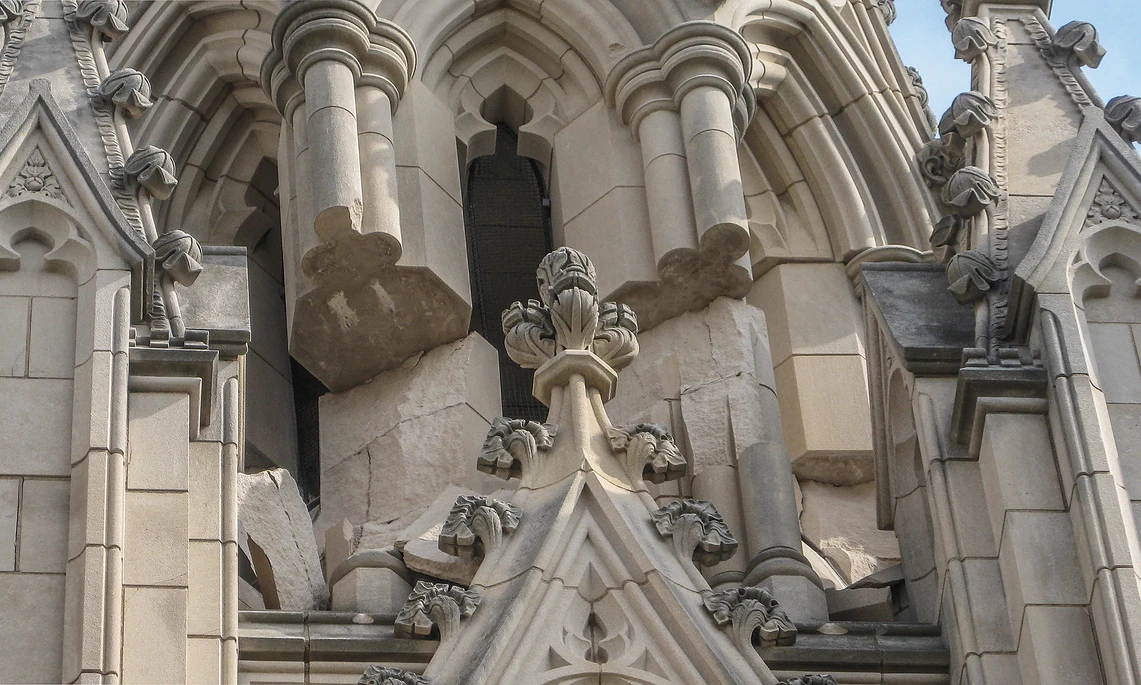
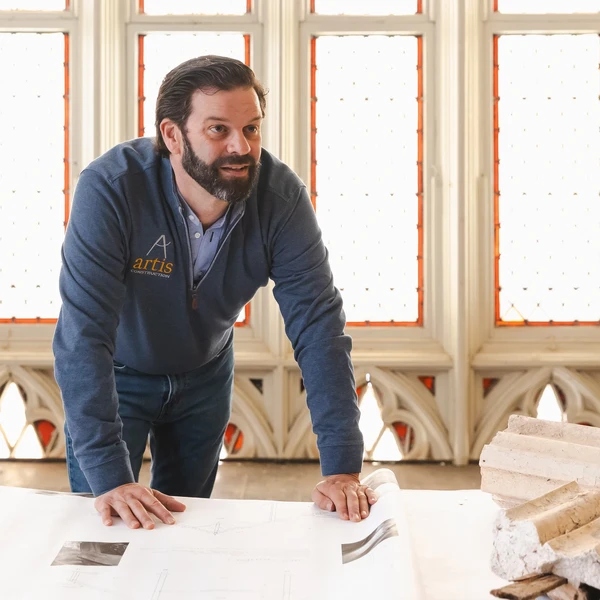
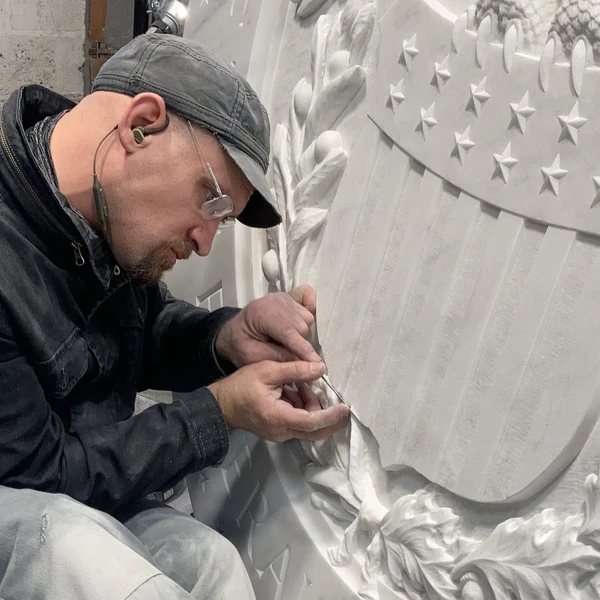
In 2011, the Cathedral suffered severe damage from an earthquake that rocked the Mid-Atlantic region. Alonso’s work changed dramatically from routine preservation and maintenance to urgent full-time restoration. Since then, he and his experienced team of stone carvers and masons—Sean Callahan, Brianna Castelli, and Andy Uhl—have been devoting their skill and knowledge to heroic efforts to restore the Cathedral’s intricate stonework to its former beauty. After more than a decade of extensive stabilization, repair, and rebuilding, lending their craftsmanship, ingenuity, and care to resurrecting hundreds of damaged stones across the entire exterior, they are getting close to completion: the final phase of earthquake restoration on the massive central tower begins in 2026.
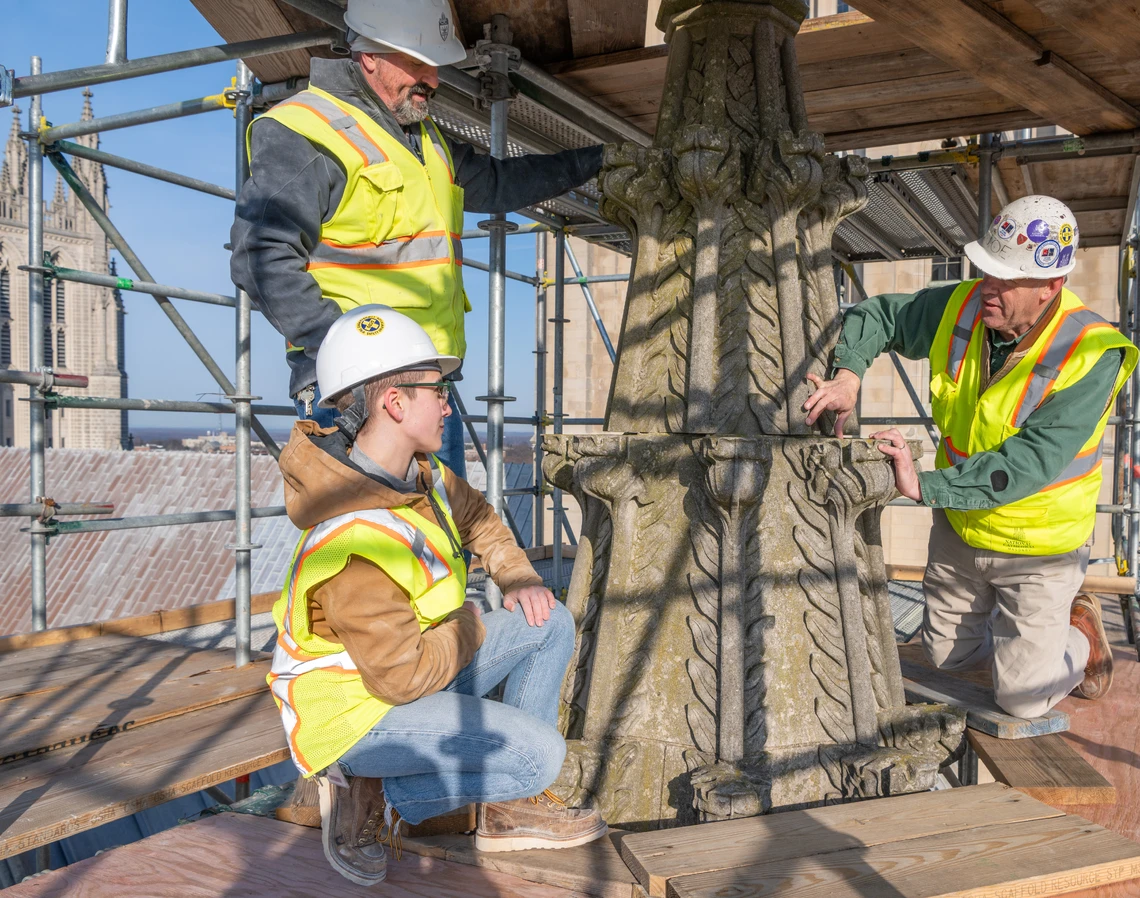
Along with playing a central role in rebuilding his beloved Cathedral, what Alonso values most is the opportunity he has had to impart his centuries-old skills and knowledge to young people coming up in the trade, including Castelli, the Cathedral’s newest young journeyman stone mason and carver. “Passing on our trade, our knowledge, to the next generation is so important,” he says. “Brianna is part of it now. She’ll carry the craft forward.”
Learn More
-
“My Journey as a Stone Mason” by Joe Alonso (Folklife Magazine)
-
“The Monumental Work of Historic Preservation in the Building Trades” (Festival Blog)
-
“The Decades-Long Journey to Restore the National Cathedral” (Smithsonian Magazine)
-
Good Work: Masters of the Building Arts (film)
-
Washington National Cathedral Earthquake Restoration
-
International Union of Bricklayers and Allied Craftworkers
-
“Meet Our Stonemasons” (Crossroads Podcast)