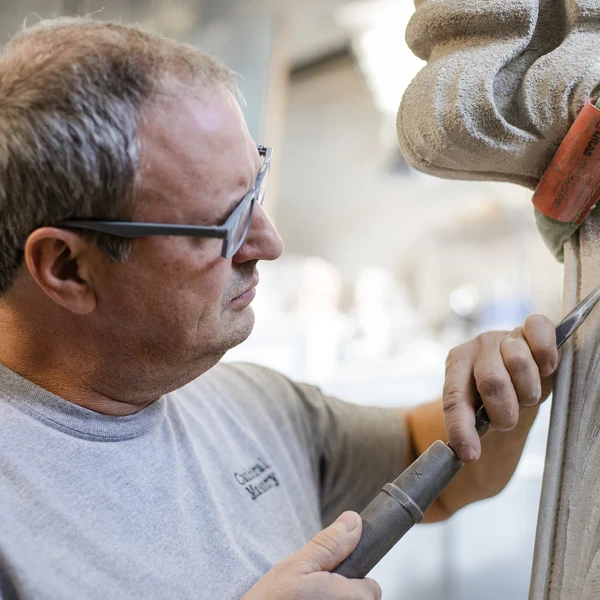

Markus Damwerth
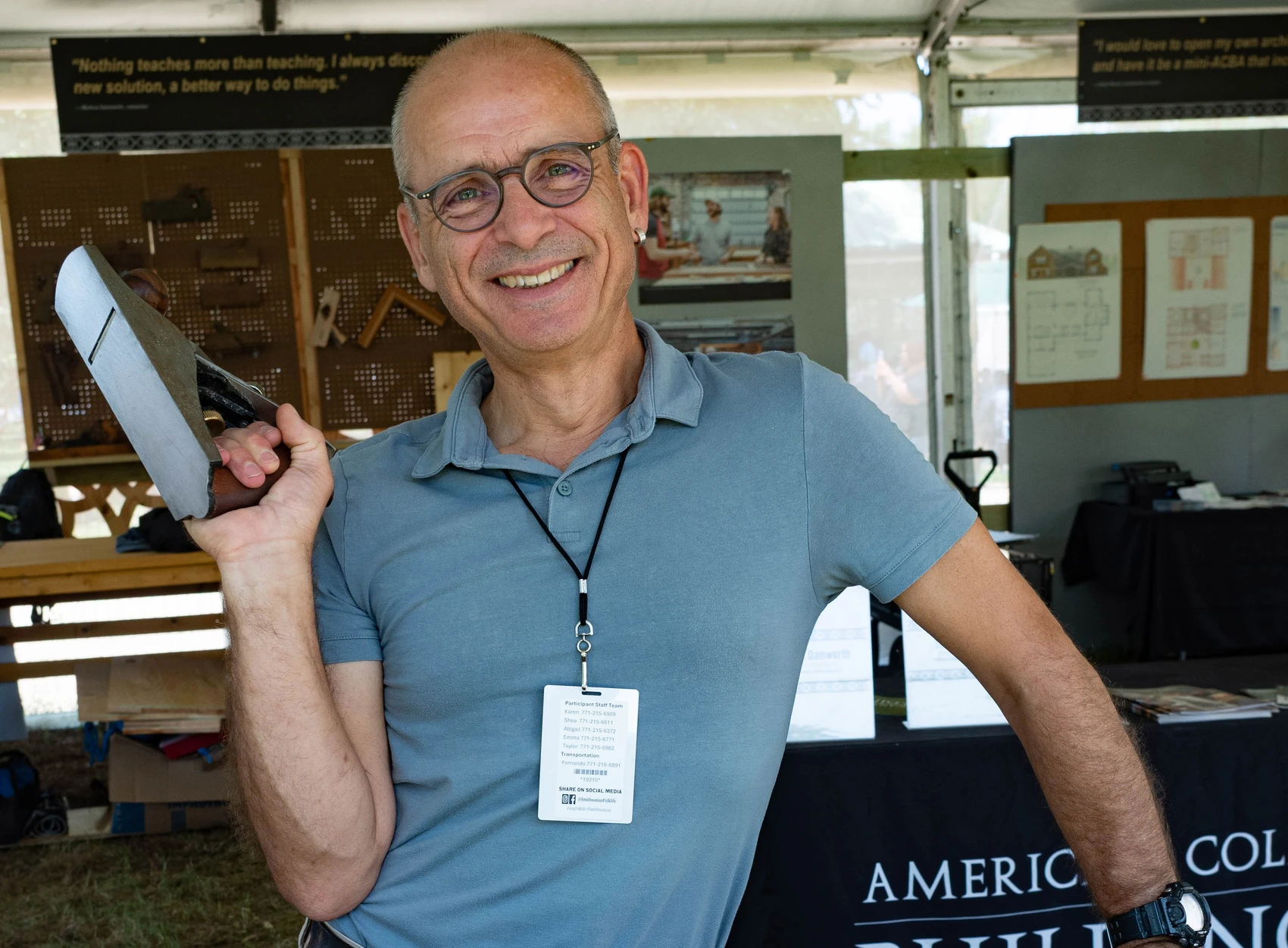
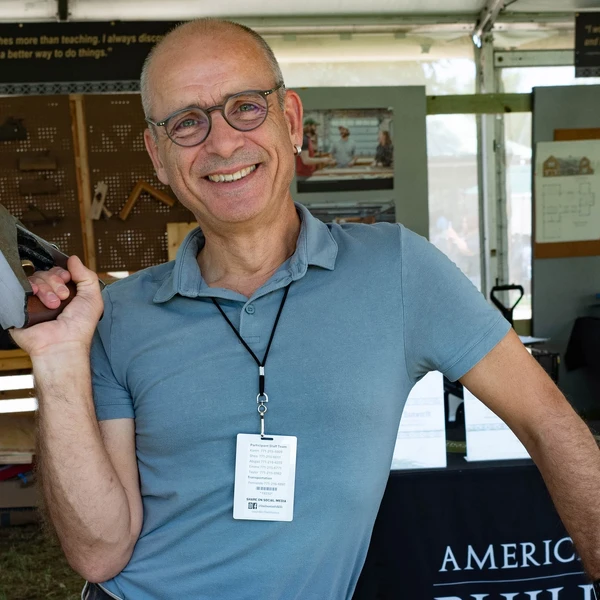
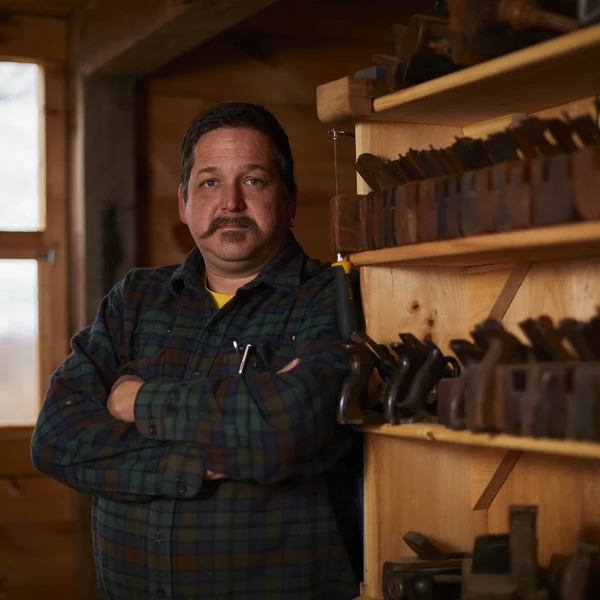
Markus Damwerth is a third-generation master carpenter and the former chair of architectural carpentry at the American College of the Building Arts. Born and raised in a small town in Germany, he grew up with a carpentry workshop as his playground, watching his father and grandfather fabricate craft windows, doors, cabinetry, and interior woodwork for his school, local church, and the homes of neighbors and friends. “I’ve been working with wood from the beginning, since the time I was able to walk,” he says.
Damwerth credits his historic village outside of Münster, Germany, for sparking his initial interest in the craft. A strong sense of community was felt throughout the village, and he was able to observe that fellowship and connection through the projects his grandfather and father had worked on, dotting the streets he walked every day. “It was not abstract what we built. For me, being a kid, I looked at things and knew the purpose. Where is this going? Why are we doing this? Who are the people who are living there or using it? That is something I took into my professional career.”
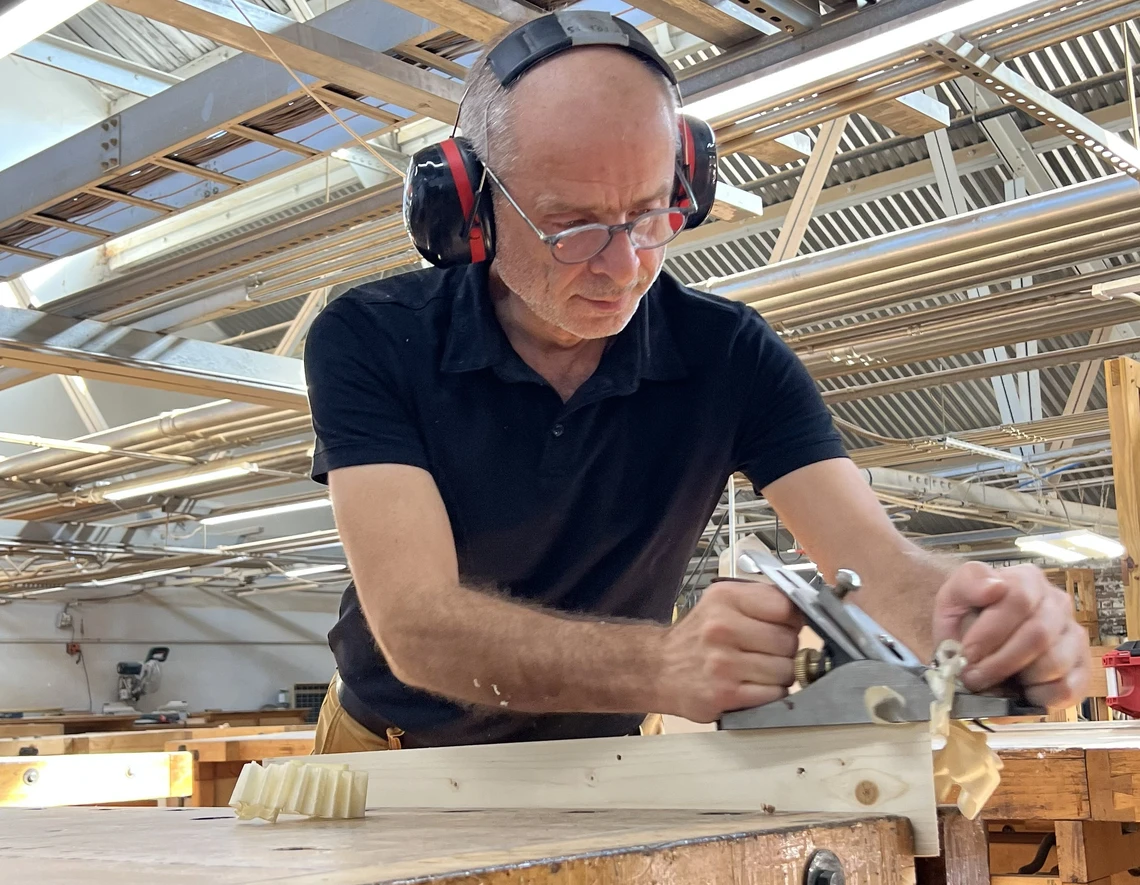
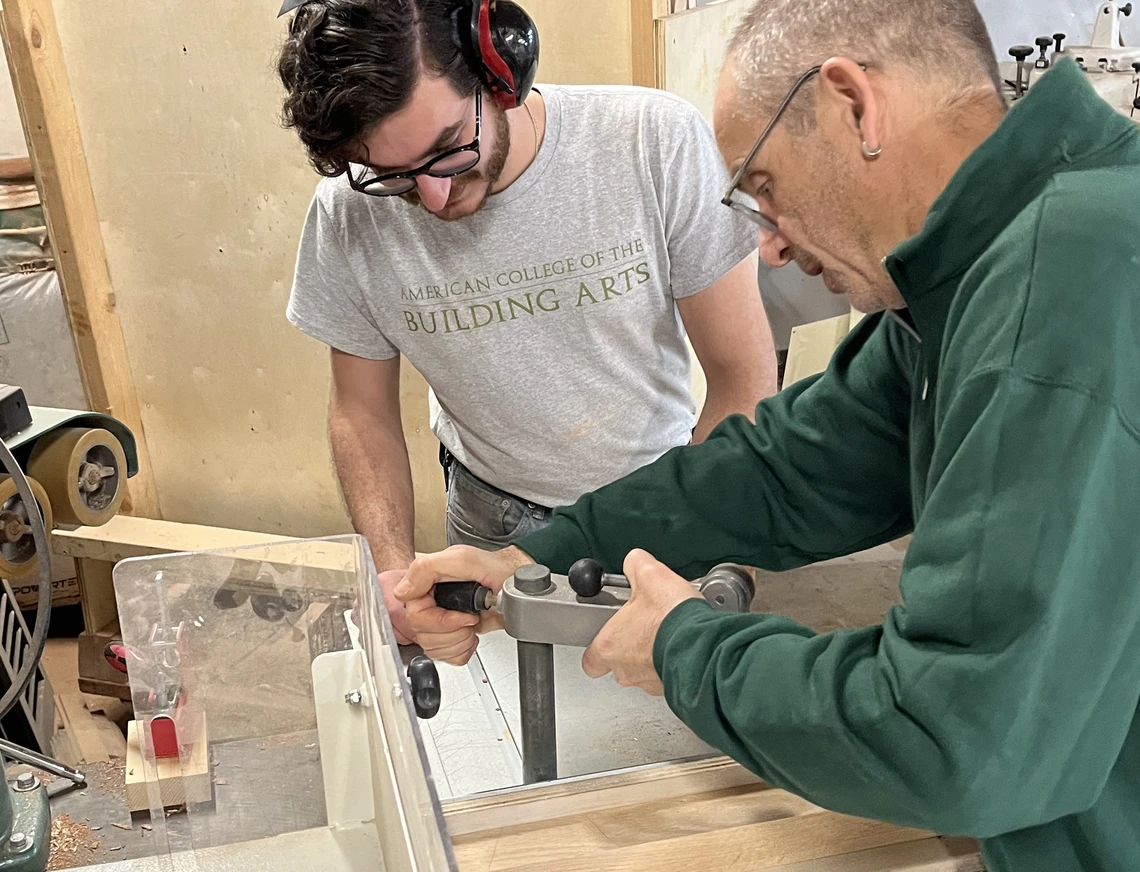
Damwerth infused his teaching at the American College of the Building Arts (ACBA) with this context-based approach. “Ideally, all our graduates become solution finders,” he says. “So, all our projects started with the same question: ‘What is the purpose?’”
He first began his journey to woodworking by borrowing hand tools from his father’s employees in the family’s backyard workshop. Upon graduating from high school, Damwerth decided to broaden his knowledge beyond his family’s carpentry business, serving a three-year apprenticeship and then attending a rigorous trade school in Lower Bavaria, gaining experience and expertise in all elements of the carpentry craft. “I was trained by a seventy-year-old master carpenter. When I started, he told me, when you use a hand tool it has to become a part of your body. It is the extension of your hands. You have to feel what it does.” At ACBA, he carried these teachings with him, believing that beginning with hands tools develops the necessary baseline for understanding what a machine does and why.
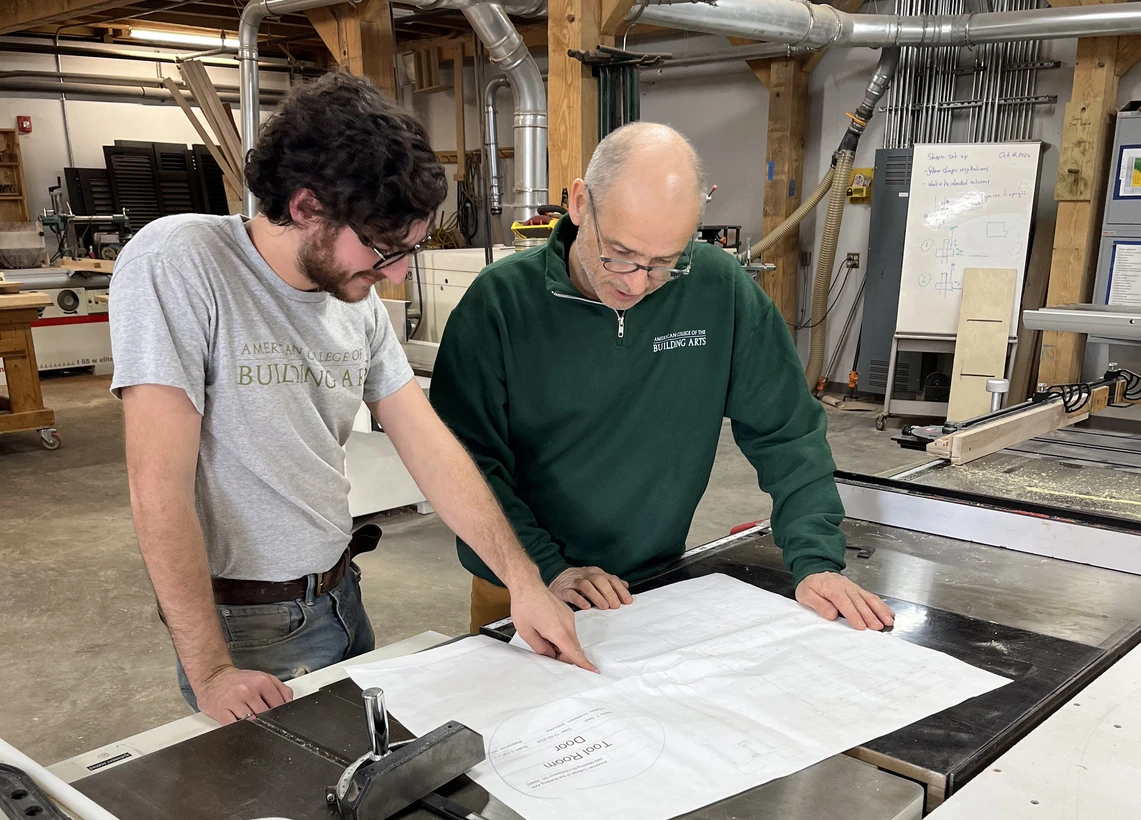
Damwerth’s apprenticeship training provided a dual education, requiring him to work in the field three days of the week and attend classes during the other two. This education not only gave him the tools he needed to develop his skills in carpentry but also the background and context that create a well-rounded craftsperson—one who understands and values all parts of the process. “Being trained on the job is good, because you see all the difficulties, all the limitations, the chances you have, how to work with the materials. You gather a lot of experience. But at the same time, you need to learn the ‘why’—why we are doing things in a certain way.”
For Damwerth, a carpenter cannot just be good at working with a hammer and a saw; they must be able to think critically about what joinery to use or which material best suits the conditions. With Charleston, South Carolina, as ACBA’s “laboratory,” he often brought new students to an old building in disrepair, asking them, “What went wrong? What could have been done better?” Teaching is as much Damwerth’s passion as practicing his craft. “I love seeing young people grow by communicating with them,” he says. “It’s rewarding to pass my knowledge and experience to the next generation of craftspeople.”
With his broad experience in all realms of carpentry, Damwerth’s favorite project to design and create has always been a table. Symbolic of how essential human-centered design is to the trade, the table for him represents how important good craftsmanship is, not only to a community, but to a family and home.