
Andy Uhl
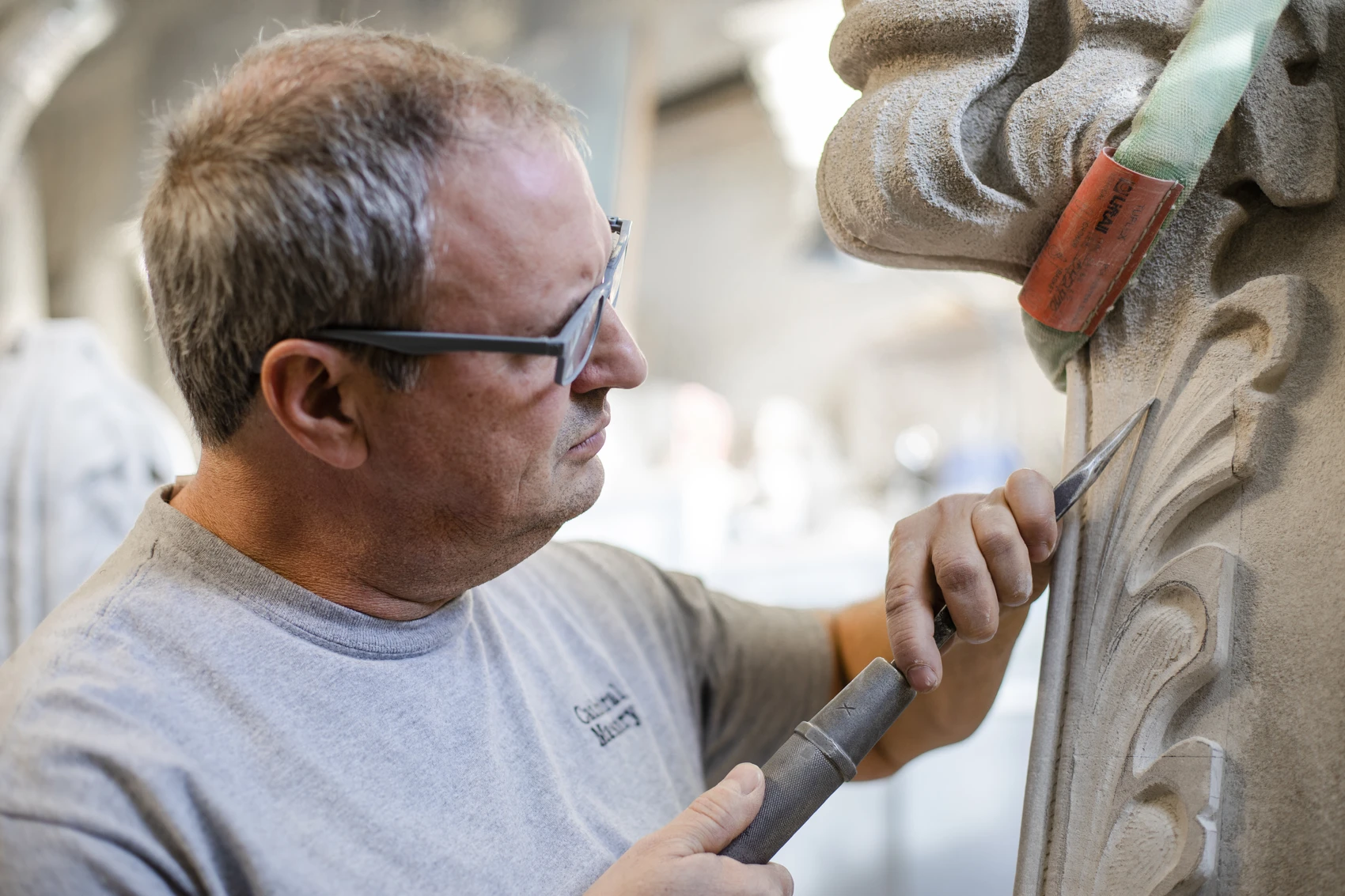
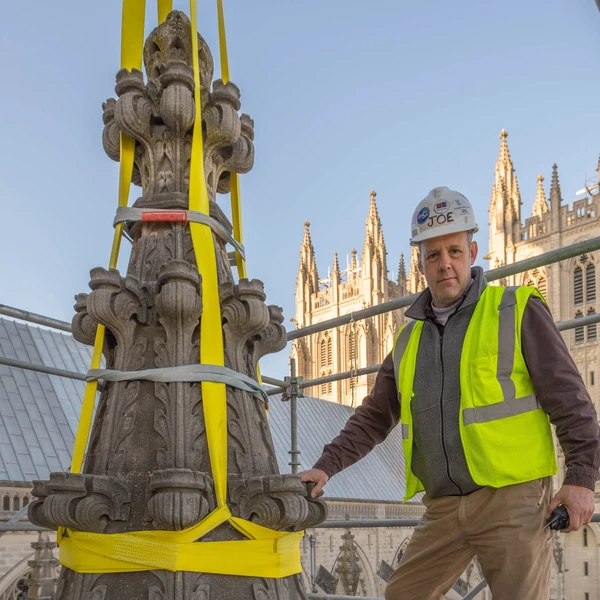
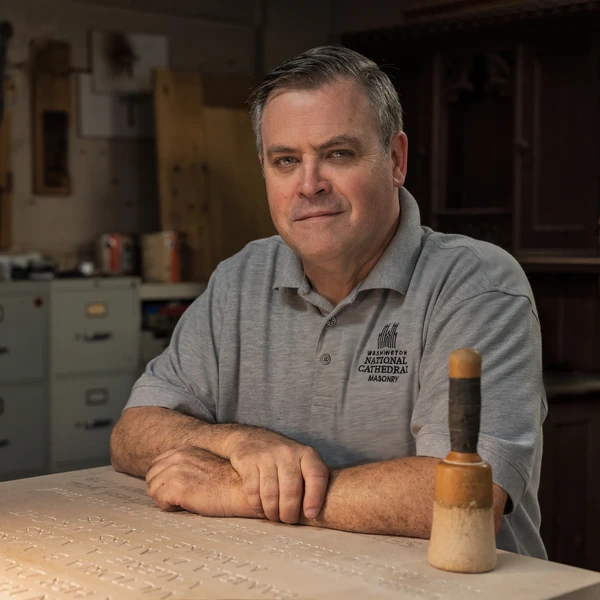
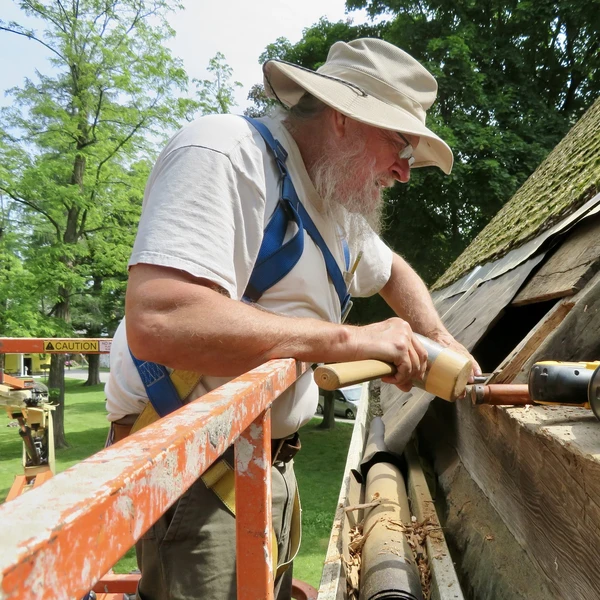
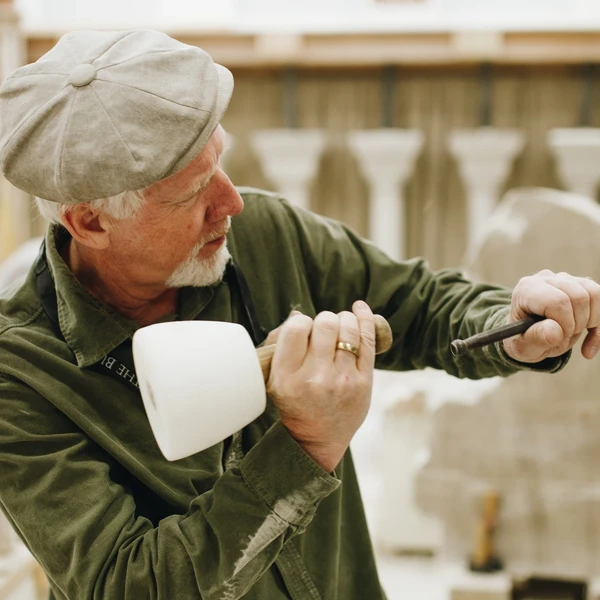
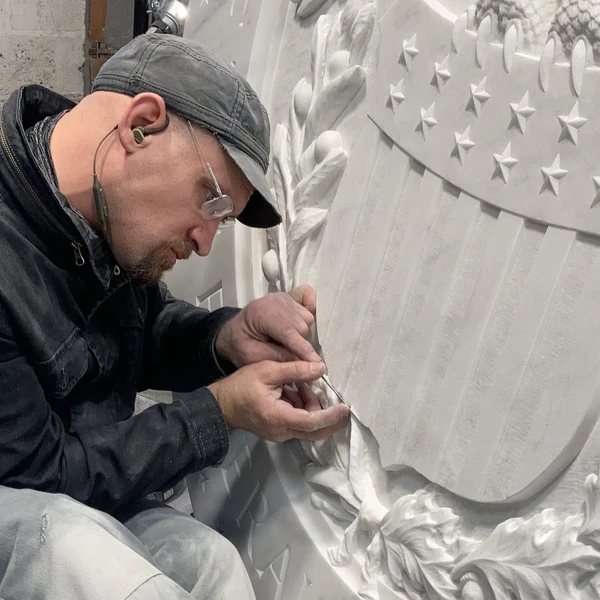
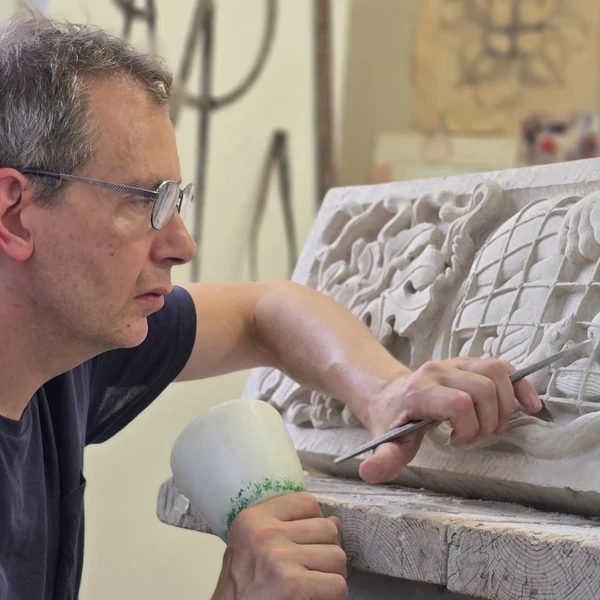
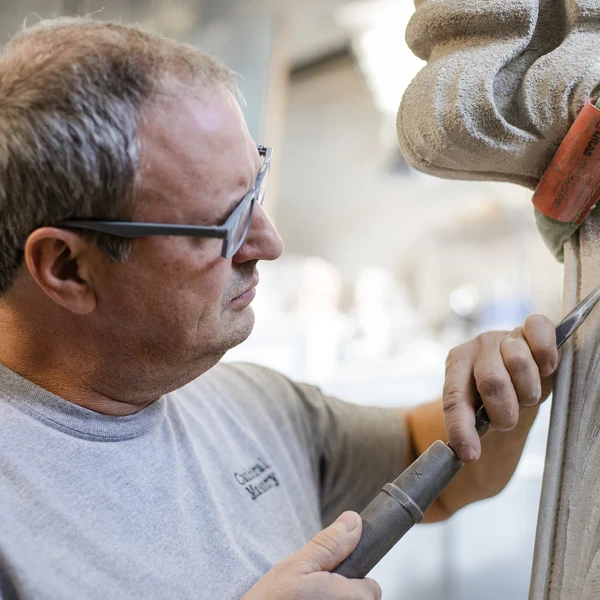
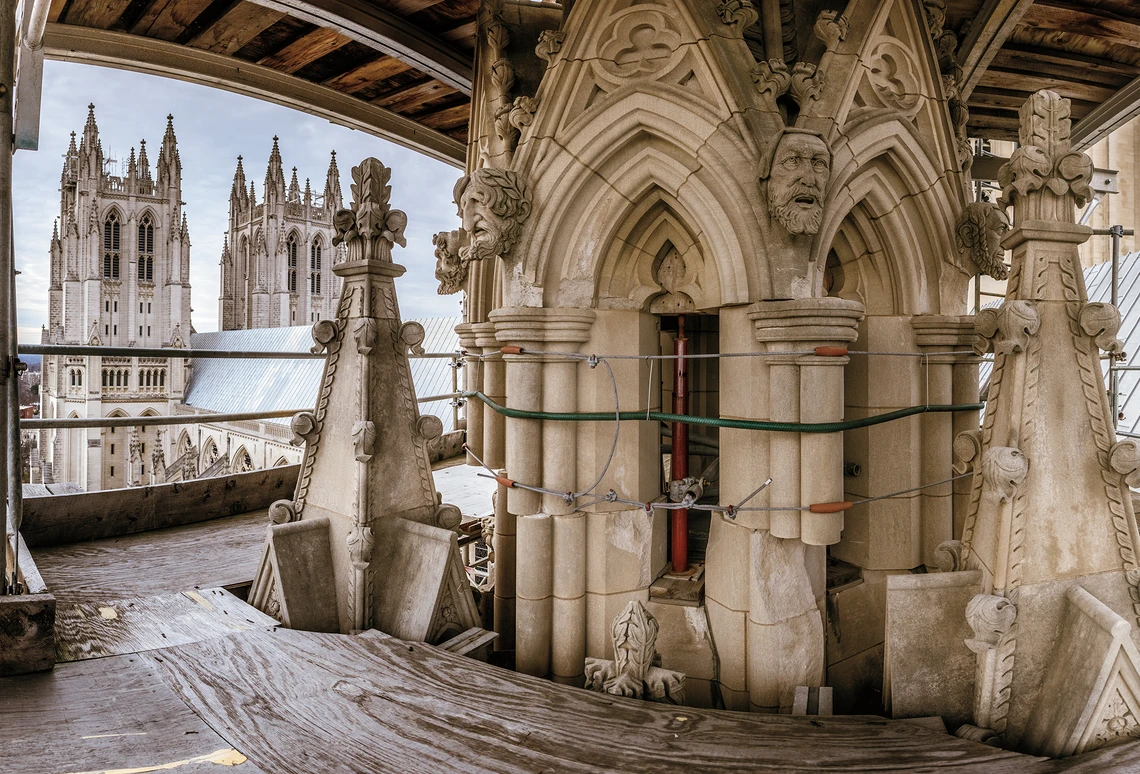
High up on scaffolding at Washington National Cathedral, stone carver Andy Uhl works to carefully repair damaged carvings. It’s part of ongoing efforts to restore the exterior stonework of the Cathedral, an intricate fourteenth-century-Gothic-style landmark that was severely damaged when an earthquake rocked the D.C area in 2011. The building holds special meaning for Uhl; he helped to create many of its angels, finials, and pinnacle stones when the Cathedral’s west towers were under construction in the 1980s.
Uhl first started working at the Cathedral in 1985, apprenticing with master stone carver Vincent Palumbo, a fifth-generation carver who learned the trade from his father and grandfather in Italy before immigrating to the United States in 1961. In a small workshop at the foot of the Cathedral, Palumbo taught Uhl and a dozen other young apprentices how to carve finials, angels, and other decorative elements of Gothic architecture. It was an old-world, production-oriented apprenticeship experience: learning by watching and doing, through trial and error.
Learning the craft in a production setting was key to his training, Uhl believes, for he acquired not only the skills necessary to carve limestone blocks into Gothic-style shapes but also the ability to create quality work with speed, precision, and efficiency. “Learning it from a practical standpoint was really helpful,” he says. “You need to be both fast and good.”
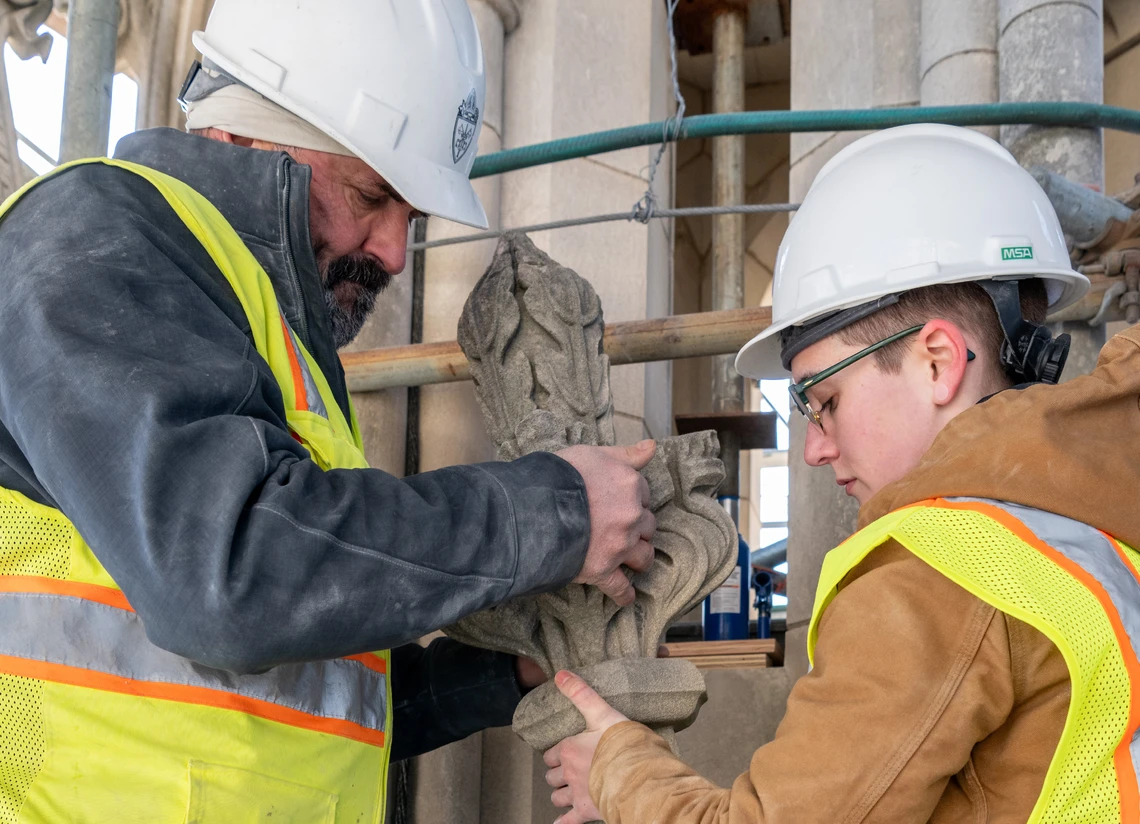
As the work on the Cathedral neared completion, Uhl left in 1989 to work on the restoration of the White House and other preservation jobs in the area, expanding his skills in the stone trade, especially in restoration masonry. In 2004, head stone mason Joe Alonso asked Uhl to return to the Cathedral to help with routine maintenance and preservation. He has worked there ever since. After the 2011 earthquake, his expertise in preservation masonry and his intimate knowledge of Gothic-style carving have served the Cathedral well, as he and his fellow team members, Alonso and stone carvers Sean Callahan and Brianna Castelli, focus all their efforts on restoring the massive damage to the Cathedral’s stonework. Their goal is to save as much of the historic fabric as possible.
“It feels good to be part of a project like this, helping to bring the building back.”
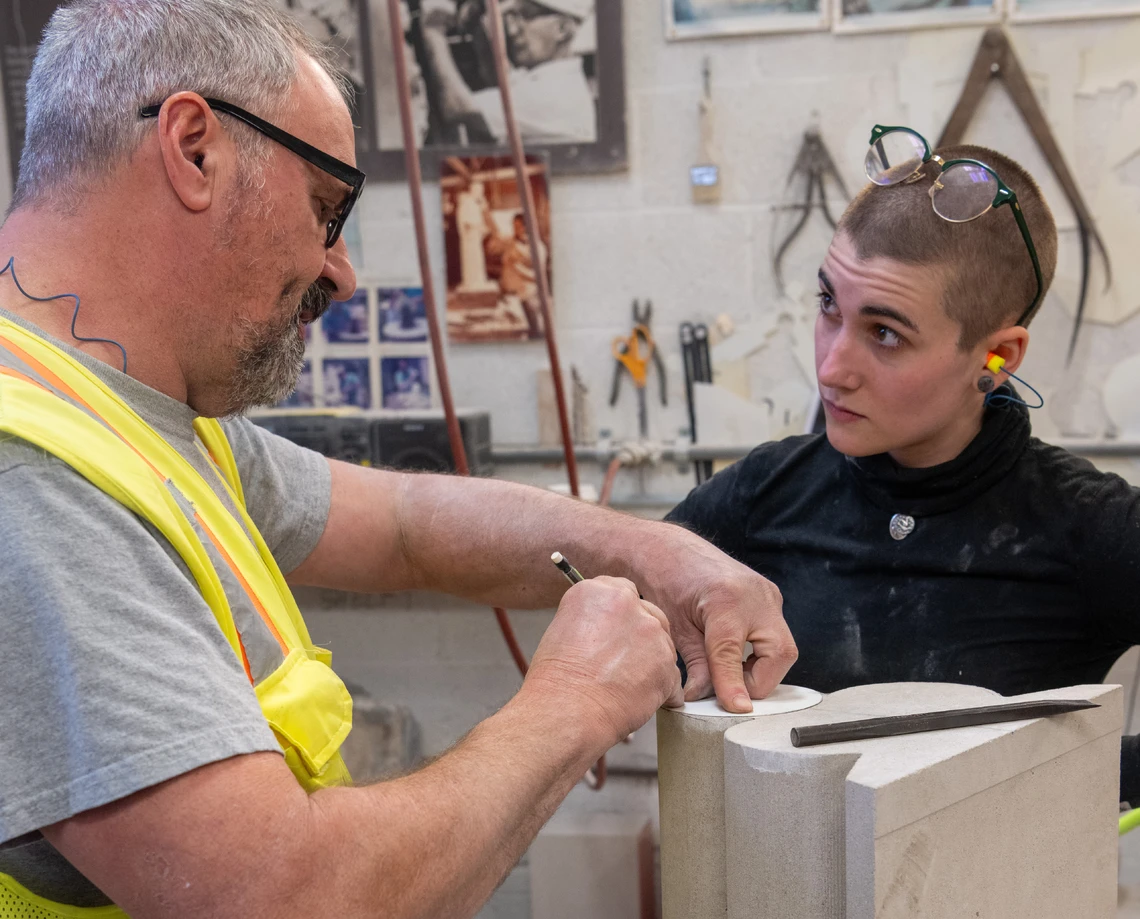
Uhl works on repairs to the building in situ up in scaffolding and in the Cathedral’s stone shop, an evocative space filled with tools, templates, old photos, architectural drawings, chain hoists, sturdy wooden work benches, stone dust, and carvings.
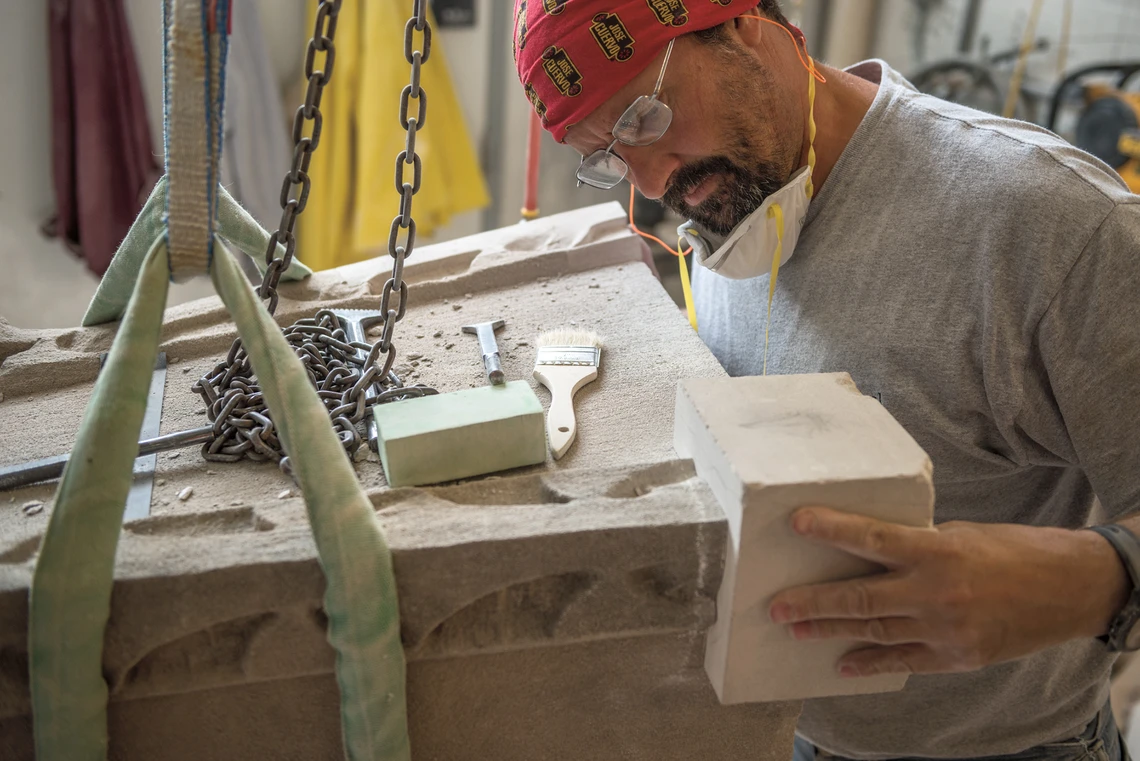
The most common kind of stone repair is called a “Dutchman.” Many of the Cathedral’s pinnacle stones have broken corners or edges cracked off from the severe shaking caused by the earthquake. With hammer and chisels, the carvers cut out damaged sections to create a clean, flat surface. They then fit or “graft” a replacement block of stone snugly in place, securing it with epoxy and stainless-steel pins, and carefully carve the stone “patch” to recreate the original. The trick is to get a perfect match.
“The hardest part to disguise is the joint itself. A nice tight graft is what we’re going for,” Uhl says. He experiments with different tools, seeking to replicate the texture of the old piece. “I’ve gone to the old tool cabinet here, where we have a bunch of antique chisels. You have to just feel your way through it and see what gives you the best result, and when you find it, it’s very satisfying.”
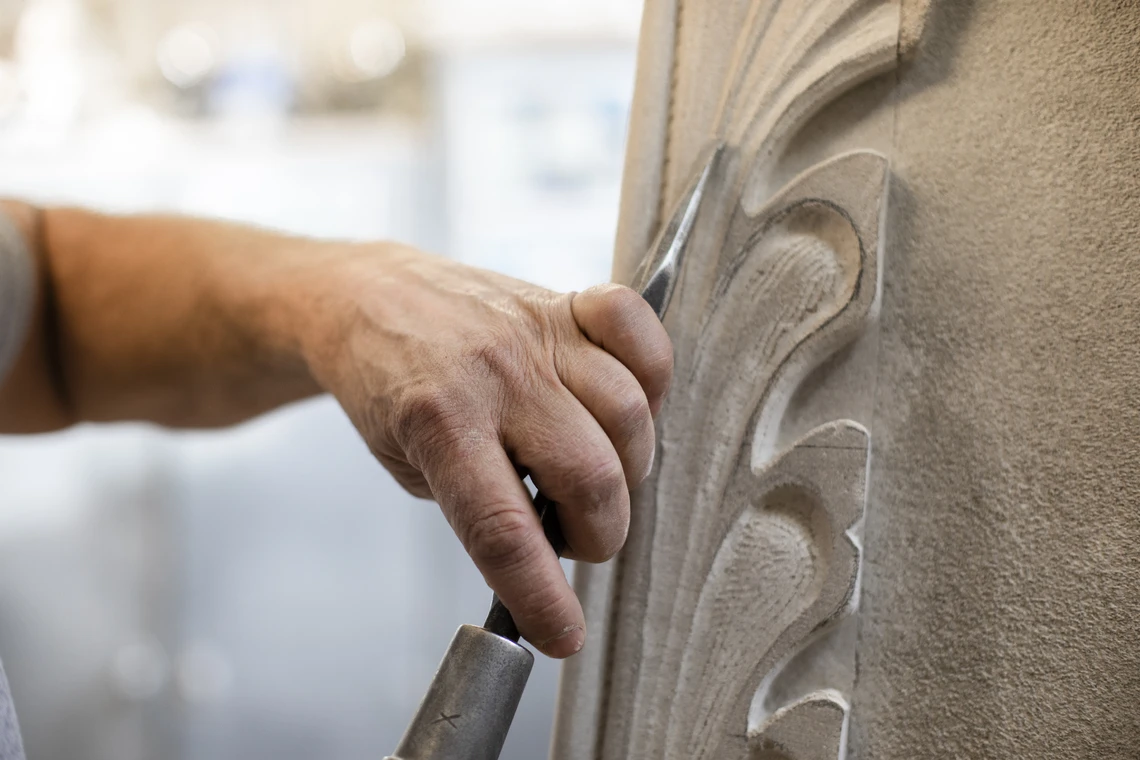
A silver lining of the earthquake has been the opportunity for artisans to view the craftsmanship on the oldest parts of the cathedral at close range. “We see lots of subtleties and differences in the carving in various parts of the Cathedral,” Uhl says. “On the oldest part, you see how free and loose it is, and the nice movement they got. They left the edges rough. It seems so coarse, but when you stand back, it really reads well. We’re like, ‘Hey, this is nice work!’”
Uhl enjoys passing on his accumulated knowledge and experience to young people coming up in the trade. He, Alonso, and Callahan are thrilled to be mentoring the newest member of the team, stone carver and mason Brianna Castelli, who joined the Cathedral in 2024. Most of all, he values the opportunity to create something lasting, lending his human touch to the Cathedral for centuries to come.