
rounded play button chevron hamburger X Pinterest

Chris Pellettieri

Pellettieri Stone Carving, New York City, New York
Stone Carver
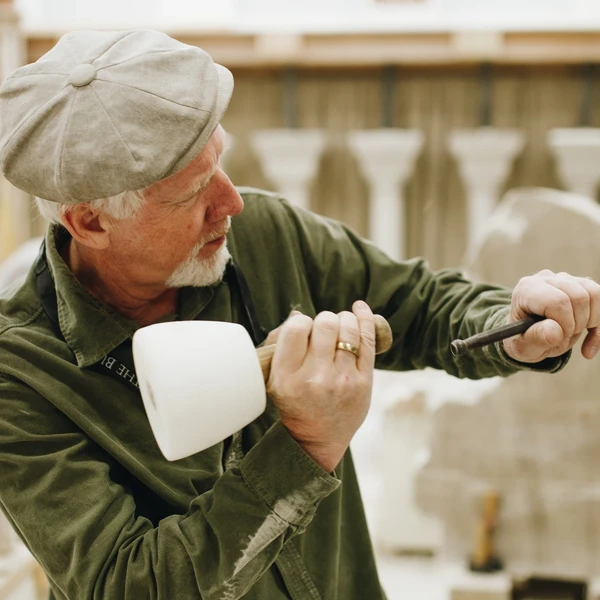
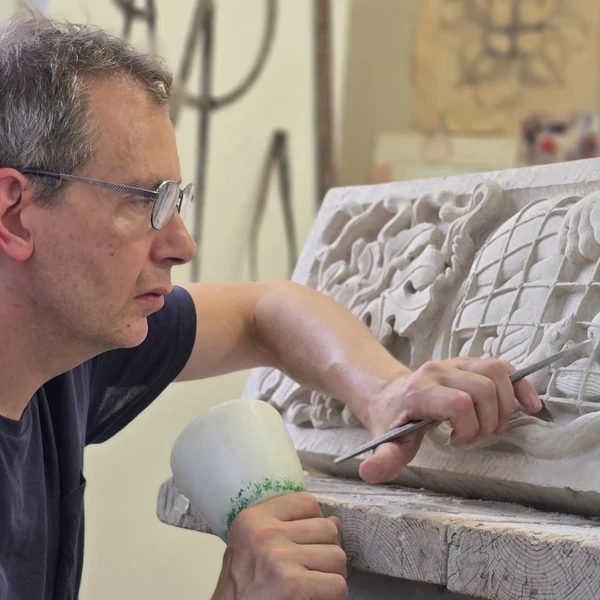
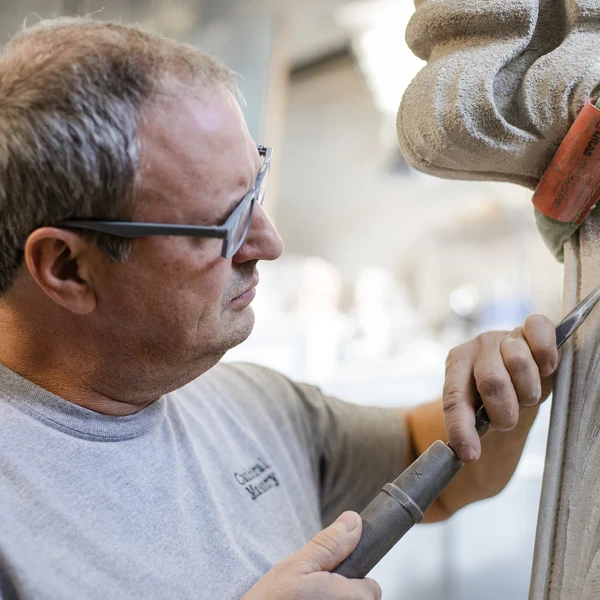
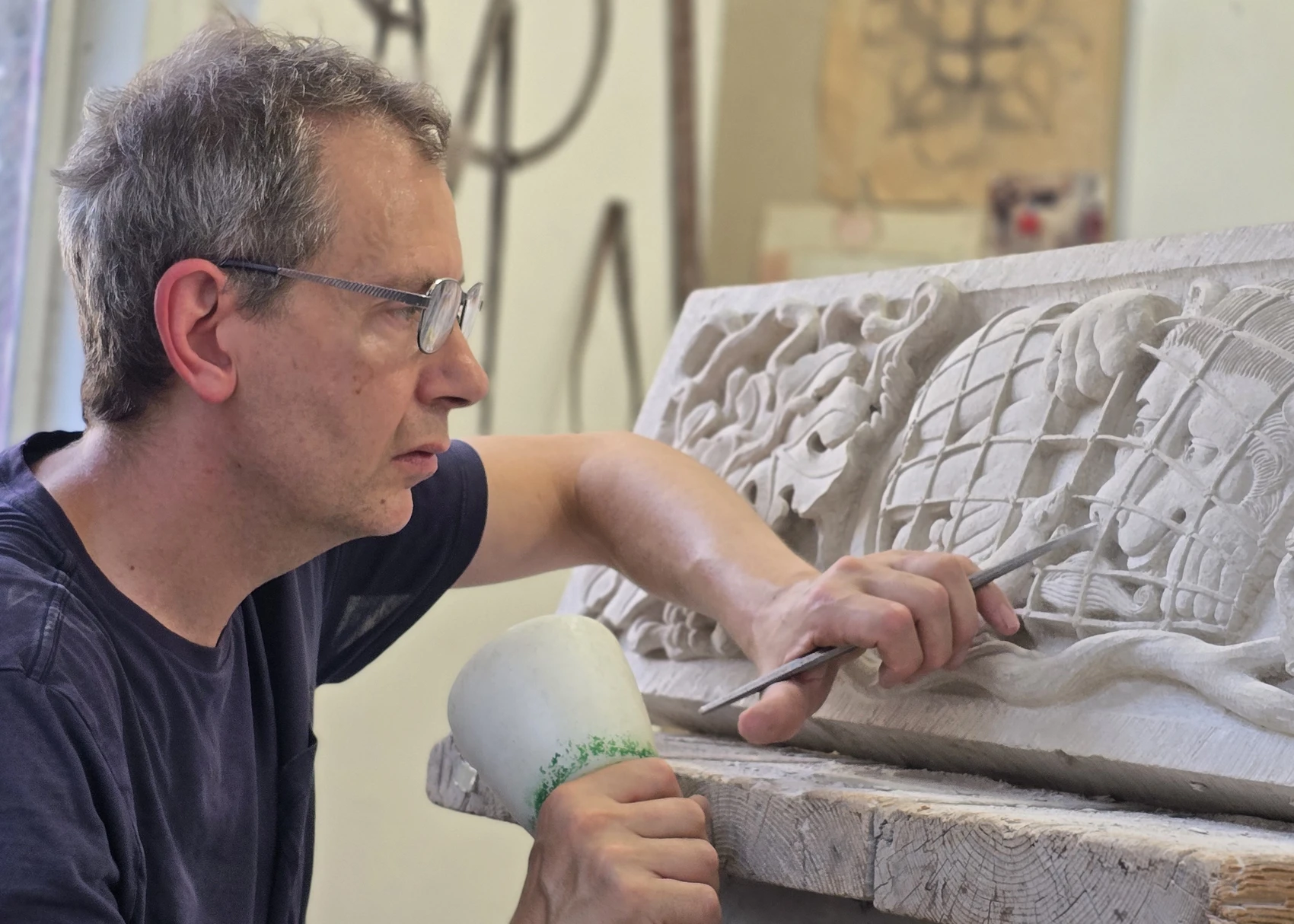
A man in a workshop uses a mallet and chisel to carve an intricate ornamental design into a rectangular piece of limestone on a wooden work bench.
Stone carver Chris Pellettieri works in his studio. Photo courtesy of Chris Pellettieri
Stone carving deserves saving. It’s a perfect expression of what makes human beings special.

Chris Pellettieri, an independent stone carver hailing from Morningside Heights in New York City, specializes in carving ornamental pieces, freehand sculptures, and inscriptions. He pours the rest of his time into educating the next generation of artisans at Pellettieri Stone Carvers’ Academy, which provides him with an outlet to share his passion for the craft and to help revitalize the knowledge he fears is endangered. 

Pellettieri’s career path was largely informed by his time as a student and apprentice at the Cathedral of St. John the Divine. While initially impartial to the idea of stonework when he was a student at the Cathedral School, years of a sedentary classroom education led him to reevaluate. His very first experience as an apprentice in the cathedral’s stone yard affirmed his emerging enthusiasm. “As soon as I tried stone carving, it proved to be like a godsend,” he says.
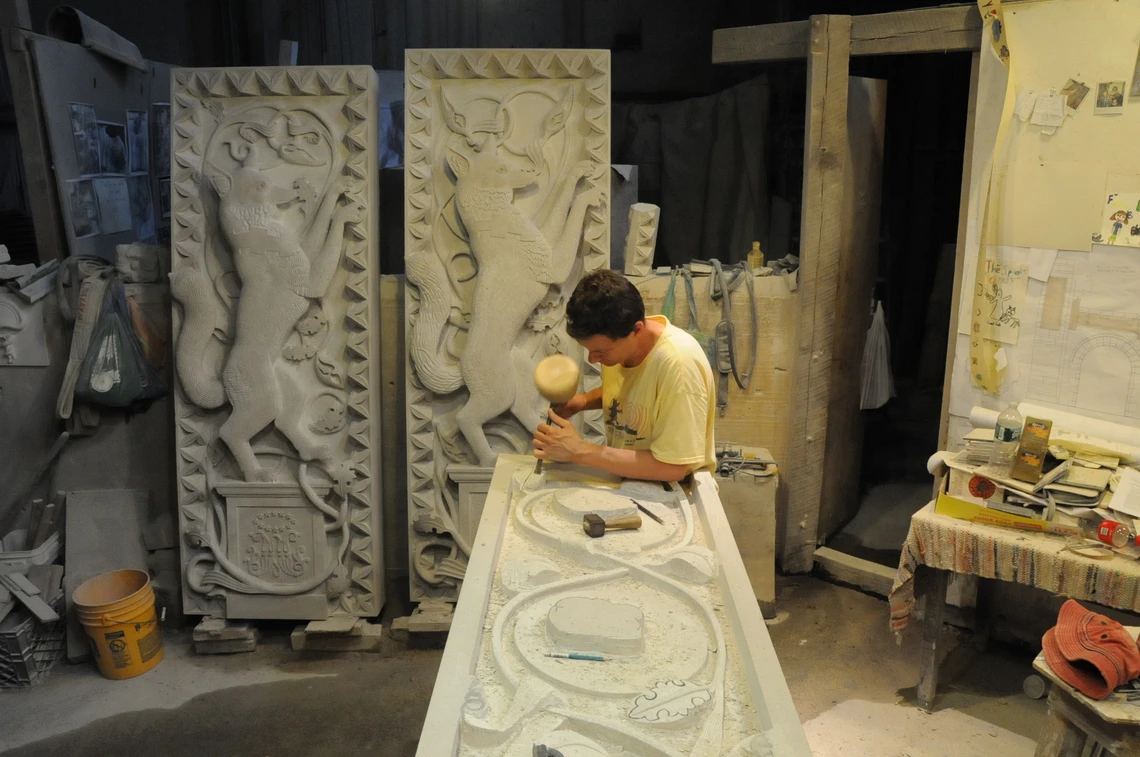
A man uses a mallet and chisel to carve a rectangular piece of limestone in a workshop; two large elaborate vertical carvings of a fox surrounded by ornamental motifs stand against the wall behind him.
Chris Pellettieri carves decorative panels for Marist University in Poughkeepsie, New York. Photo by Luigi Pellettieri

With the invaluable support of highly skilled stone workers trained in Europe, he made rapid progress in two short years. Pellettieri applauds the cathedral not only for offering a paid apprenticeship program but also for creating a space where the diffusion of knowledge among carvers and masons of all skill levels was commonplace.

“People who knew a lot were getting together with people who knew nothing and sharing openly. That just seemed revolutionary.”  

Inspired by the training program, he established Pellettieri Stone Carvers’ Academy, a setting where sharing stone-carving skills and knowledge is fundamental. The academy is close to his heart because he has the chance to exercise one of his favorite activities: teaching. He loves to watch people enter a “flow” state of consciousness—a form of mindfulness and complete focus that he considers the antithesis of the “technological bombardment” that our society is collectively experiencing. “It’s a great state of mind. It calms you,” he says.
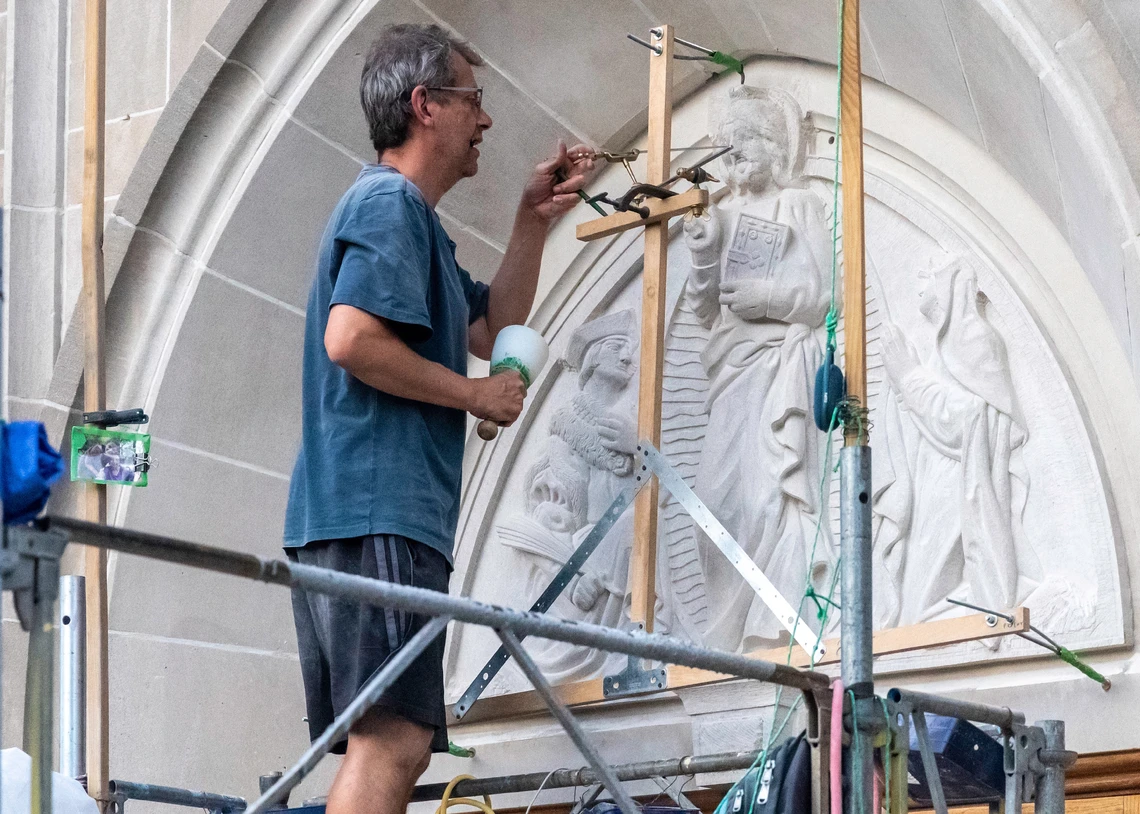
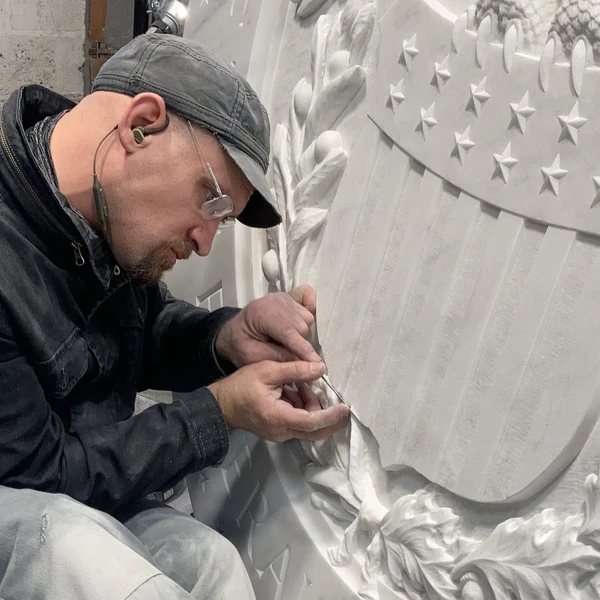
A man works in scaffolding on the exterior of a church to carve a large triangular sculpture depicting Jesus holding a bible flanked by two figures; the man is using a mallet and chisel and a metal measuring device to carve the figures in stone.
Chris Pellettieri uses a pointing machine to aid with carving a tympanum sculpture for St. Rita’s Catholic Church in Alexandria, Virginia. Photo courtesy of Chris Pellettieri

As one who “came alive” through his training, Pellettieri still favors the traditional techniques and materials that he learned early on. He prefers working by hand with mallets and chisels—tools that have been around for thousands of years. When effective and suitable for a project, he employs modern drills and pneumatic tools, such as his handy air hammer for speed. The Cathedral of St. John the Divine’s primary medium is limestone—one of the softer stones and Pellettieri’s favorite. He appreciates how tool marks elevate a limestone piece, giving it texture, shadow, and depth. Pellettieri also occasionally works in granite, marble, or sandstone, and for cemetery monuments he tends to use slate, given its legibility for even the smallest of inscriptions. 
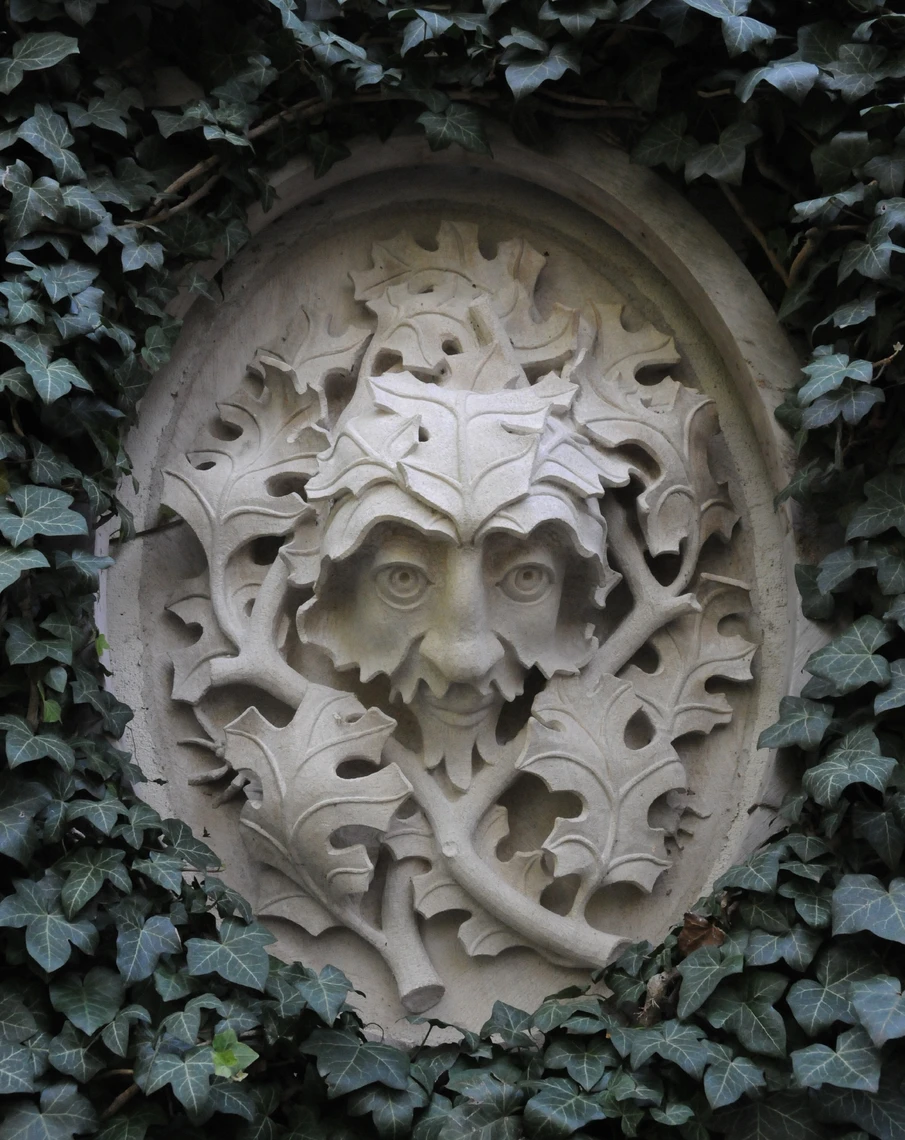
A fanciful oval-shaped decorative sculpture carved in limestone depicts the face of a man with a beard surrounded by twigs and foliage; the sculpture is placed in the wall of a garden and is surrounded by green ivy.
A “Green Man” carving by Chris Pellettieri. Photo by Luigi Pellettieri

Pellettieri is energized by experimentation and will create with the simple intent of personal enjoyment and self-expression. He fondly recalls his collection of limestone “green people,” visages emerging from leafy surrounds, as he tried his hand at an age-old ornamental tradition. In his quest for connection and meaning, he finds cemetery monuments to be the most rewarding because they are “packed with emotion.”  In 2025, he received the prestigious John Russell Pope Award for Artisanship from the Institute of Classical Architecture and Art for his sculptural carving on the façade of St. Rita’s Catholic Church in Alexandria, Virginia. 
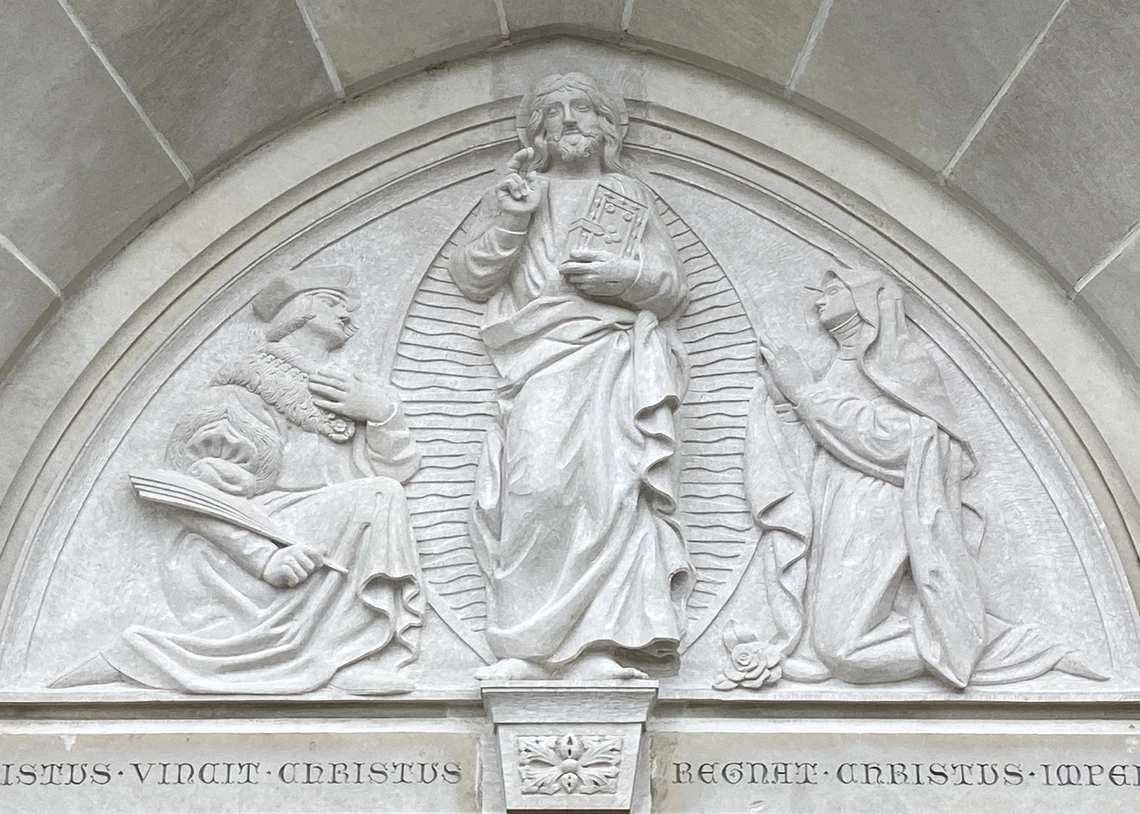
A triangular limestone tympanum sculpture located on the exterior wall of a church depicts a figure of Jesus holding a bible and two men kneeling on either side of him who are praying.
A tympanum sculpture carved by Chris Pellettieri for St. Rita’s Catholic Church in Alexandria, Virginia. Photo courtesy of Chris Pellettieri

Through his academy, Pellettieri has forged a partnership with the Stephen T. Mather Building Arts and Craftsmanship High School in New York City and the National Park Service to give weekly carving workshops for high school students on Governors Island, and a partnership with the New York City Department of Education to run a summer camp teaching the stone carving tradition to the city’s teens. He has great hope that the next generation will keep the centuries-old craft alive and well. 
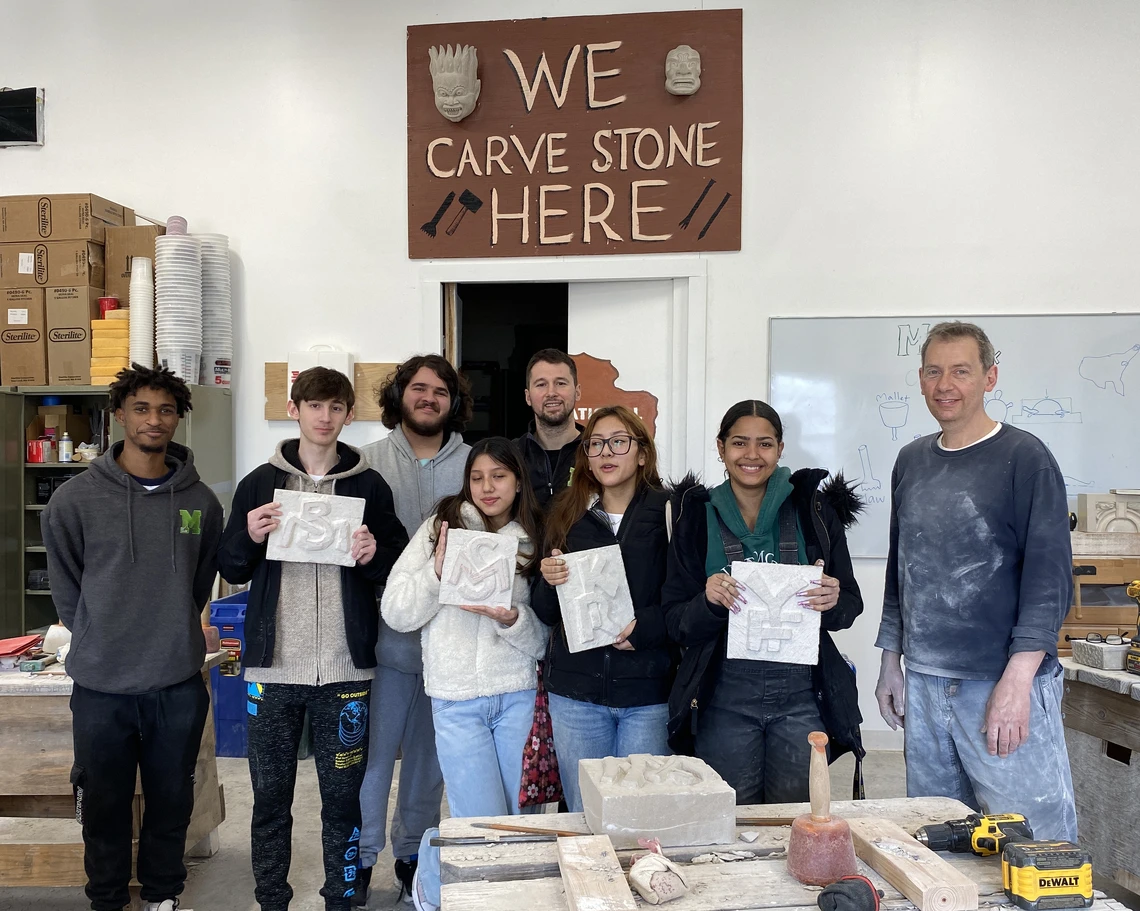
A group of seven high school students and their stone carving teacher pose in a workshop holding square limestone tablets that they carved with various designs; behind them a sign reads: “We Carve Stone Here.”
Chris Pellettieri teaches stone carving classes to students from the Stephen T. Mather Building Arts & Craftsmanship High School in New York City. Photo courtesy of Chris Pellettieri

Learn More

Share

View By:

Credits

Sponsors

Smithsonian Women‘s Committee

This project has been made possible by the generous support of the Smithsonian Women’s Committee.

Additional support was provided by the University of Notre Dame School of Architecture.

Built by Hand: Skilled Artisans in the Traditional Trades was produced by the Smithsonian Center for Folklife and Cultural Heritage in collaboration with the University of Notre Dame School of Architecture. 


Smithsonian Women‘s Committee

This project received funding from the Smithsonian’s Our Shared Future: 250, a Smithsonian-wide initiative supported by private philanthropy and created to commemorate the nation’s 250th anniversary and advance the Smithsonian vision for the next 250 years.

Exhibition

Curator

Marjorie Hunt

Editor

Elisa Hough

Interns

Ben Cook, Lydia Desormeaux, Claire Egelhoff, Lucy Florenzo, Peyton Hoffman, Mary Bridget Jones, Maria Maxwell, Connor Roop

Project Support

Sloane Keller

Advisors

Christina Butler, American College of the Building Arts; Christine Franck, INTBAU USA; Jonn Hankins, New Orleans Master Crafts Guild; Stephen Hartley, University of Notre Dame School of Architecture; Alejandro Garcia Hermida, Traditional Building Cultures Foundation; Michael Lykoudis, University of Notre Dame School of Architecture; Stefanos Polyzoides, University of Notre Dame School of Architecture; Nicholas Redding, The Campaign for Historic Trades; Moss Rudley, National Park Service Historic Preservation Training Center; Steven Semes, University of Notre Dame School of Architecture; Simeon Warren, National Park Service National Center for Preservation Technology and Training; Harriet Wennberg, International Network for Traditional Building, Architecture & Urbanism (INTBAU)

Special Thanks

Betty Belanus, Marquinta Bell, Halle Butvin, Allen Carroll, Paloma Catalan, Kevin Eckstrom, Mimi McNamara, Arlene Reiniger, Colin Winterbottom, Erin Younger

Web Development

Design & Programming

Visual Dialogue

Content Migration

Ben Hatfield

Web Support

Elisa Hough

Archives Support

Cecilia Peterson
David Walker


Resources