
Nicholas Benson
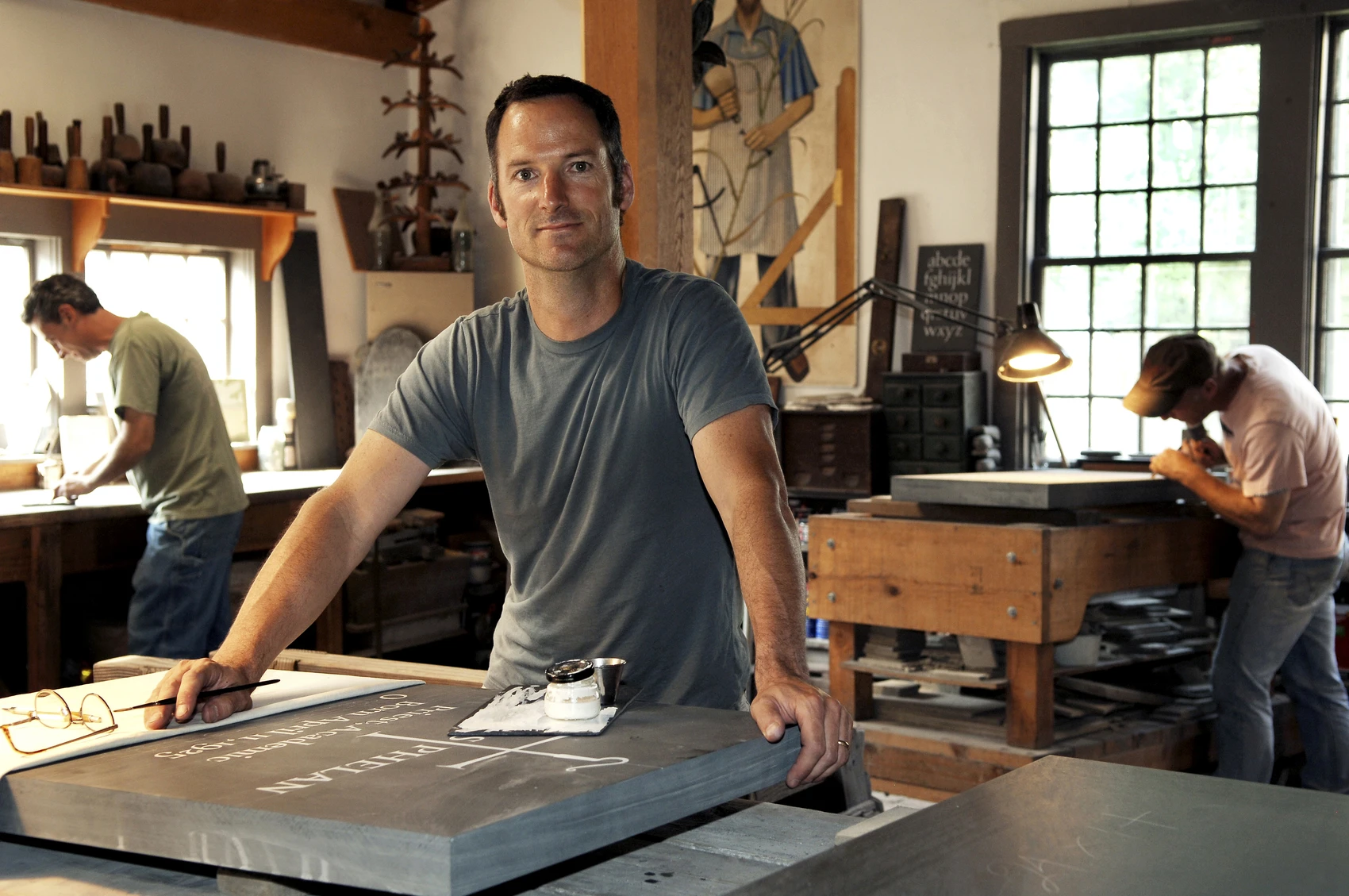
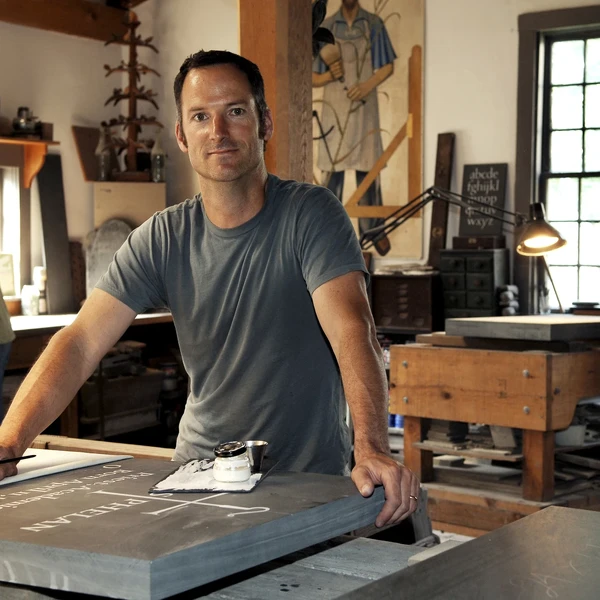
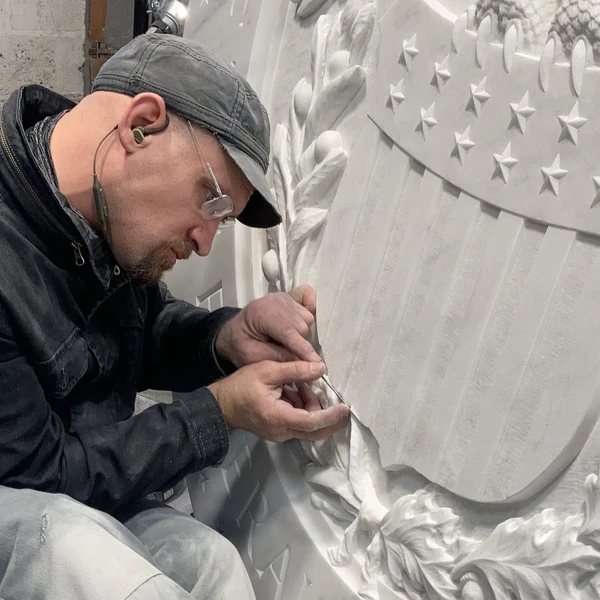
A renowned third-generation master stone carver and letterer, Nicholas Benson specializes in the design and execution of beautiful hand-carved memorials and elegant architectural lettering for public buildings and monuments across the country. He is the owner and creative director of the highly acclaimed John Stevens Shop in Newport, Rhode Island, which was founded in 1705 and has been continuously operating for more than 300 years.
Eight generations of the Stevens family ran the carving shop in Newport, going back to the early colonial days. In 1926, Benson’s grandfather, John Howard Benson, bought the shop from the Stevens and revived the art of the hand-carved letter, raising it to new heights of artistic excellence. Benson’s father, John Everett Benson, followed in his father’s footsteps, becoming a master of large-scale architectural inscriptions and leaving his mark on such national treasures as the John F. Kennedy Memorial, the Franklin Delano Roosevelt Memorial, and the National Gallery of Art.
Benson learned the art of letter design and carving from his father, apprenticing with him in the shop at an early age. “It was so valuable to spend eight to ten years of my life carving his designs because what I ended up doing, by osmosis, I learned so much about letter form.” Benson also attended the School of Design in Basel, Switzerland, for a year of intensive study of calligraphy and letter form design. When his father retired in 1993, he took over the shop, designing and carving inscriptions by hand in the tradition of his father and grandfather, yet adding his own distinctive personal style to the mix.
“My measuring stick, my standard, is my father. And he had his dad to measure up to. Their work is what inspires me.”
What excites Benson is the ability to combine both the design and carving of letter forms in a unified and meaningful way. “The thing about the John Stevens Shop,” he emphasizes, “is that we not only do the physical carving of this inscriptional work, but the design, too. And that is not typical. But we are convinced that if you have one person who understands the entire process of both design and carving, you’re going to end up with the best work.”
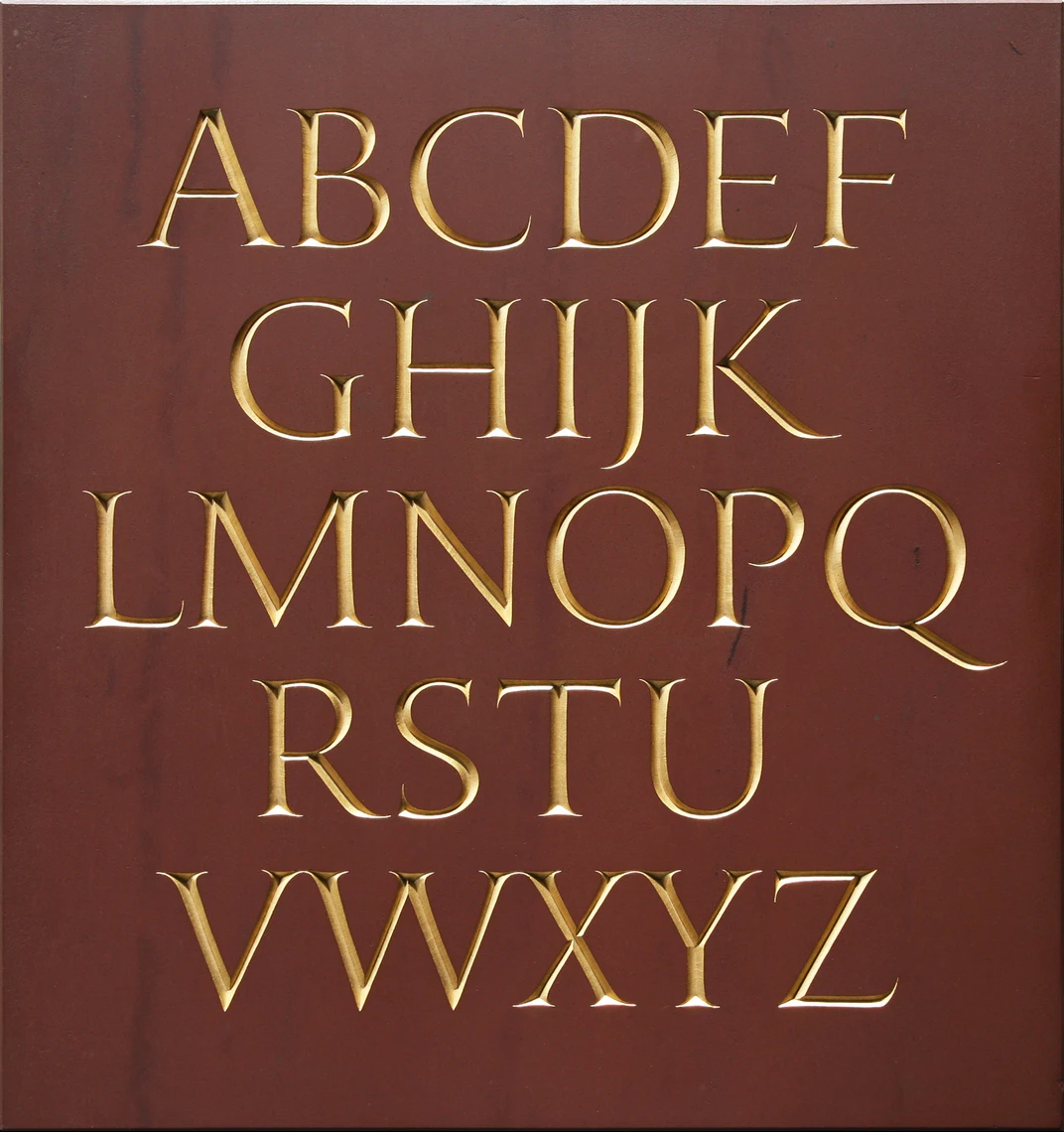
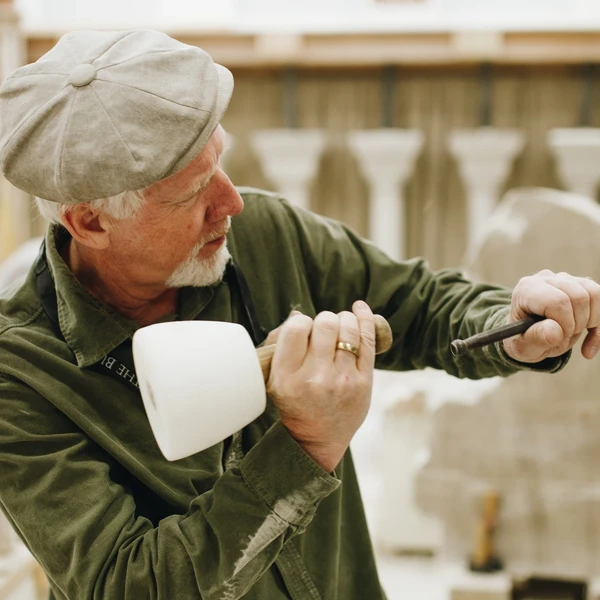
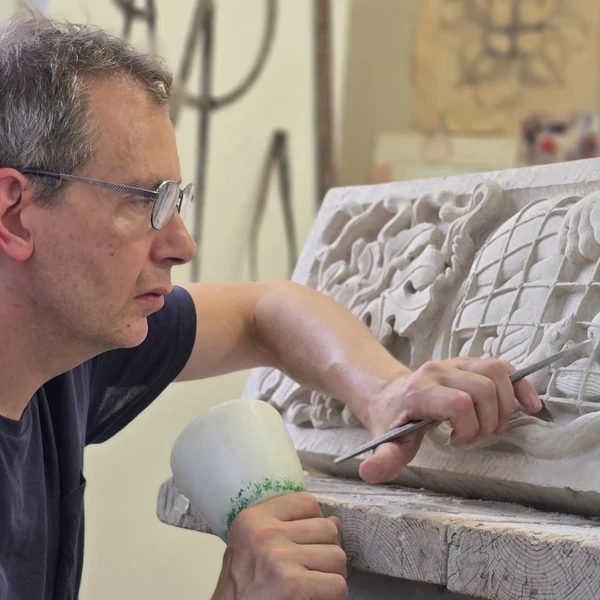
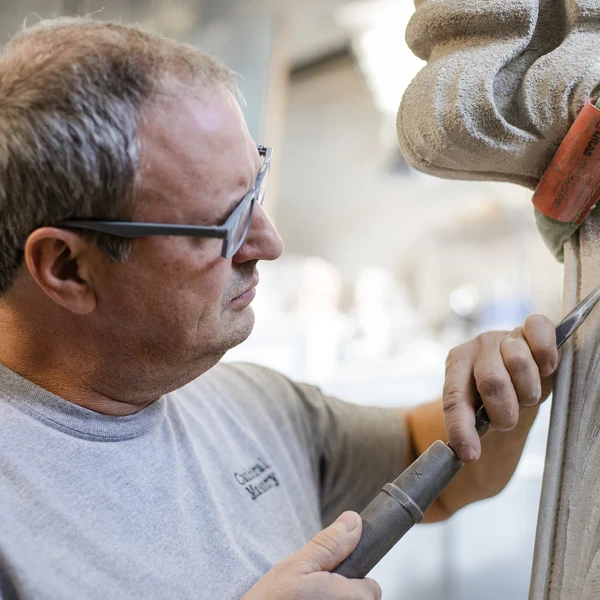
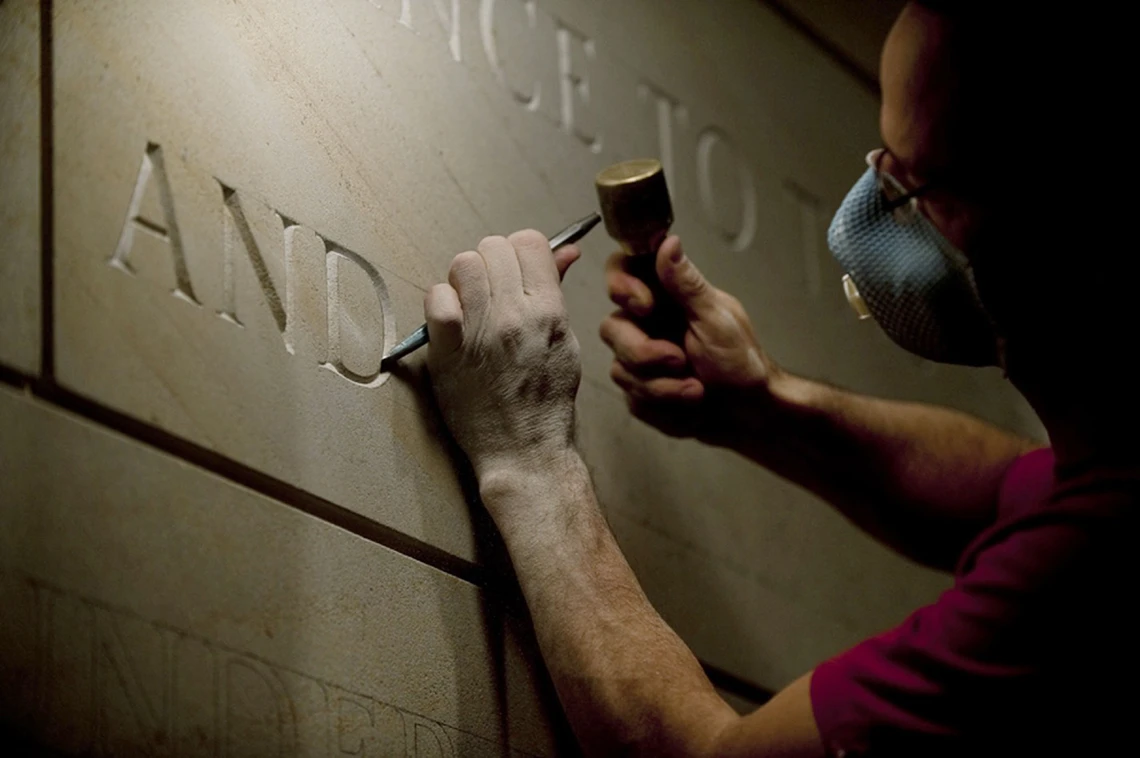
Like his father and grandfather, he excels in creating one-of-a-kind lettering in the manner of the great Roman inscriptions crafted 2,000 years ago. Letters are first painted with a broad-edge brush, then incised in stone with hammers, mallets, and chisels. “Each step of the process is a step of refinement,” he says. “You want the layout to become better and better as you go along. And the final word is the mallet and chisel.”
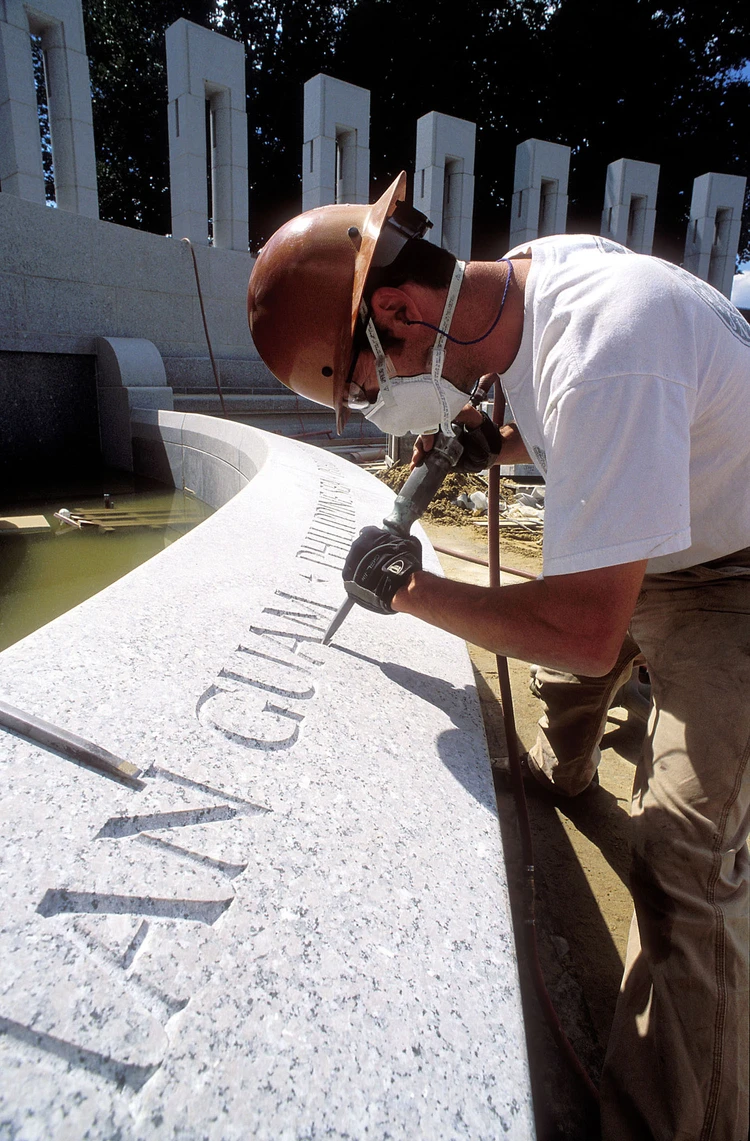
Benson’s deep working knowledge of his raw materials—his keen understanding of the qualities and characteristics of many different types of stones—is a key factor in designing and executing successful inscriptions in stone. “The limitations of what you’re able to do in any given material dictate the approach to any given inscription,” he stresses. The end result is a work of art infused with the beauty and nuance of the human touch from start to finish.
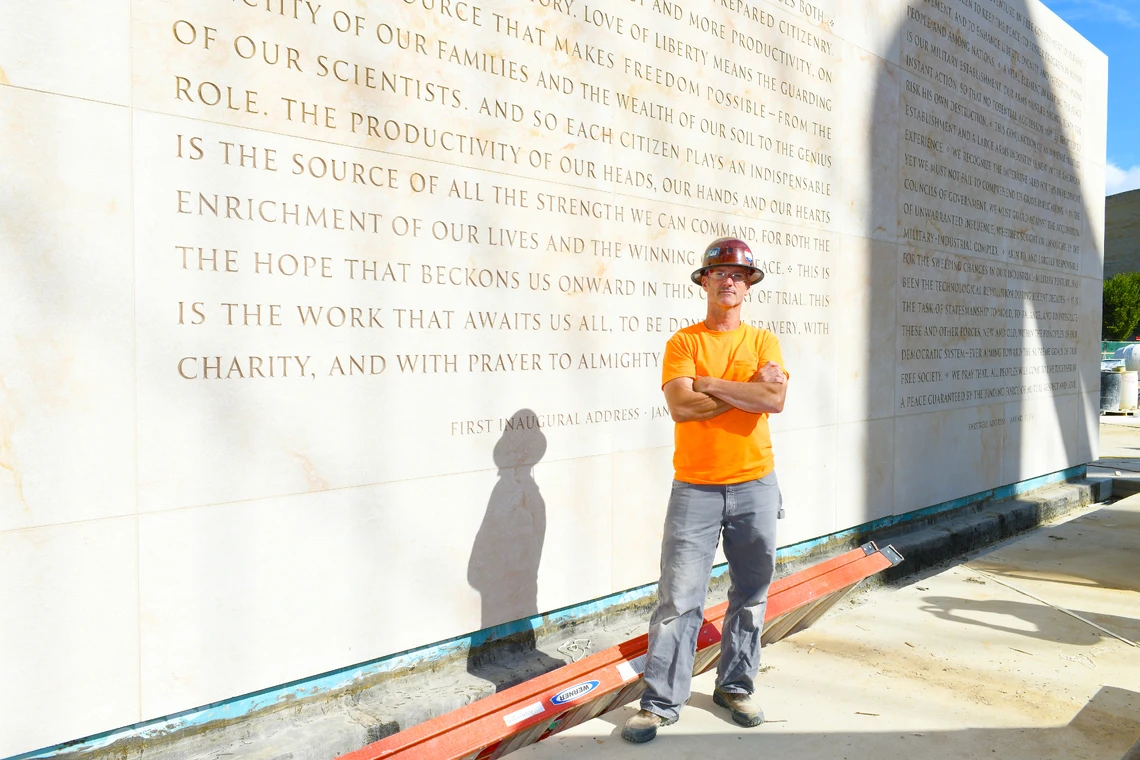
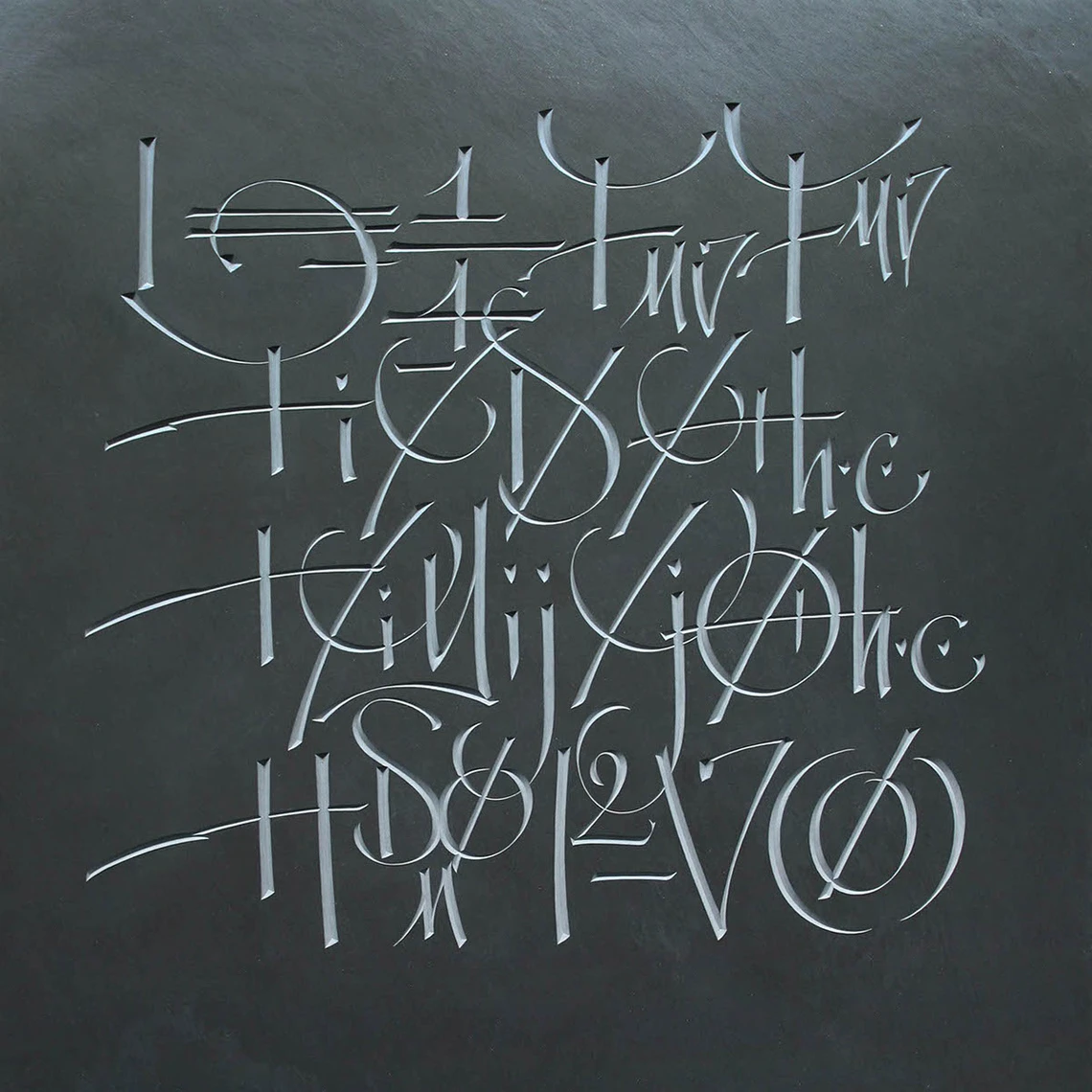
A master of letter form, Benson designed and carved the inscriptions for the National World War II Memorial, the National Martin Luther King, Jr. Memorial, and the Dwight D. Eisenhower Memorial in Washington, D.C. He has created inscriptional work for the National Gallery of Art, the Washington National Cathedral, the Civil Rights Memorial in Montgomery, Alabama, and numerous other architectural projects, as well as finely carved stone markers and tablets for clients across the country. Since 2013, he has been designing and carving symbolic texts in contemplation of the complexities of digital communication in the Information Age.
In 2007, Benson received a National Heritage Fellowship from the National Endowment for the Arts, the nation’s highest award for excellence in the traditional arts; in 2010, he was awarded the prestigious MacArthur Fellowship; and in 2024, he was bestowed an honorary doctorate degree from the Rhode Island School of Design.
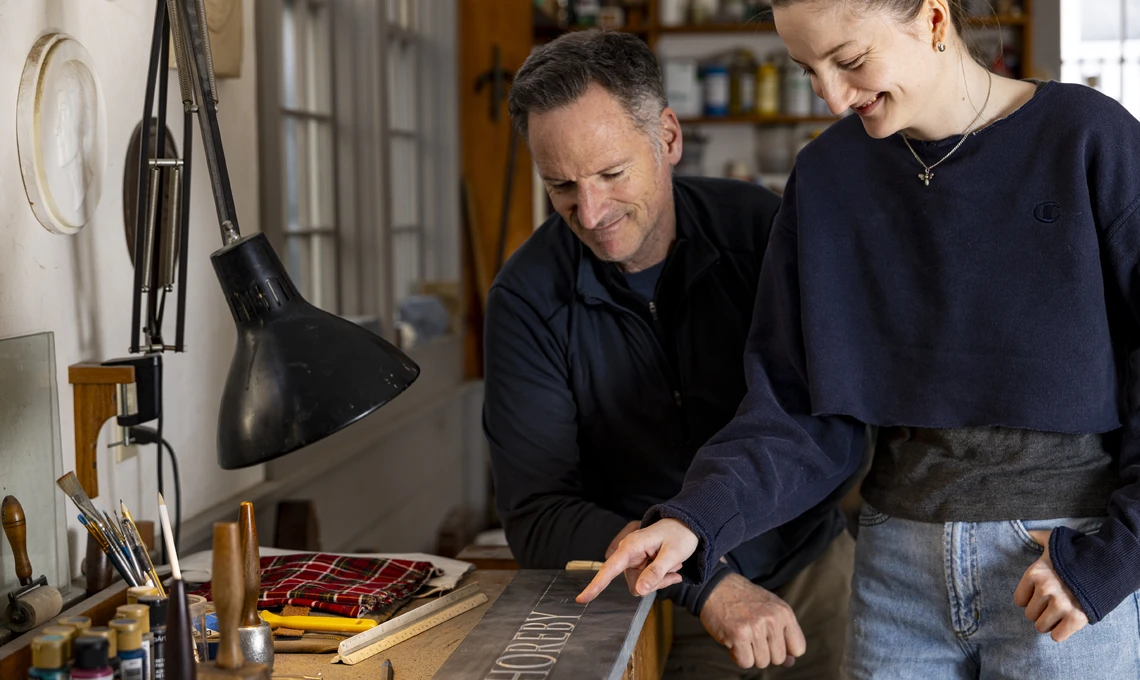
He is proud that his daughter, Hope Benson, a fourth-generation carver, has joined the John Stevens Shop, adding her own unique stamp to the Benson tradition.
Learn More
-
“Written in Stone: Master Stone Carver and Letterer Nick Benson”
-
Story Circle: Stories in Stone: Master Artisans on Tools, Technique, and Meaning (2021 Festival)
-
“Something AI Cannot Generate: A Call to the Building Arts” (Festival Blog)
-
Good Work: Masters of the Building Arts (film)
-
The John Stevens Shop
-
Nicholas Benson (MacArthur Foundation)
-
Pace Matters | Nick Benson | TEDxBeaconStreet (video)