
Kenneth Schwarz
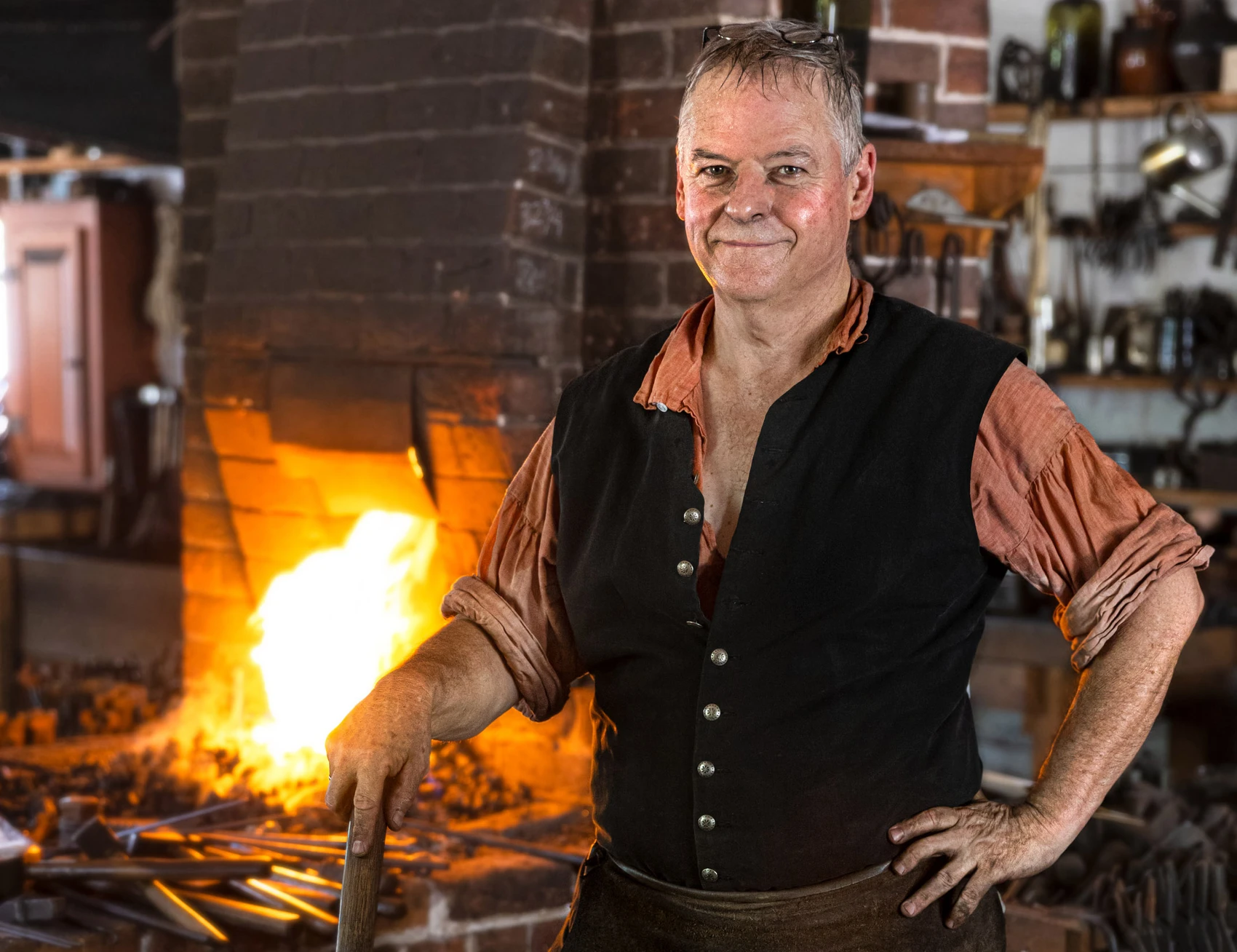
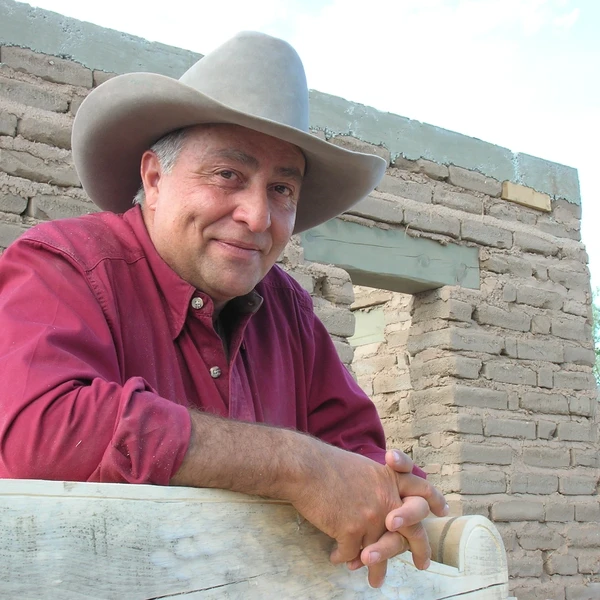
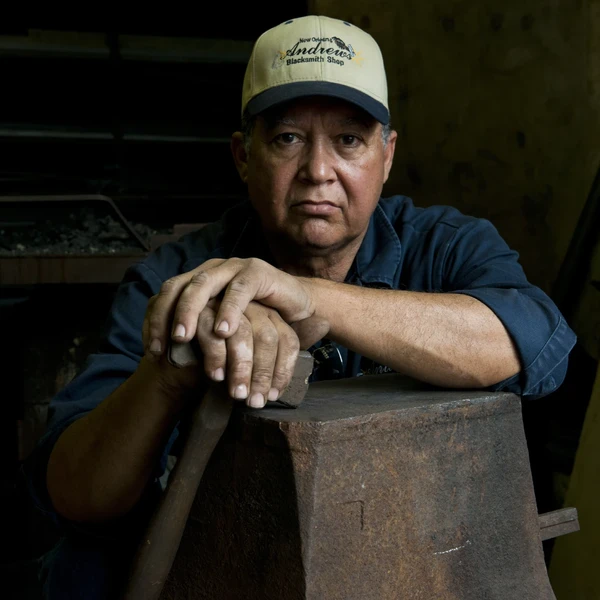
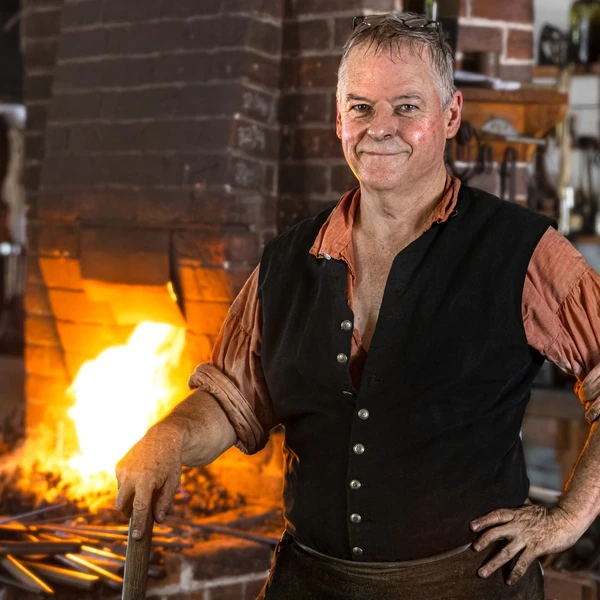
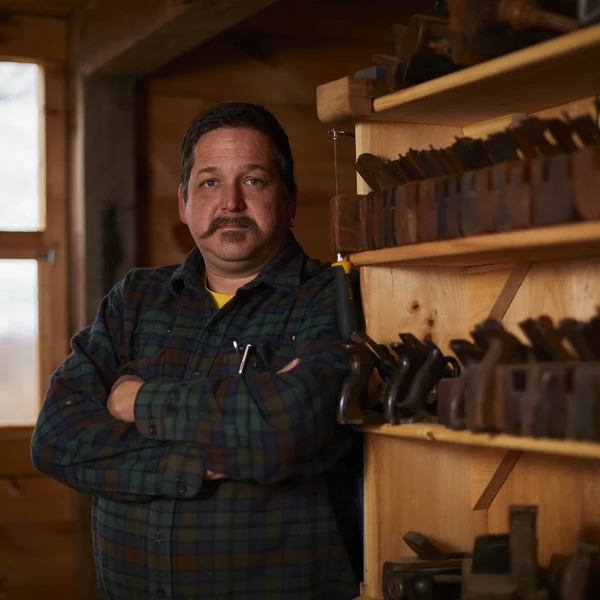
The James Anderson Blacksmith Shop at Colonial Williamsburg has a legacy of blacksmithing going back 200 years. Since 2003, Kenneth Schwarz, a skilled artisan and talented mentor, has served as “master of the shop,” generously sharing his blacksmithing skills with visitors and apprentices alike. He and his team supply the historic complex with everything from door hinges and weathervanes to gun barrels and nails, all using eighteenth-century techniques.
Born in the prairies of south Louisiana, Schwarz first connected with the forge at thirteen years old. “I first encountered a blacksmith at the New Orleans Jazz and Heritage Festival around 1972, ’73,” he says. “There was fire, smoke. There was noise and banging on stuff—all the things you are not supposed to do as a kid. I was immediately captivated.” When he was going into his senior year of high school, Schwarz found the Carrol County Farm Museum, where he met local blacksmith Randy McDaniel. “From the very first training day, when I pulled on the bellows and I smelled the coal smoke and I made something out of iron, I was so proud of it,” he says.
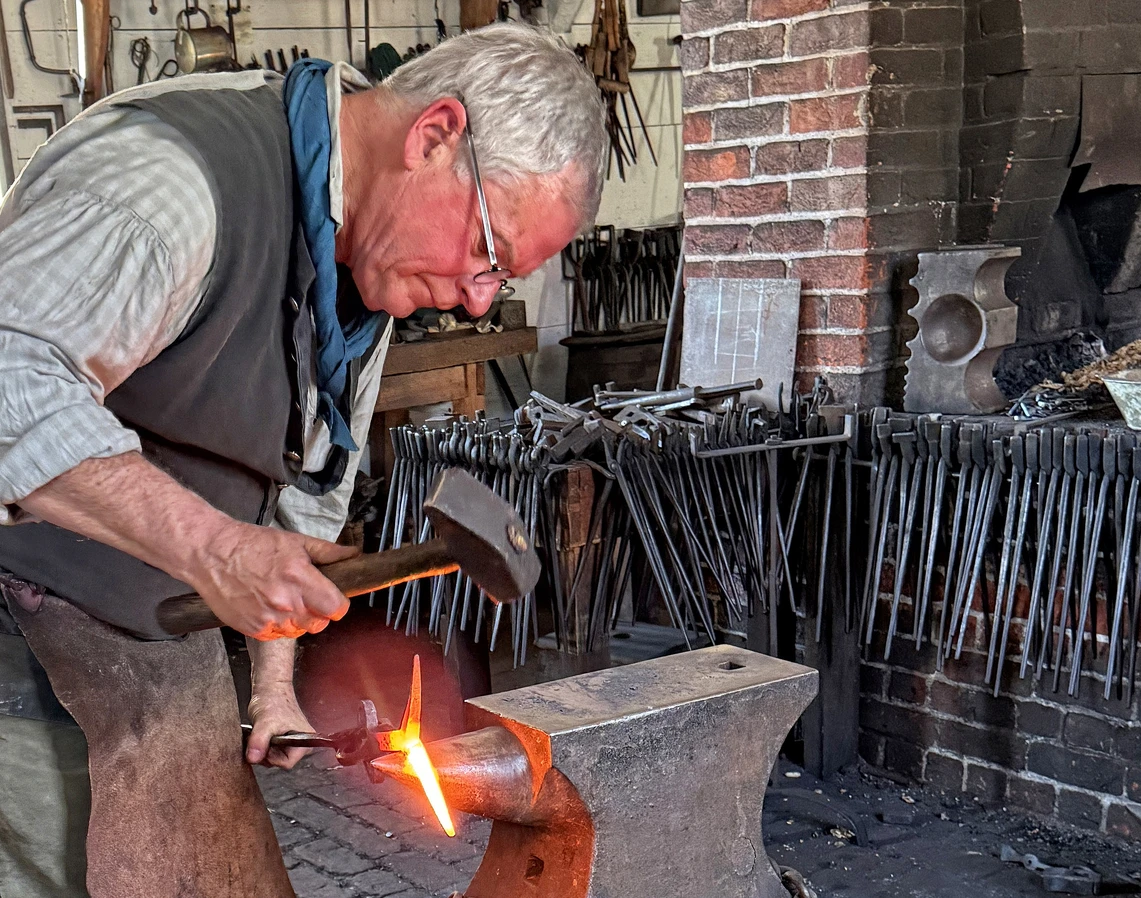
Early on, Schwarz knew he wanted to be in the field of historic restoration, and, with McDaniel’s help, he opened his own shop and grew a clientele. At twenty-two years old, he met the blacksmiths at Colonial Williamsburg and was hired in 1982 as an apprentice. “Peter Ross was the master of the shop when I started. He has a lineage that goes back to some of the early twentieth-century blacksmiths,” Schwarz says, noting the important connection this gave him to the legacy and knowledge of legendary smiths who had set the standard for historic restoration work. After six years of blacksmith training, he earned journeyman status in 1988 and later achieved the distinguished position of master of the shop.
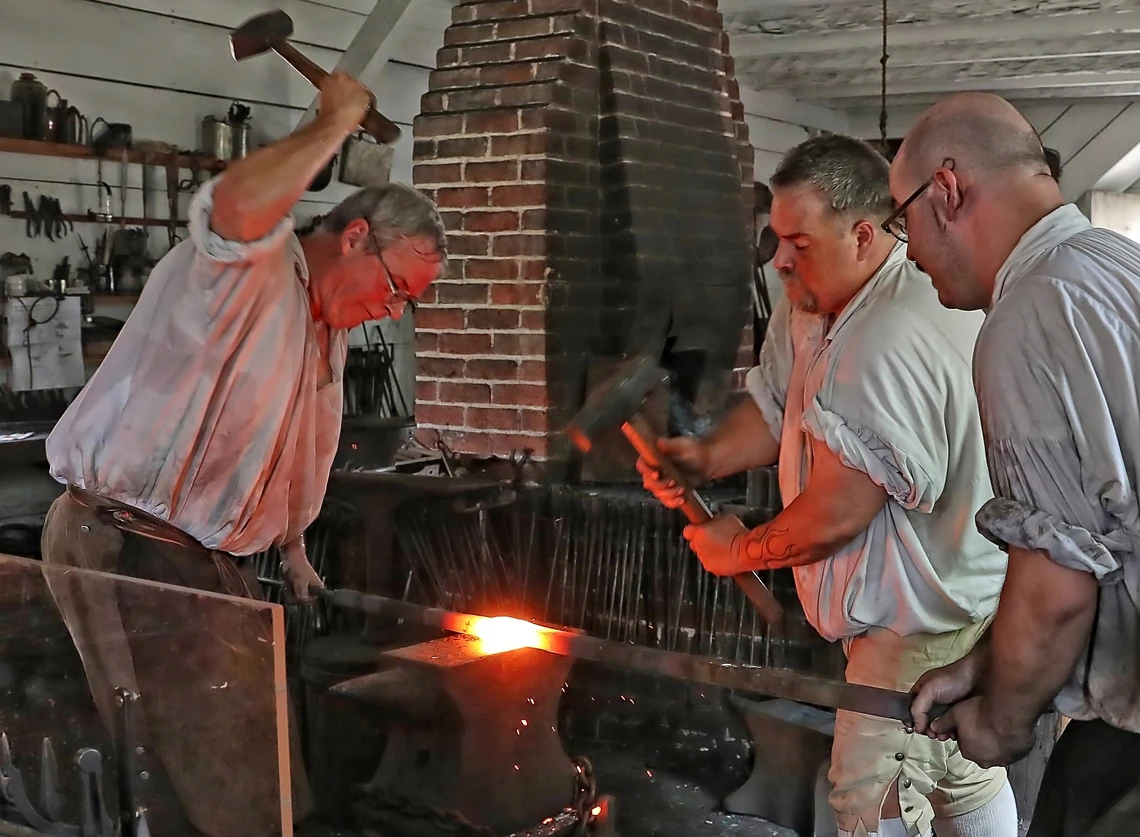
Schwarz developed a curriculum for the apprenticeship process that works well for Colonial Williamsburg, a site with historic trades programs covering twenty-two different traditional crafts. Apprentices begin by learning fundamental skills, like “drawing out and upsetting”—working to make the metal longer and thinner, shorter and thicker. Early projects include repetitive work, such as crafting hooks and nails. Over time, they advance into forge welding, a centuries-old technique that requires immense skill and a watchful eye.
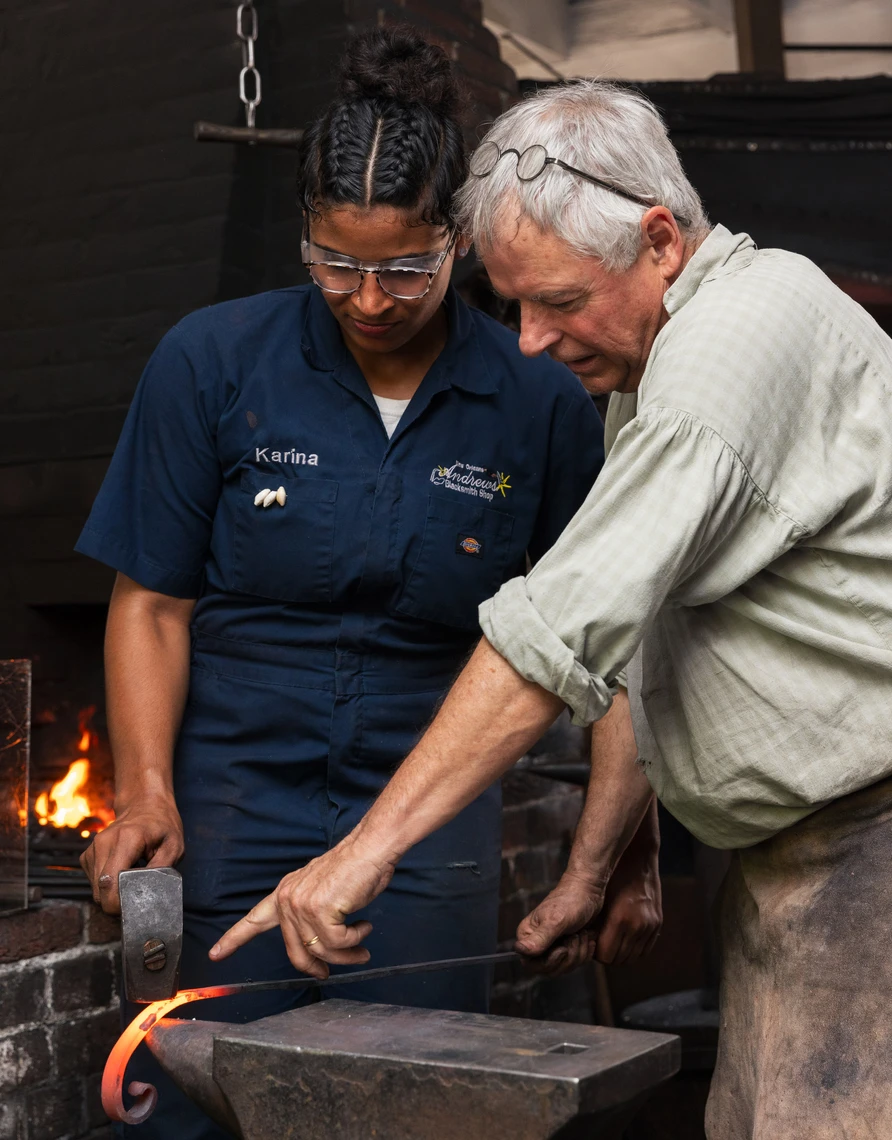
Through his teaching, Schwarz passes on the legacy of mentorship he inherited from Ross. “I have half a dozen apprentices that I’ve trained up to journeyman level, and many of them have gone out on their own,” he says. “That knowledge is part of the legacy that they’ll carry on for the next generation.” Dedicated to this work, he has built a relationship with Darryl Reeves, a master blacksmith with the New Orleans Master Crafts Guild, seeking to develop a more holistic and accurate presentation of the history of Colonial Williamsburg. Now, Reeves and his team work with Schwarz and his apprentices to demonstrate traditional blacksmithing skills for Juneteenth programming. In 2025, Schwarz hosted Reeves’ apprentice, Karina Roca, for a practicum providing her with training in forge welding and other eighteenth-century techniques.
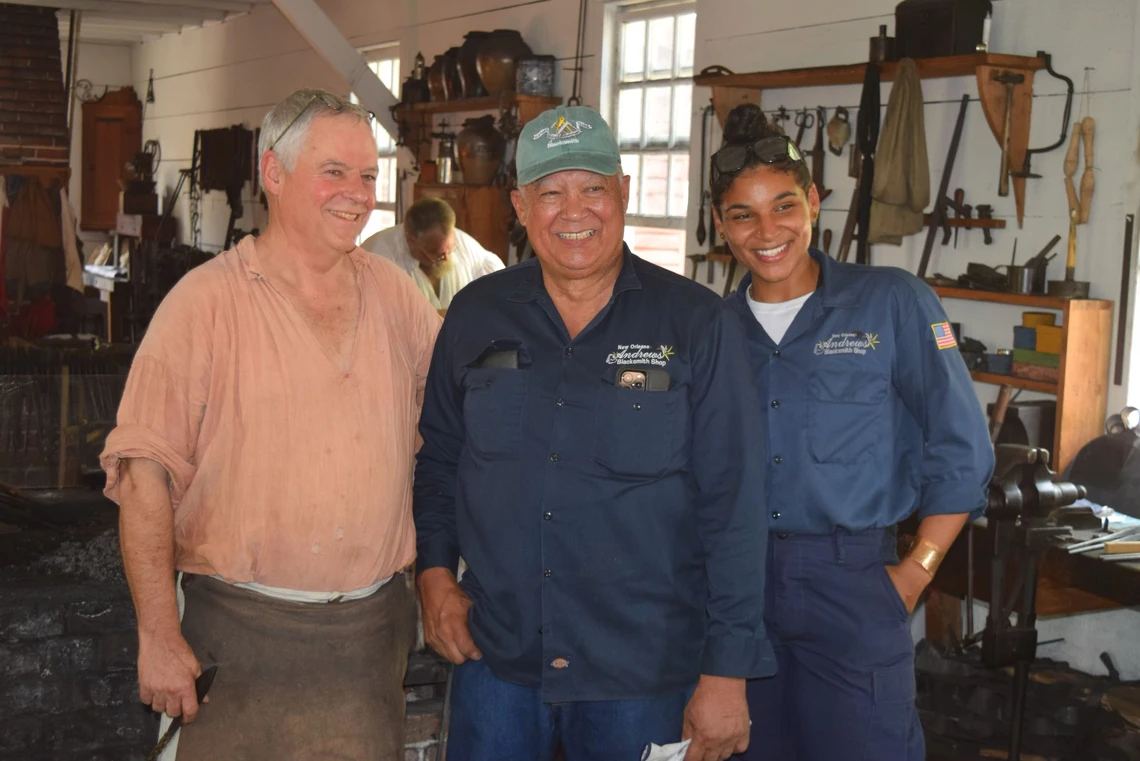
Schwarz takes blacksmithing beyond the anvil through a philosophy of preservation and intentionality. At Colonial Williamsburg, he brings history to life for visitors by utilizing traditional methods and materials. He and his apprentices and journeymen handcraft every element in Colonial Williamsburg that requires a blacksmith’s touch. Using only eighteenth-century techniques, Schwarz created an exact copy of the weathervane which sat atop Bruton Parish Church for 240 years. “It’s really satisfying knowing that my work will live on like that,” he says. Today, you can find his handiwork at historic sites such as Monticello, Mount Vernon, the St. Louis Arch, and, of course, Colonial Williamsburg. Always humble, he states, “It’s been a privilege to help preserve some of that culture and share it with others.”