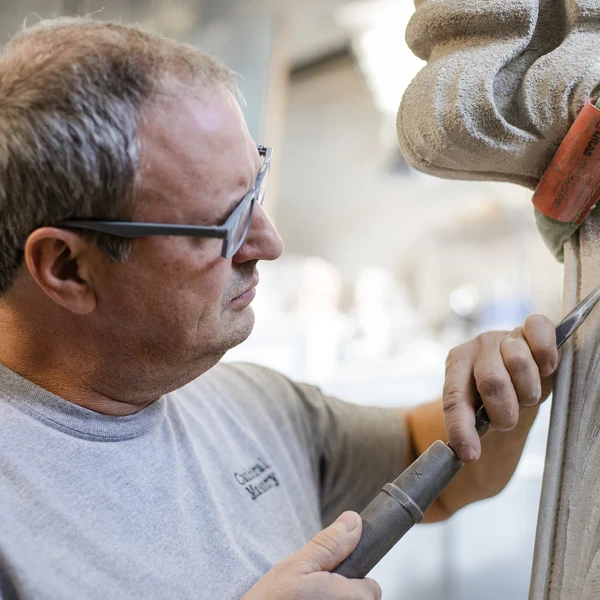

Joseph Kincannon
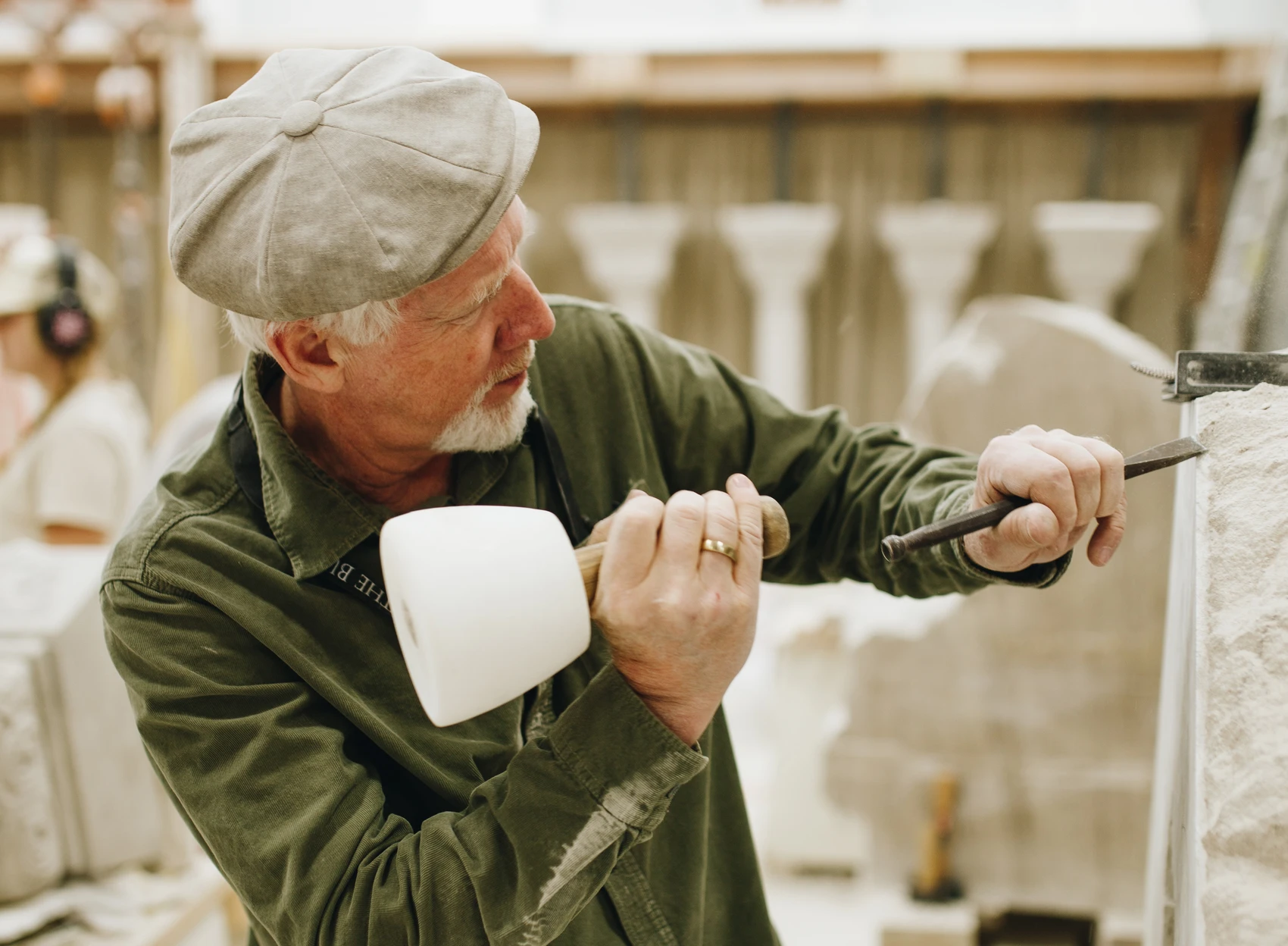
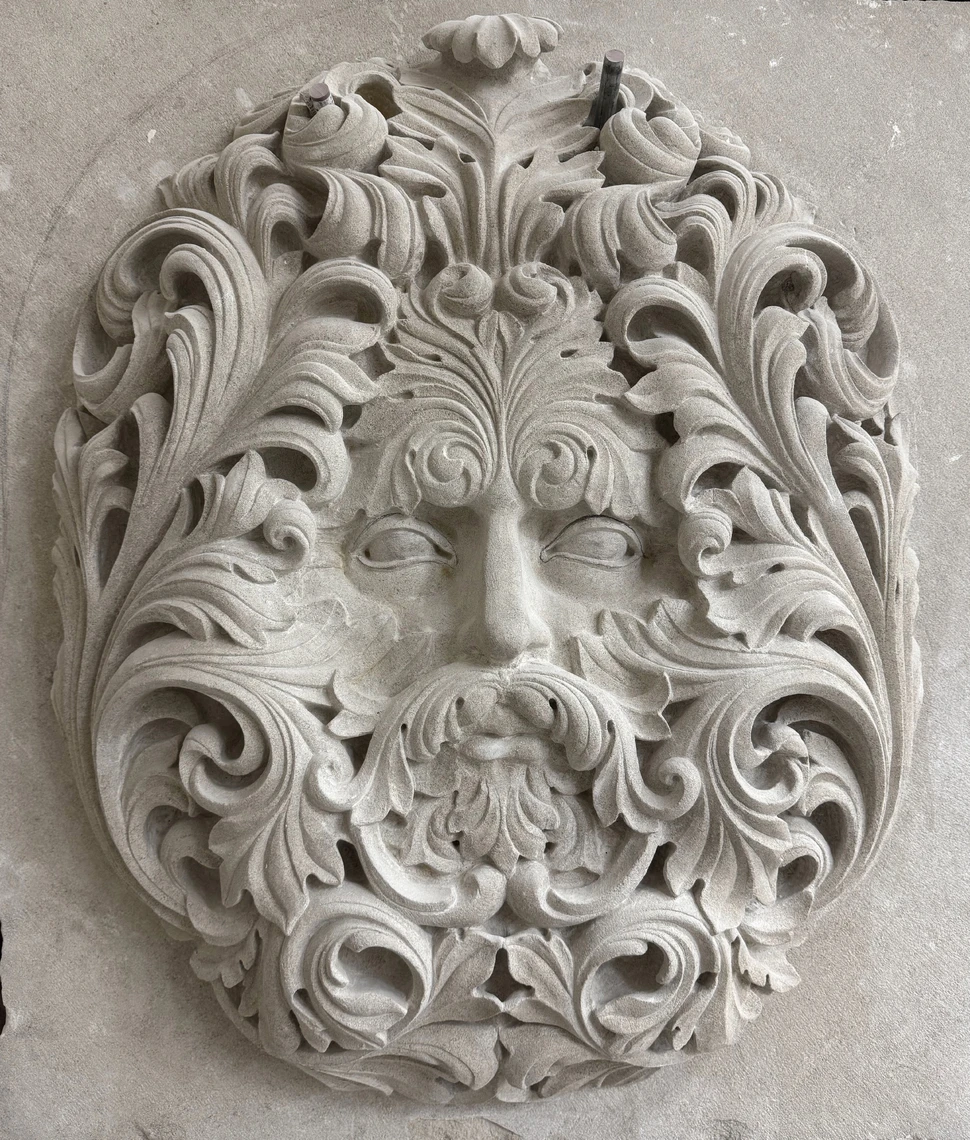
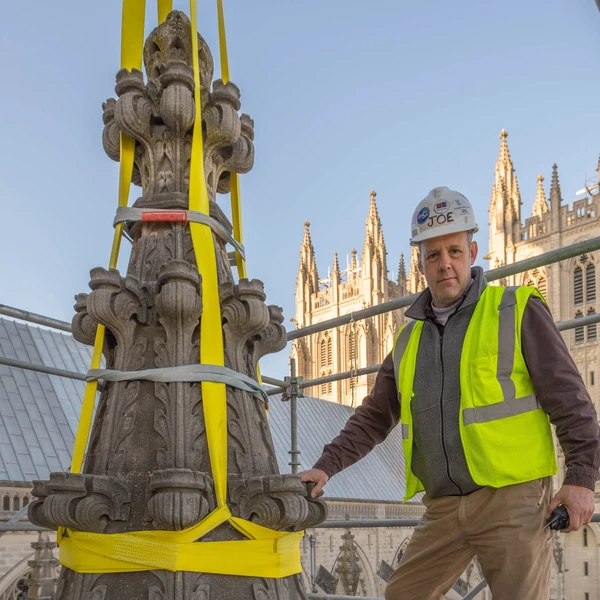
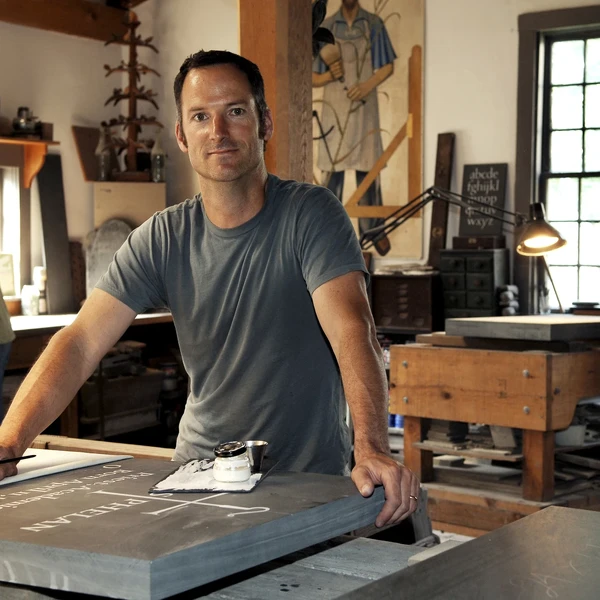
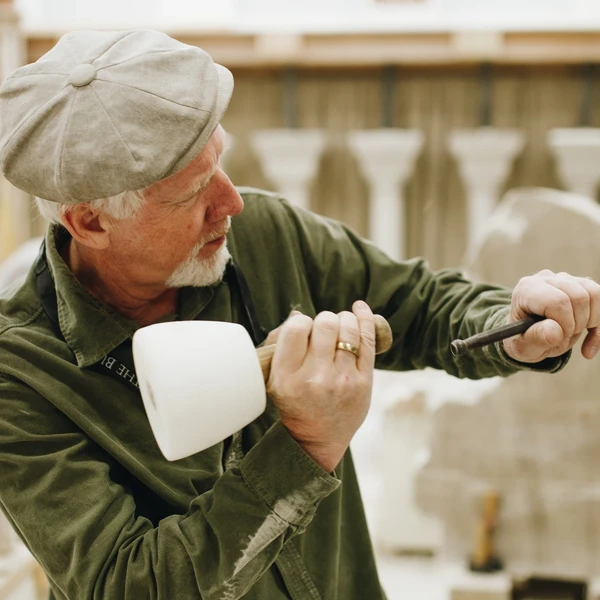
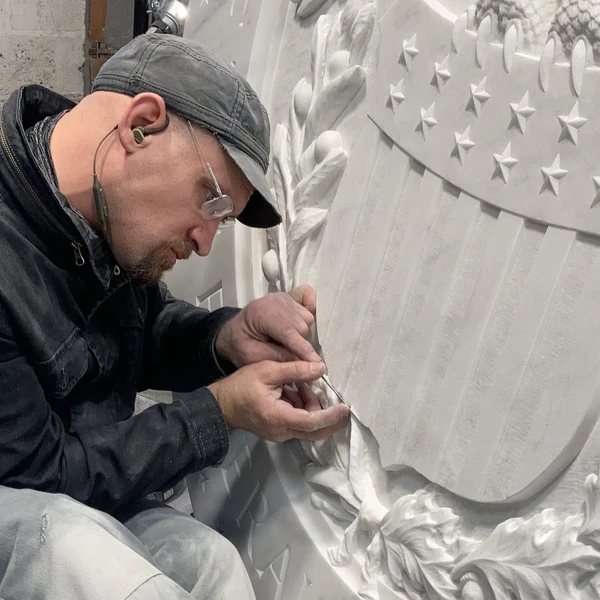
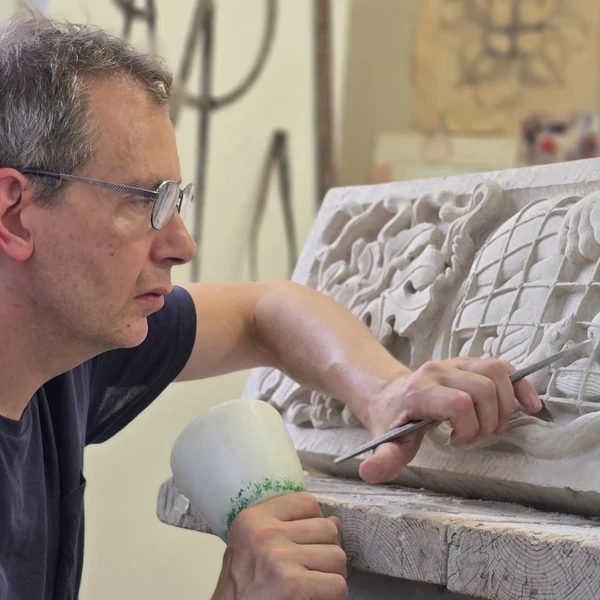
A skilled stone carver and dedicated teacher, Joseph Kincannon specializes in architectural sculpture—crafting beautiful hand-carved creations for restoration projects and new buildings. “It’s our job to add the human touch, to bring life to the stone,” he says of the carver’s art. He is passionate about his work mentoring a new generation of stone carvers through his role as chair of the stone carving department at the American College of the Building Arts.
Kincannon describes his start in the trade as something he “fell into by chance.” Raised in a small rural community in western Massachusetts, he moved to New York City after high school and took a job in the gift shop at the Cathedral of St. John the Divine, just as they were beginning an ambitious stone-building program to complete the cathedral’s two west towers.
Inspired by the old carvings that surrounded him on buildings throughout New York and captivated by the hive of activity in the cathedral’s stone yard, Kincannon applied to the cathedral’s world-class stone cutting and carving apprenticeship program. For seven years, he served a rigorous apprenticeship, learning all aspects the trade from highly accomplished master masons and carvers from England who had been hired to help finish building St. John the Divine, a magnificent Gothic-style structure which had been started in 1892 but whose construction had lain largely dormant since World War II.
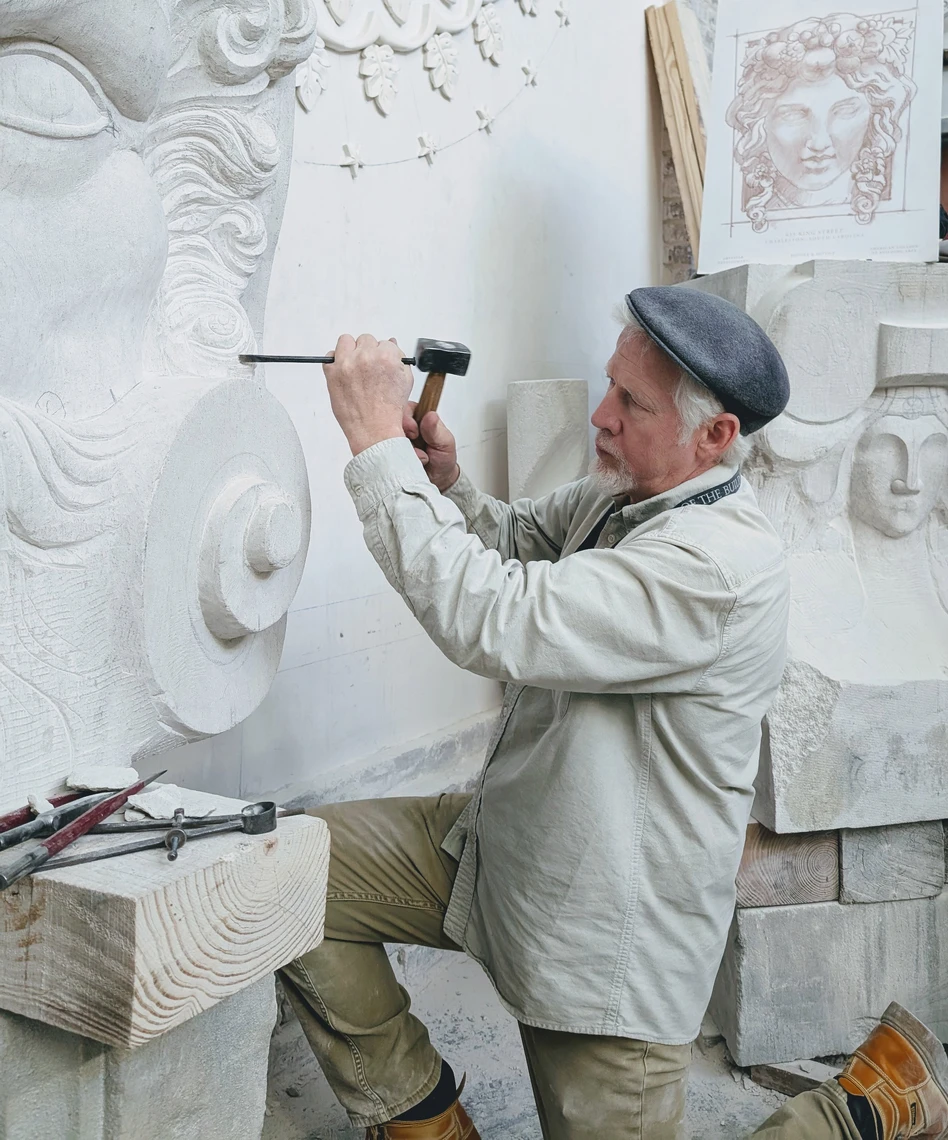
Starting out as a sawyer, Kincannon moved his way up to banker masonry, where he learned to cut flat surfaces and complex geometric forms, then graduated to carving intricate ornamental work. “We were taught by hand, just mallet and hammer,” he says. “Then after a year you would graduate into pneumatic air hammers. Once you’re locked into the process of removing stone by hand, you’re completely consumed by it.” He earned guild certifications, both as a carver and a mason, and went on to become the lead carver for Cathedral Stoneworks, heading up a department of talented carvers who continued to build St. John the Divine, as well as work on other major stone projects in New York City.
In 1992, Kincannon and his wife Holly, a preservation architect and carver, moved to Austin, Texas—one of the “limestone capitals” of the country—where they opened their own interdisciplinary studio, ARCHAIC (now Kincannon Studios). They focused their energies on restoring historic stone courthouses, carving commissions for new homes, hand-lettering stone inscriptions, crafting large-scale architectural sculptures, and, very importantly, taking on apprentices: training the many young people who came by their shop interested in learning the stone carving craft.
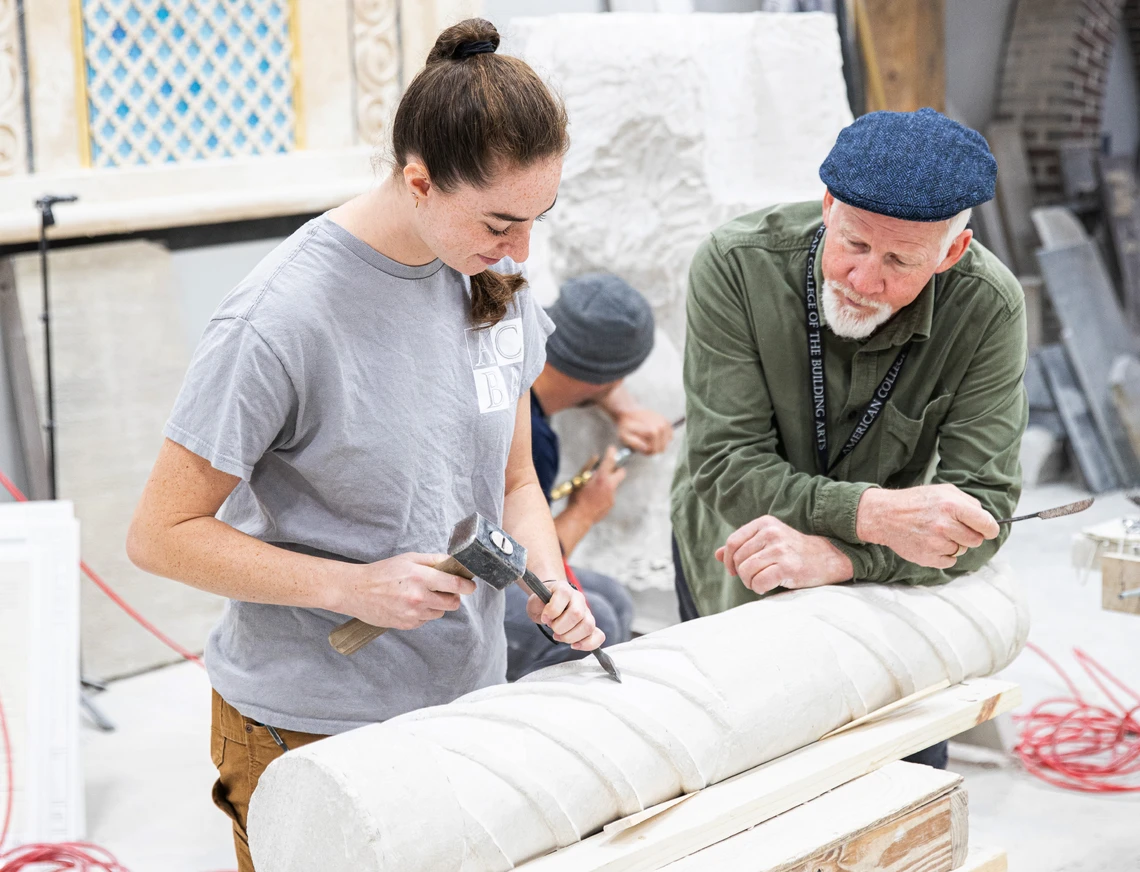
Kincannon’s commitment to training has stayed with him throughout his career. After moving back east to Savannah, Georgia, he became the head of the stone carving program at the American College of the Building Arts in 2022. It’s a job that he loves, both for the opportunity it gives him to pass on his knowledge to the next generation and to grow as a carver himself. “You’re always learning from the people you teach,” he says. “I find having students always expands my horizons.”
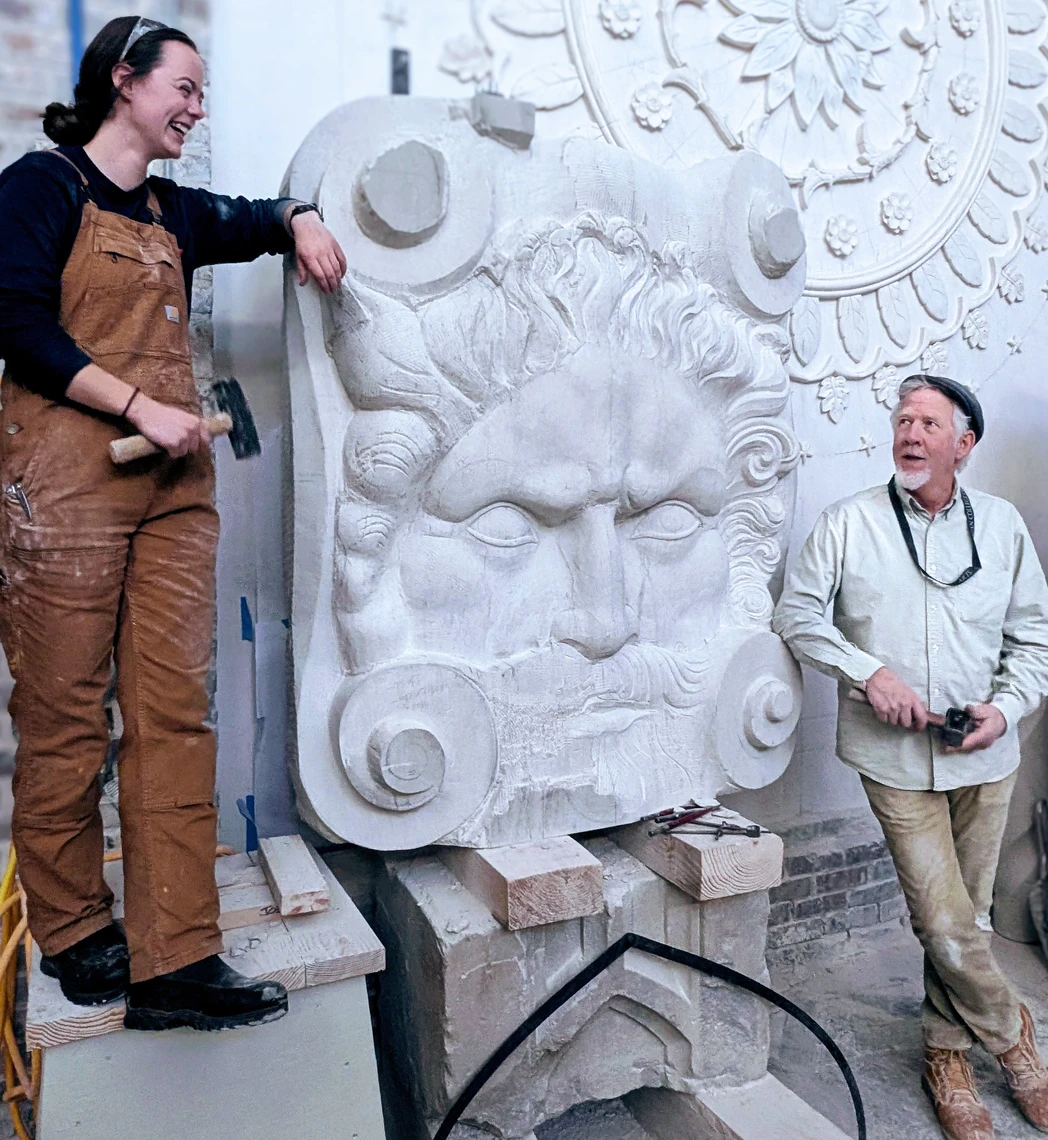
The talented young people he teaches continually inspire Kincannon with their eagerness to learn and desire to excel. “I think what attracts young people to this craft is the physicality,” he says. “We’ve strayed so far away from that—working with our hands—and we’re in pretty rough shape in this country because of it. We’re short in most of the trades.” He is encouraged by the expanding career opportunities he sees for skilled stone carvers and heritage masons, especially in the field of historic preservation.
“We have all these old buildings in cities that are falling into disrepair, and there are practically none of us to keep these places up and in good shape. So there’s a real need for young people to do this kind of work.”
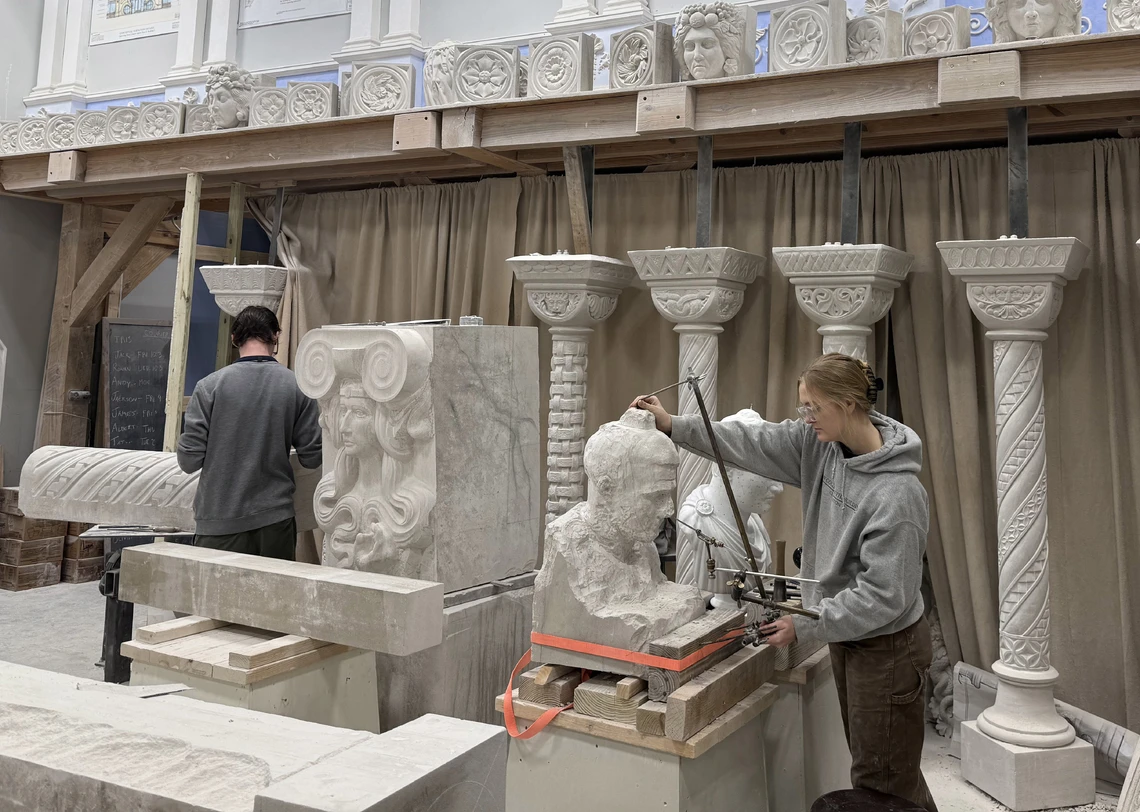
What Kincannon loves most about his trade is the creative act of carving itself. He sees a comparison between stone carving and jazz music. He is happiest when he’s “getting lost in the stone,” experiencing the freedom and flow, the “expression and poetry,” of carving fanciful Romanesque-style foliage and flowers or crafting lively Gothic-style embellishments. Yet at the same time, he respects and honors the need for discipline and adherence to the requirements of the larger architectural project at hand. “You have to be in tune with the building that you’re working on,” he says.