
Sean Callahan
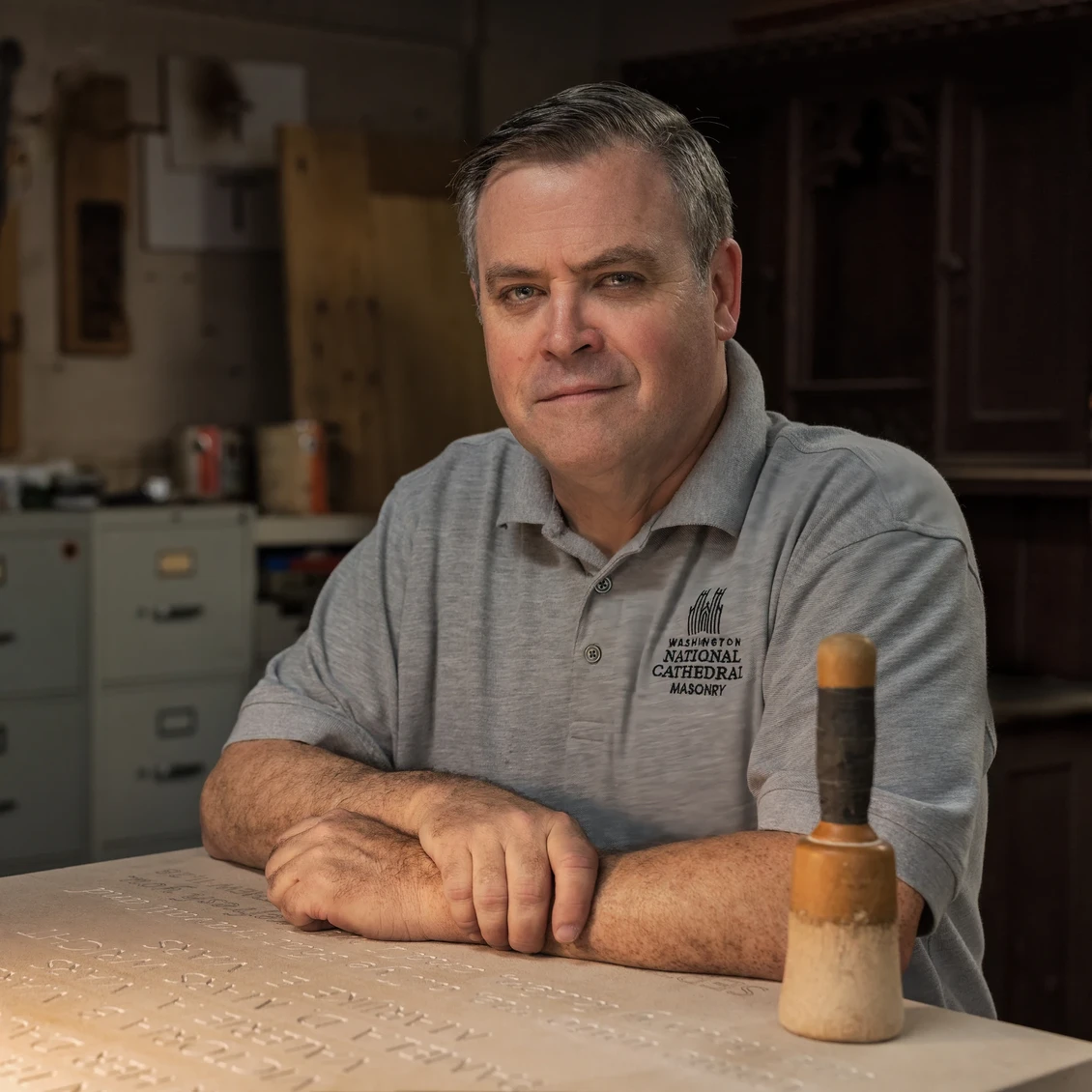
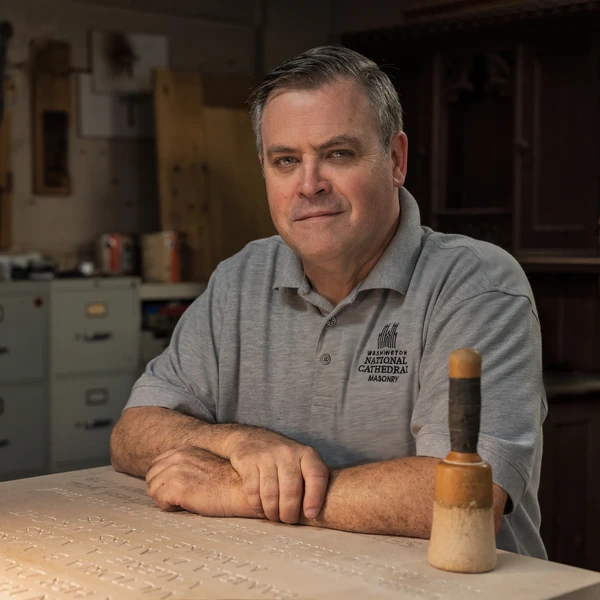
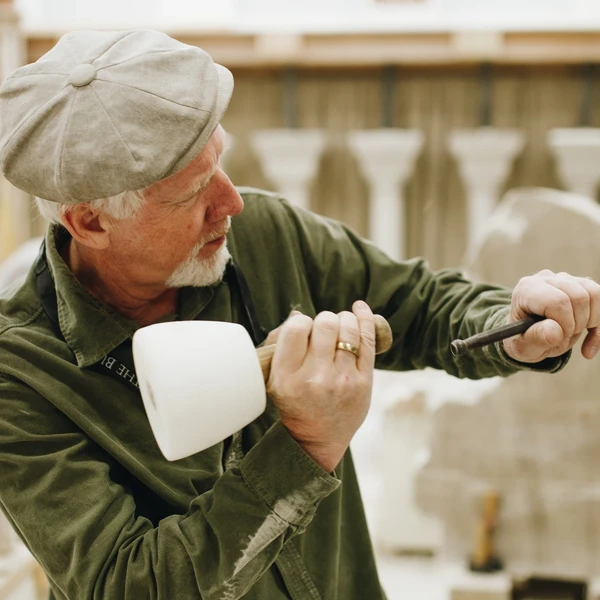
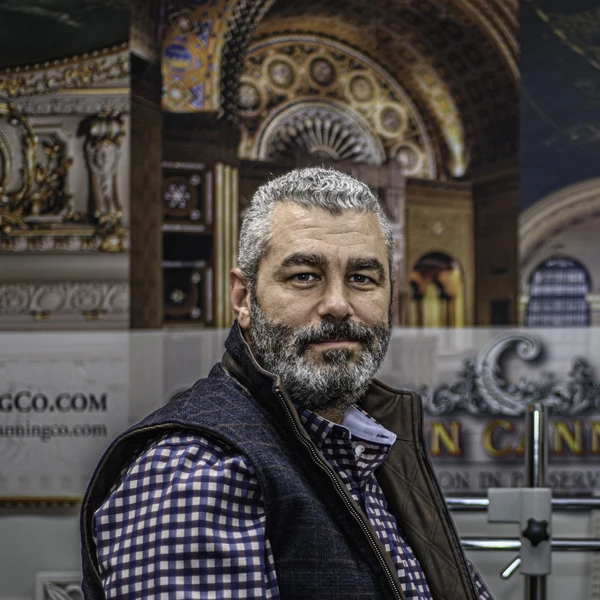
Sean Callahan began his stone carving career as an apprentice at Washington National Cathedral in 1987, crafting new Gothic-style works for the Cathedral while it was still under construction. Today, he devotes his talent as a highly skilled stone carver and mason to restoring the nearly 120-year-old historic structure after it suffered severe earthquake damage.
While in college, Callahan happened to watch The Stone Carvers, a documentary film produced in collaboration with the Smithsonian Center for Folklife and Cultural Heritage about the Italian American master artisans at the Cathedral, and he was intrigued by the idea of a career as a stone carver. He decided to apply for a position with the Cathedral’s stone carving team, and after a year of waiting to hear back, he was brought on as an apprentice, working under the direction of master stone carver Vincent Palumbo.
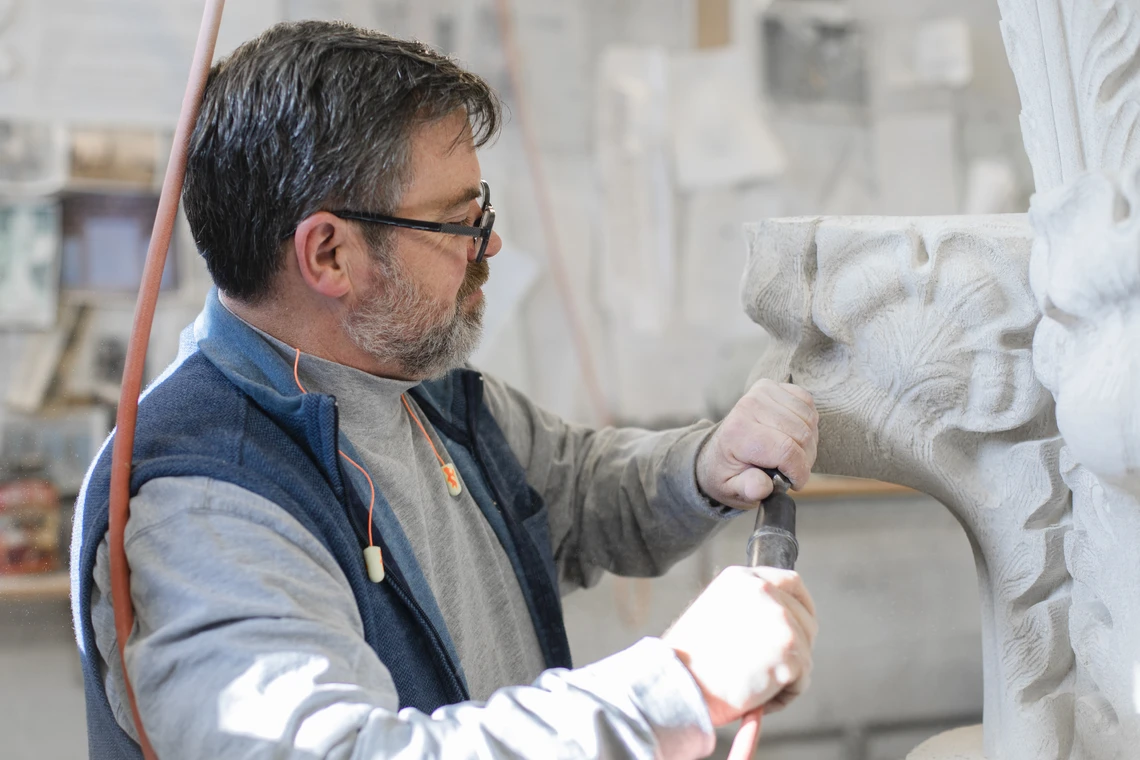
In a small carving workshop bustling with about a dozen apprentices, Callahan learned how to carve intricate finials, angels, crocket stones, and other decorative details of Gothic architecture destined for the Cathedral’s rising west towers. He describes his first day on the job as a “sink or swim” situation, picking up skills through trial and error. “You learn by doing,” Callahan says, “and the best way to learn, especially when you’re in a big shop, is you just watch the people around you. If you get in trouble, then you ask someone.” For the most part, he stresses, it’s a process of independent problem solving, with each new challenge requiring a unique approach.
After the Cathedral was completed in 1990, Callahan joined several other stone carvers working on the White House, an experience that introduced him to the world of restoration and broadened his skills. The team went from one side of the building to the other, top to bottom, addressing every course of stone. “Anything that was decayed we were doing repairs on,” he says. “With restoration, you’ve kind of got to do it all. Sometimes you’re repointing, sometimes you’re setting stone, sometimes you’re re-carving a damaged piece.”
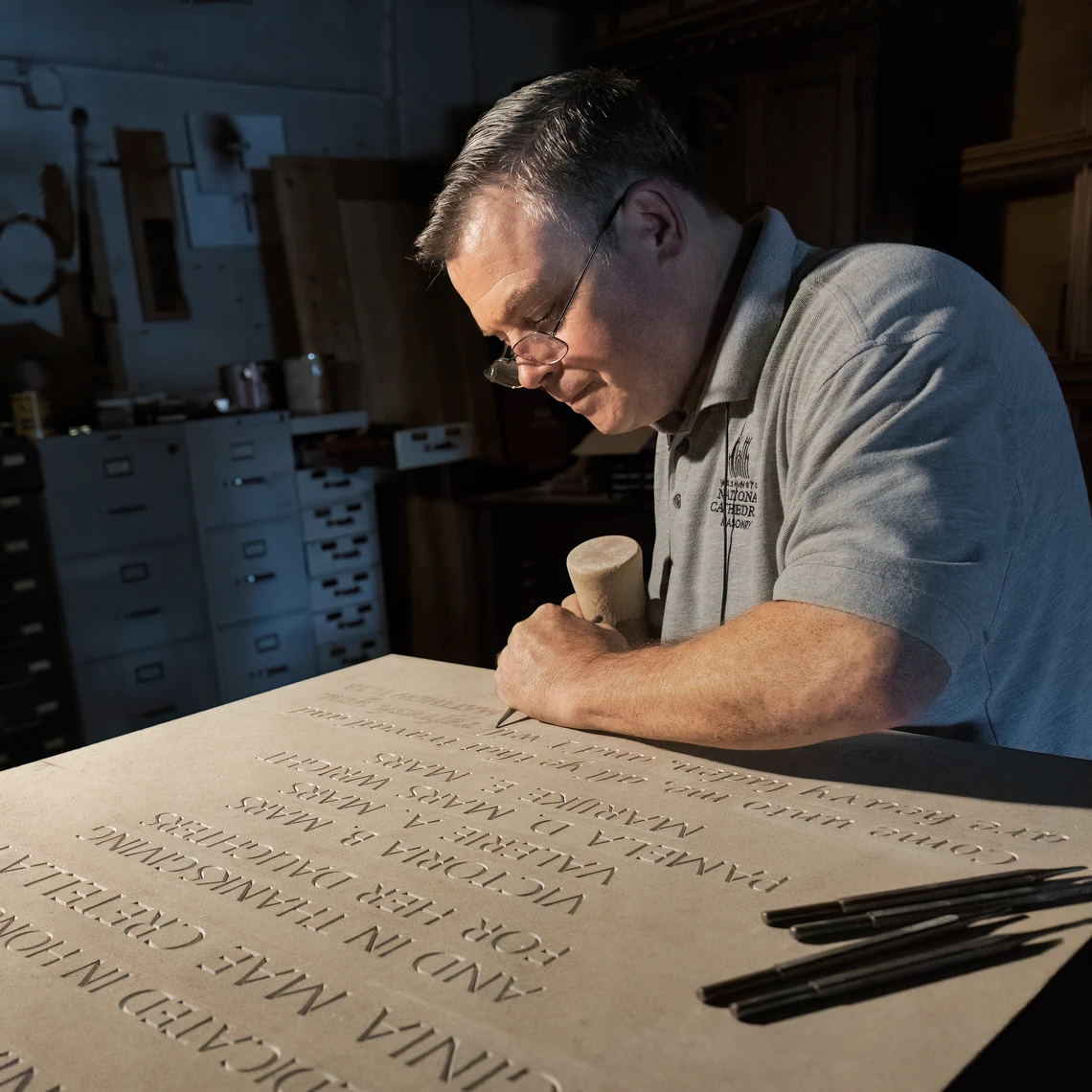
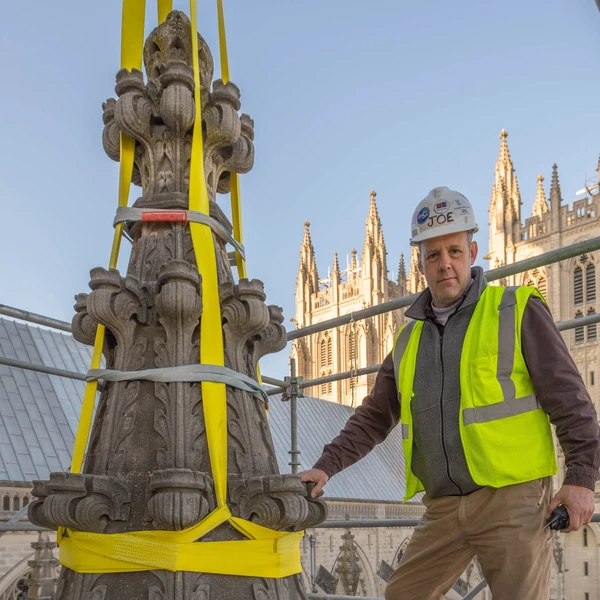
Callahan returned to the Cathedral in 2005 to work on the maintenance and preservation of the building, occasionally carving new pieces of sculpture, ornament, or lettering as needed. All that changed dramatically after a 2011 earthquake severely damaged the Cathedral’s stonework. Callahan and his team members, head mason Joe Alonso and stone carver Andy Uhl, leapt into urgent stabilization, restoration, and reconstruction mode. “There’s not many guys who have come up in this Gothic cathedral carving world,” Alonso says of Callahan and Uhl. “Thank God that we’ve got these guys who honed their skills on the west towers. We’ve got the talent with Andy and Sean to do the fine Dutchman repairs and re-carving of entire pieces that fell off.”
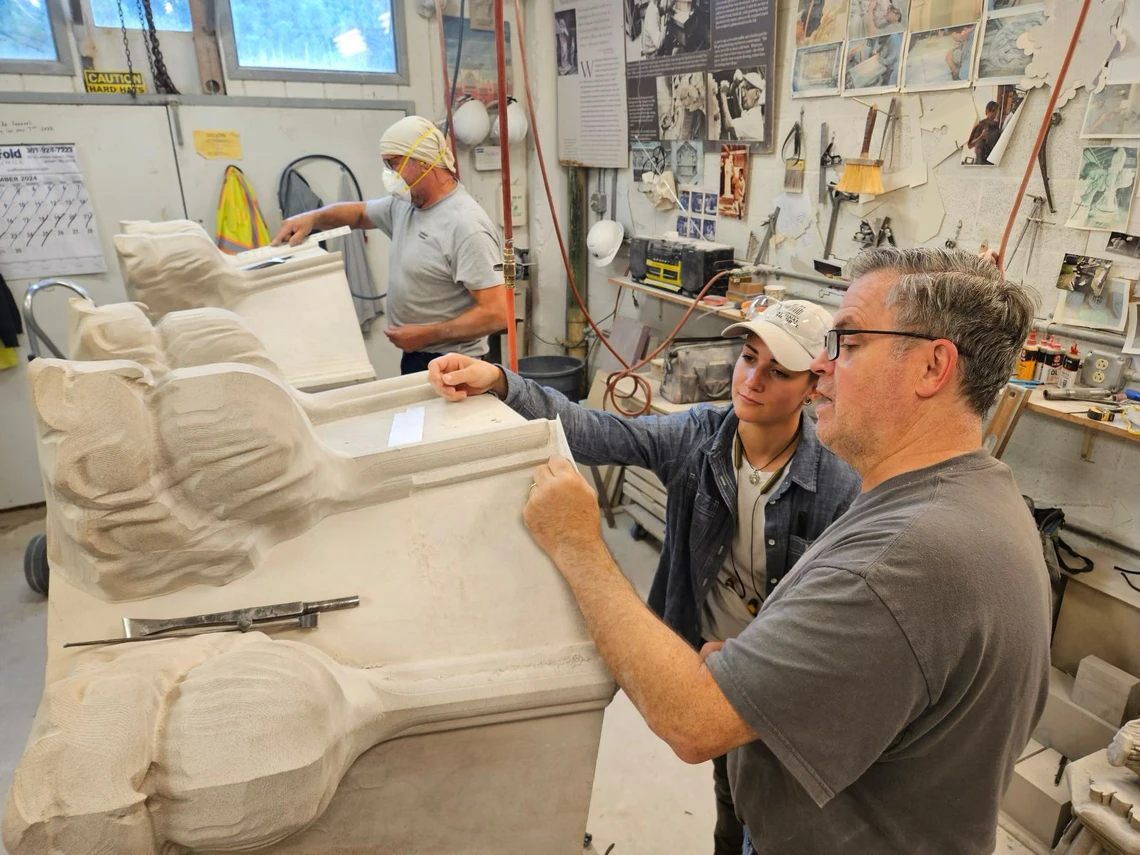
In Callahan’s view, restoration projects are in some ways more challenging than new work. “When working on new carvings, you get to use your own language, your own vocabulary of form,” he says, but with restoration, “it takes more attention and patience to replicate the hand of the original carver.” Instead of following his own system of carving, he strives to figure out the system and style of the carver who came before him. “You have to go against your instincts sometimes to try and faithfully reproduce someone else’s work. You feel relieved and satisfied when it comes out well.”
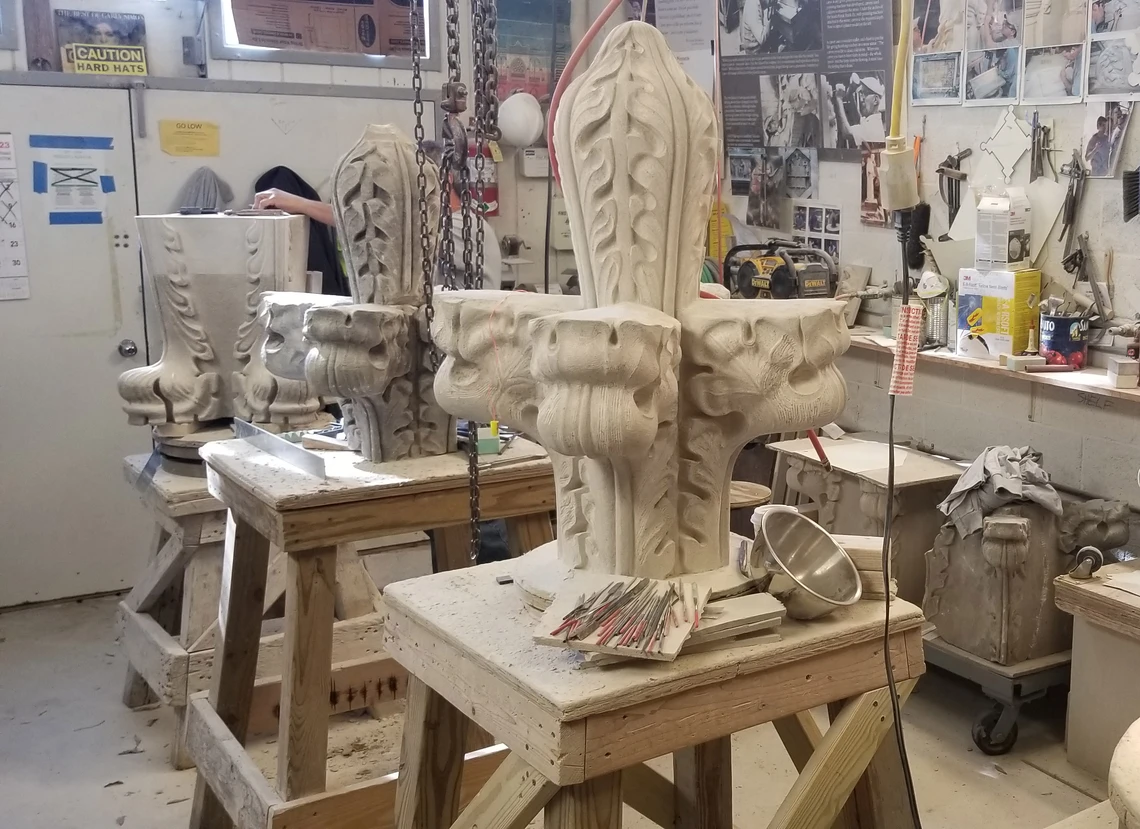
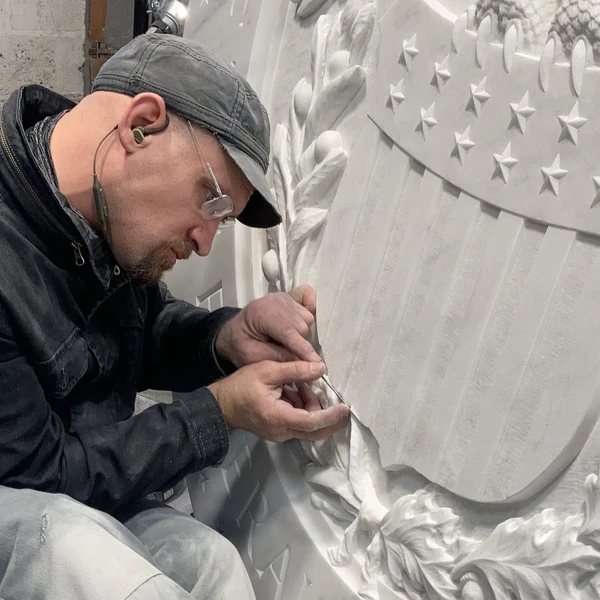
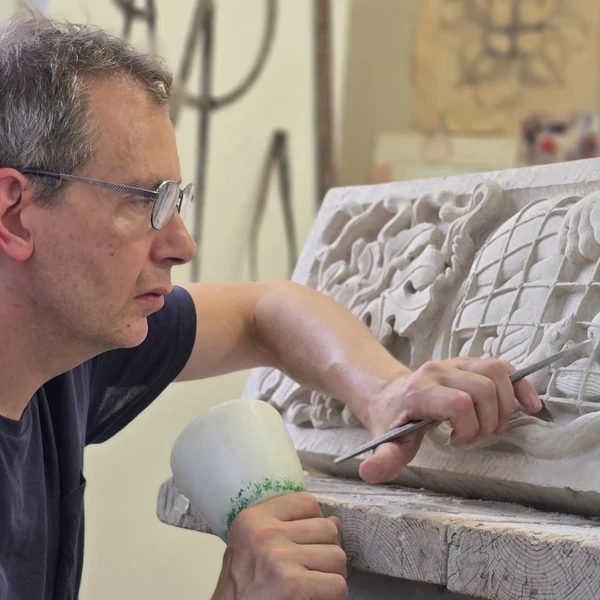
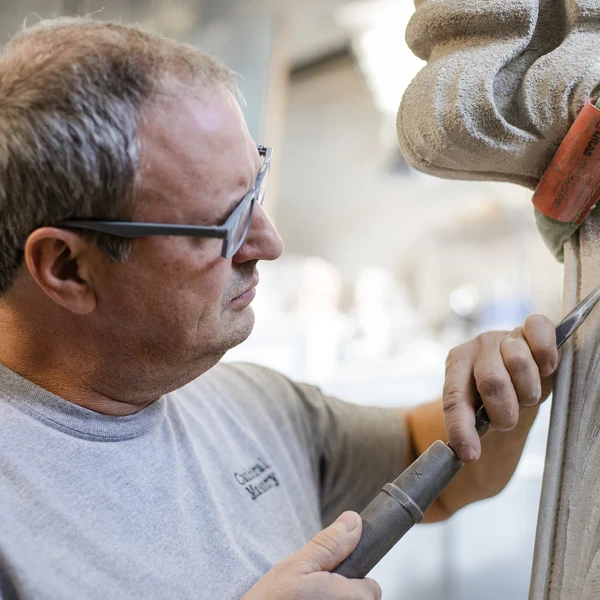
Typically, Callahan begins carving a piece using pneumatic tools and refines the details with a mallet and chisel, giving life to the stone. To aid with precisely carving a sculptor’s model in stone, he employs a pointing machine, a “three-dimensional mapping tool,” as he describes it, that relies on three points of contact to indicate exactly how deep into the stone to carve.
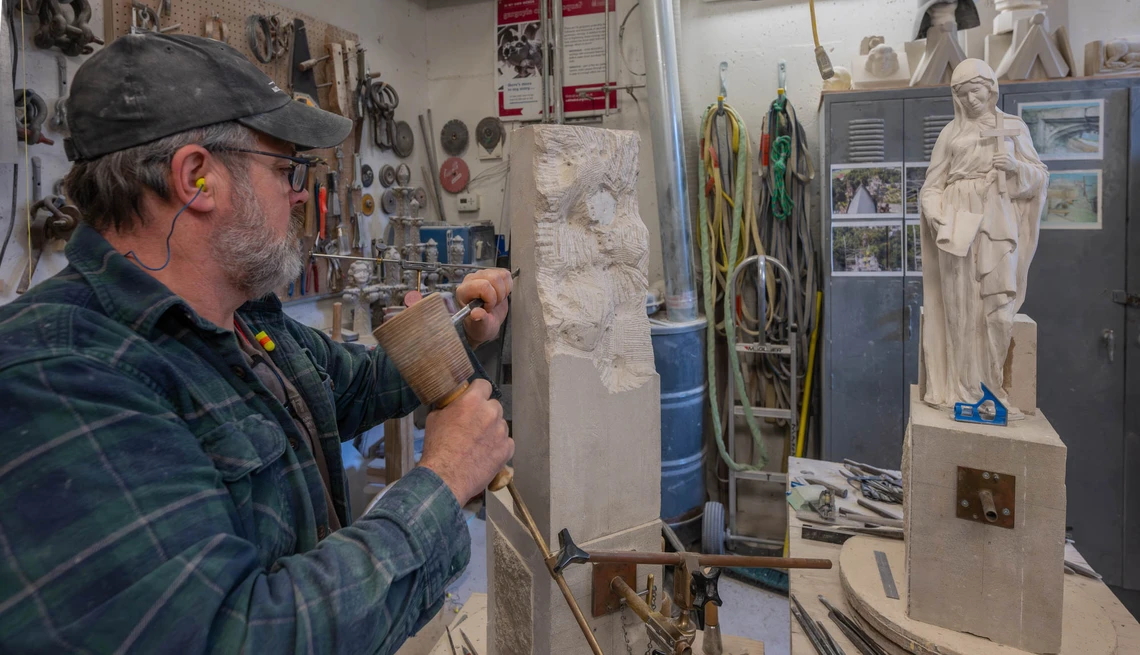
With more than thirty-five years of experience under his belt, Callahan is proud of all his work for the Cathedral, whether carving a new angel, repairing damaged stones, or repointing mortar joints. But his favorite work by far is carving sculptural pieces, collaborating closely with sculptors, such as Chas Fagan, to beautifully realize their clay creations in stone. He has carved statues of Mother Teresa, Rosa Parks, and Elie Wiesel for the Cathedral’s Human Rights Porch, and, most recently, a statue of St. Phoebe installed near the crypt. “The sculptural form was what really brought me into the trade in the first place,” he says, “and I still enjoy doing it.”