
Neil Rippingale

To Scottish-born drystone mason Neil Rippingale, common sense, hard work, and respect are essential to his profession. Educated in Edinburgh as an apprentice to legendary Scottish waller Charles Jardine, Rippingale carries on centuries-old techniques at NR Stonecraft in Louisville, Kentucky, and through numerous workshops, teaching people of all backgrounds the intricacies of building beautiful and lasting stone structures.
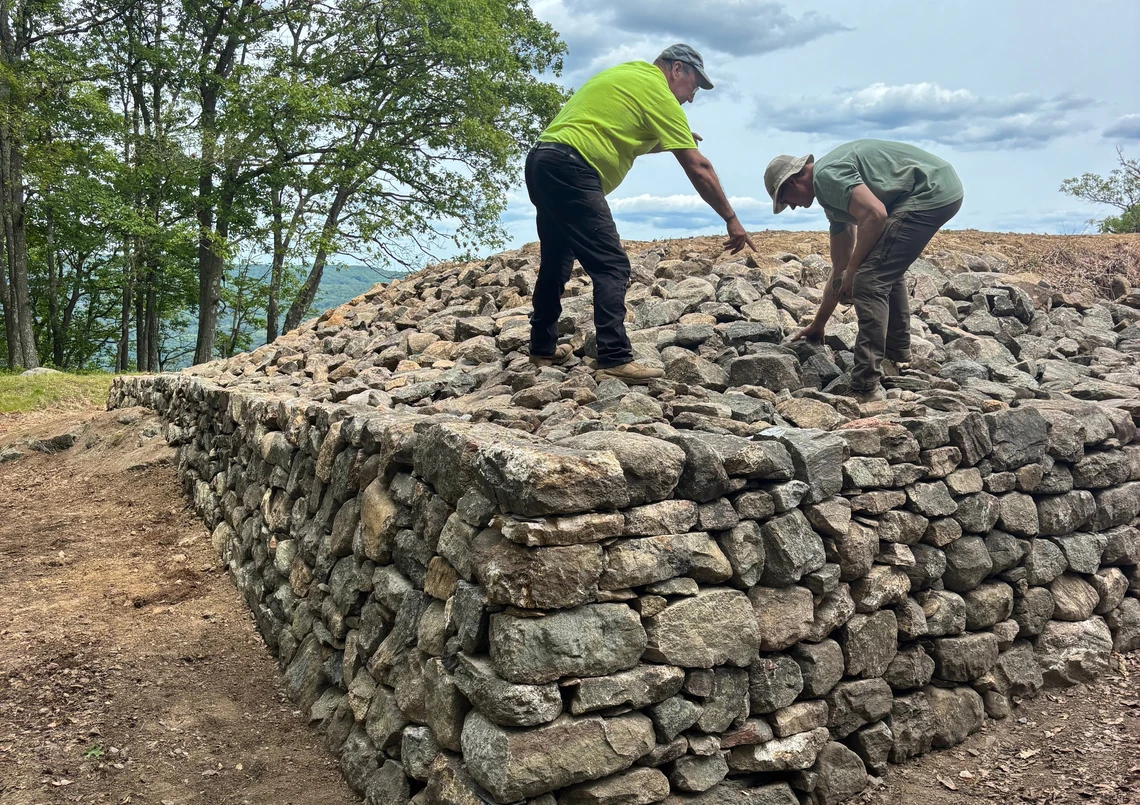
At the age of twenty, while attending an agricultural college in Scotland, Rippingale was thrust into the craft when he was asked to build a drystone wall on the farm where he was employed. “It was the worst-looking piece of stonework you would have ever seen in your life,” he laughs. Although unsatisfied with the final product, the experience revealed to Rippingale the satisfaction of solving an enigma rooted in the surrounding landscape. “There are a million ways to put a drystone wall together and still be technically correct,” he says. “If you had a hundred master craftsmen on the same wall, they could take it down and put it back together differently and still be correct.”
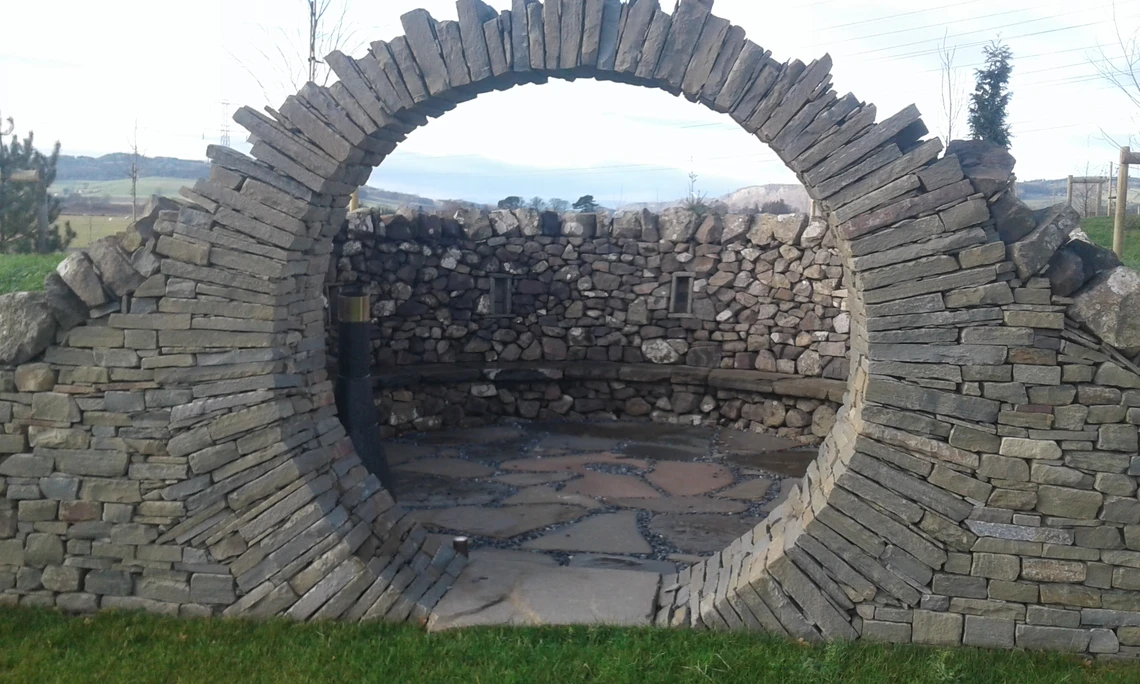
He began constructing drystone structures in the Edinburgh area, winning a variety of professional and novice competitions and gaining respect among craftsmen along the way. In 1993, he had the opportunity to work on a blackhouse, a traditional thatched-roof dwelling, in Scaristavore on the Isle of Harris, Scotland. The collaborative project was a formative experience. “What made it special was the people I worked with,” he says. “There was great respect for all the trades. Before I was finished, I was working with the plumbers, the electrician, the carpenter. The thatcher came in as well.” The blackhouse was blessed by the Church of Scotland and presented with the inaugural Pinnacle Award by the Dry Stone Walling Association in 1994.

Rippingale expanded his work internationally, journeying to over thirty-three countries throughout his career. In 2000, he immigrated to the United States and became the training program manager at the Dry Stone Conservancy in Lexington, Kentucky, where he now serves as the president of its board of directors. Over the years, he has collaborated with organizations such as the Preservation Trades Network (PTN) and the Dry Stone Conservancy to teach drystone masonry workshops to more than 7,000 eager students of the trade. To Rippingale, workshops are a mutually beneficial experience. “By lunch time you know their first names; by the end of the first day, you know their occupation. By the end of the second day, you’re friends for life.” His dedicated service to the preservation trades earned him the PTN’s prestigious Askins Achievement Award in 2010.
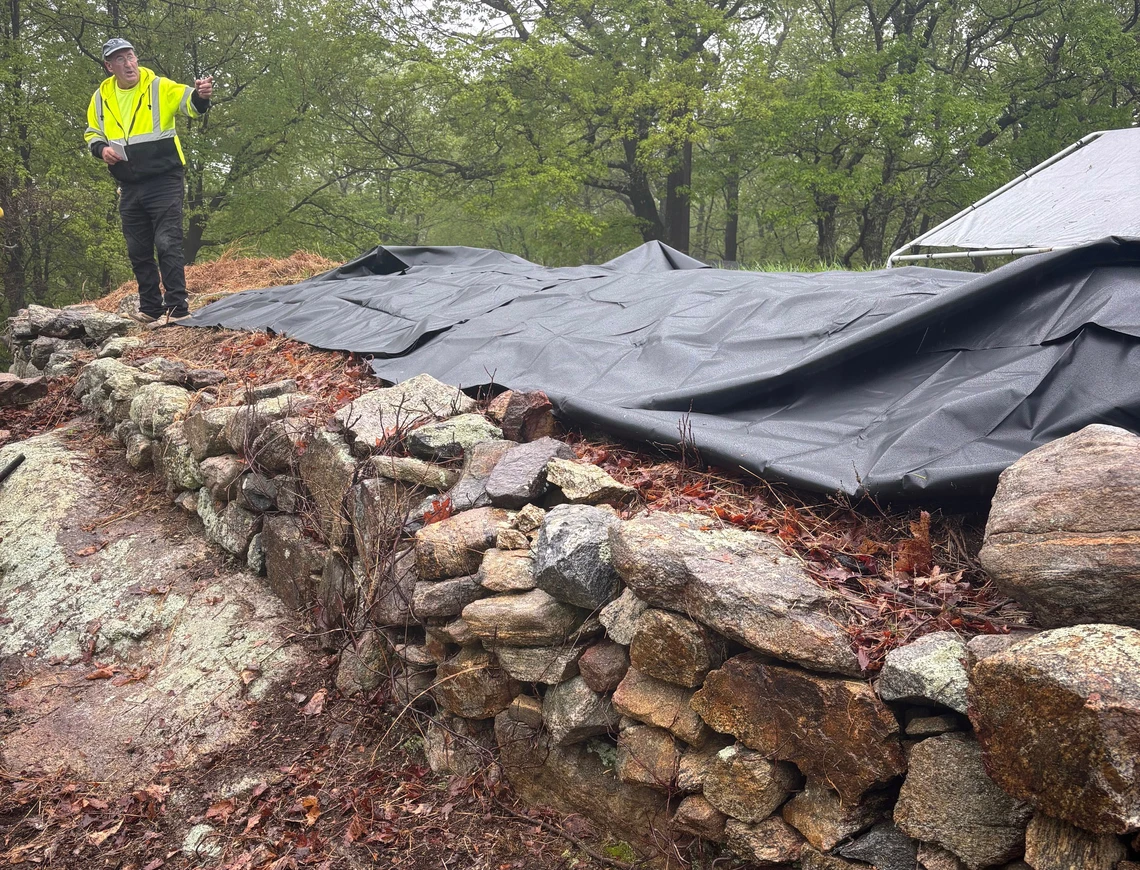
Rippingale’s teaching revolves around his four basic principles and five golden rules of drystone masonry, most of which involve accurately and patiently placing stones and a keen eye for quality assurance. Using tools such as a twenty-four-ounce brick hammer, a mash hammer, and a string line, he packs stone from the inside of the wall, recycling remnants of cut stones to ensure structural integrity.
“No mortar, no cement; it’s friction and gravity.”
What makes a craftsman like Rippingale so valuable to the trade is his experienced eye, allowing him to envision and realize an incredible range of structures with a variety of stone types. “It takes time before you can understand and read the rocks,” he says of his mastery of the craft.
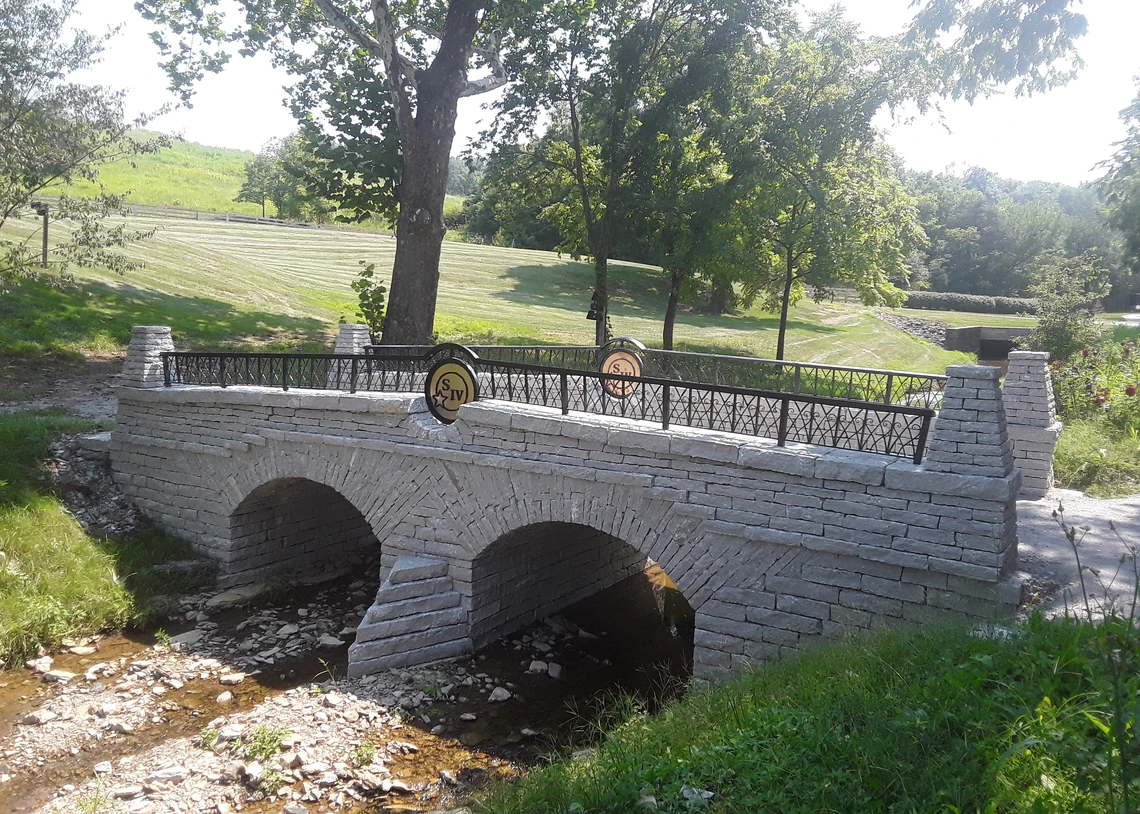
From agricultural walls to double-barrel bridges, Rippingale’s work challenges the limit of possibilities with drystone masonry. With his team at NR Stonecraft, he recently worked on his fifth project at the Maker’s Mark Distillery in Loretto, Kentucky: a masterfully crafted drystone arched bridge. Through his countless workshops and enthusiastic mentorship, he is passing the knowledge and traditions of the trade to younger artisans, who in return help him discover innovative methods of improving his craftsmanship. “They are an inspiration to me,” he says of his students.
“There was a point early in my career that I wanted to keep all of my trade secrets. I found out that the more you pass on, the more you receive.”