
Darryl Reeves
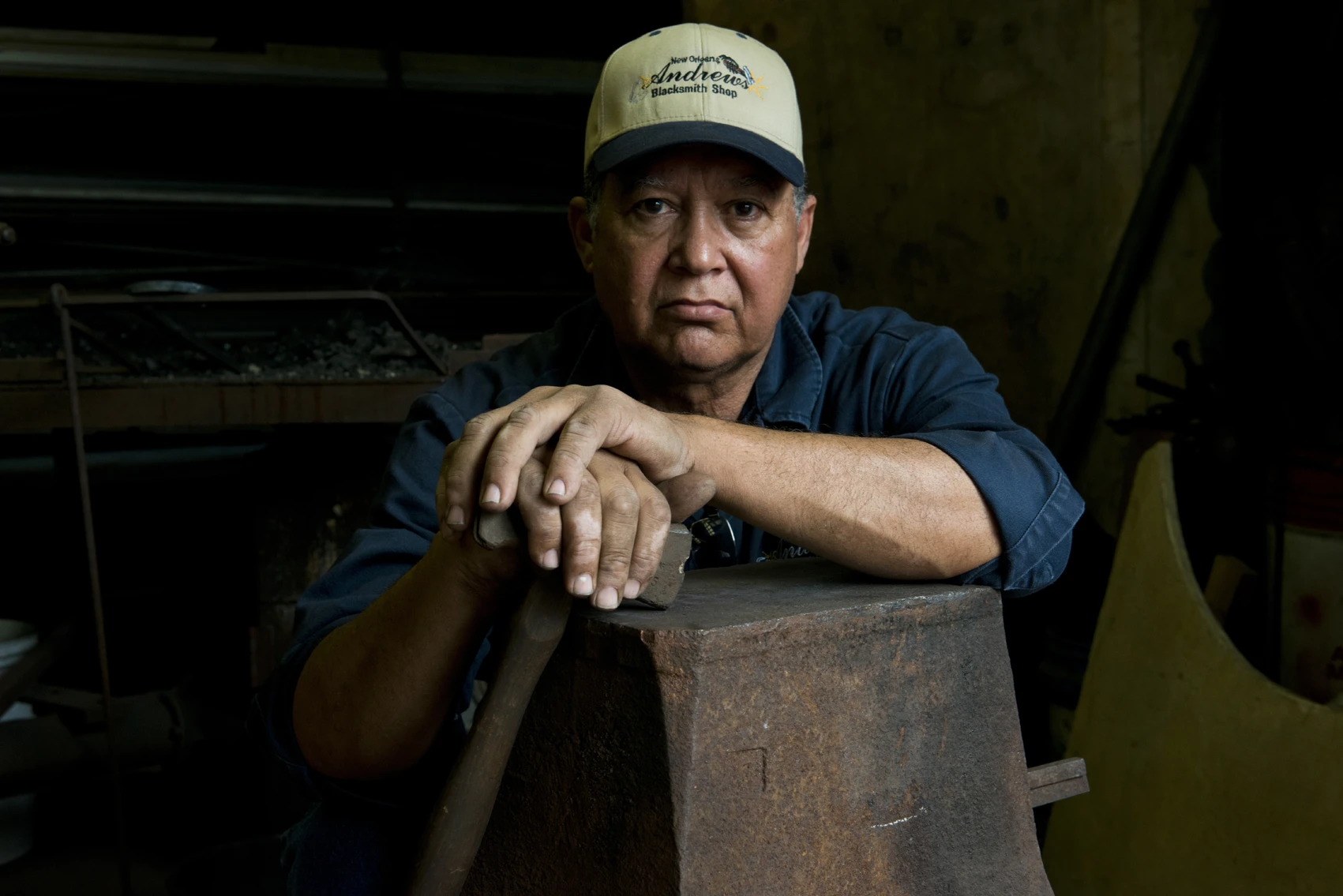
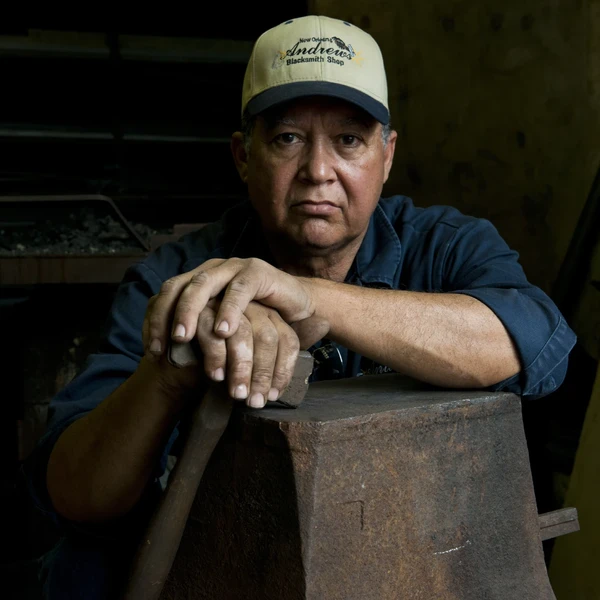
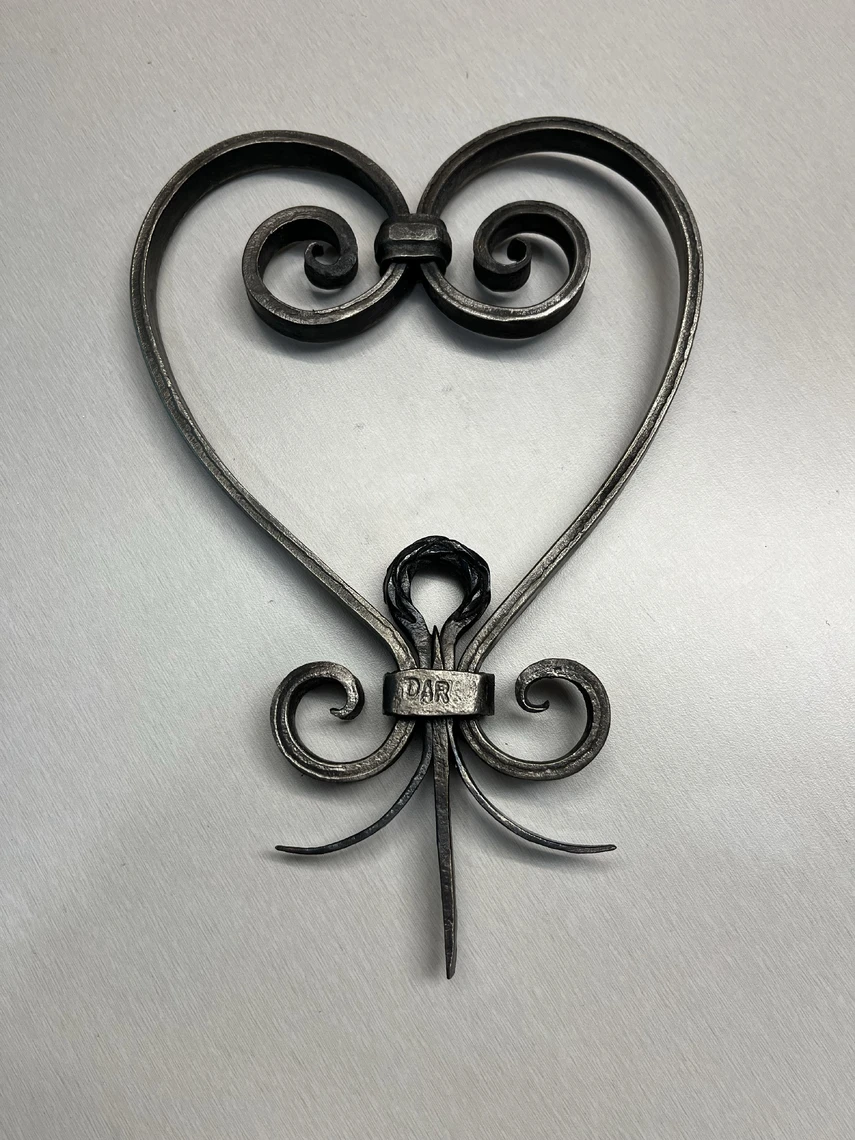
Brimming with vibrant culture and architecture, New Orleans has been the perfect setting for Darryl Reeves to leave his blacksmithing legacy. A master metalworker, Reeves is renowned both for his beautiful hand-forged restorations of eighteenth- and nineteenth-century ironwork and for his creative contemporary art pieces. “My style is everyone who came before me,” he says.
Reeves traces his love of blacksmithing back to his grandfather, who was a blacksmith on a plantation near Donaldsonville, Louisiana. “I guess it was in the blood,” he says. A welding apprenticeship program in high school yielded his first introduction to metalwork, and he went on to become a welder in the shipyards.
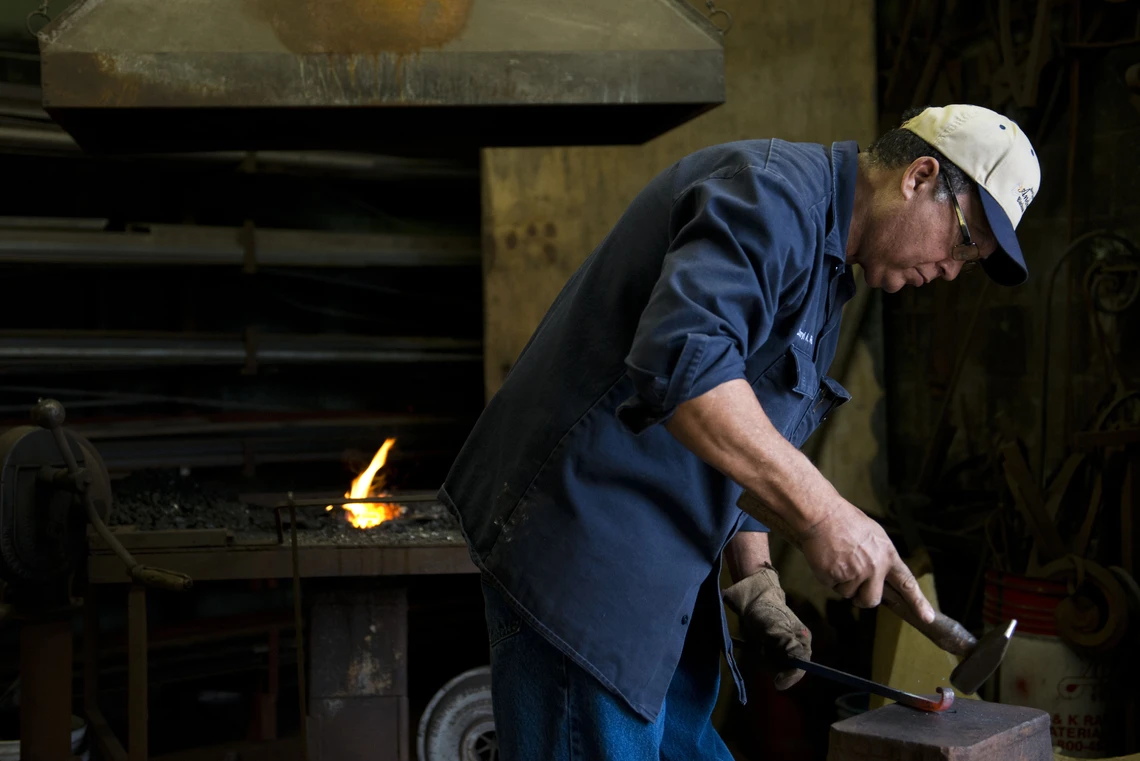
In 1990, Reeves opened Andrew’s Welding and Blacksmith Shop in the Seventh Ward, just a block away from where he was born and raised. Though at first he focused primarily on structural welding, Reeves saw a need to revive the hand-forged blacksmithing tradition that once flourished in New Orleans so that the city’s centuries-old decorative ironwork could be restored and preserved. He set out to learn everything he could about the tools and techniques of blacksmithing, apprenticing in the evenings with master blacksmith William “Buddy” Leonard and researching old books on the craft. “I wanted to be the best at the trade,” he says.
Today, Reeves is highly regarded as an undisputed master of his craft and a leader in the historic preservation and restoration trades. His public commissions include the reproduction of the historic fence for the 225-year-old Cabildo, employing the same hand-forged methods that were used to create the original; the disassembly and reconstruction of the massive gate at the Chalmette National Cemetery, originally fabricated in 1872; and the restoration of the intricate gates of the Presbytère in Jackson Square in the French Quarter.
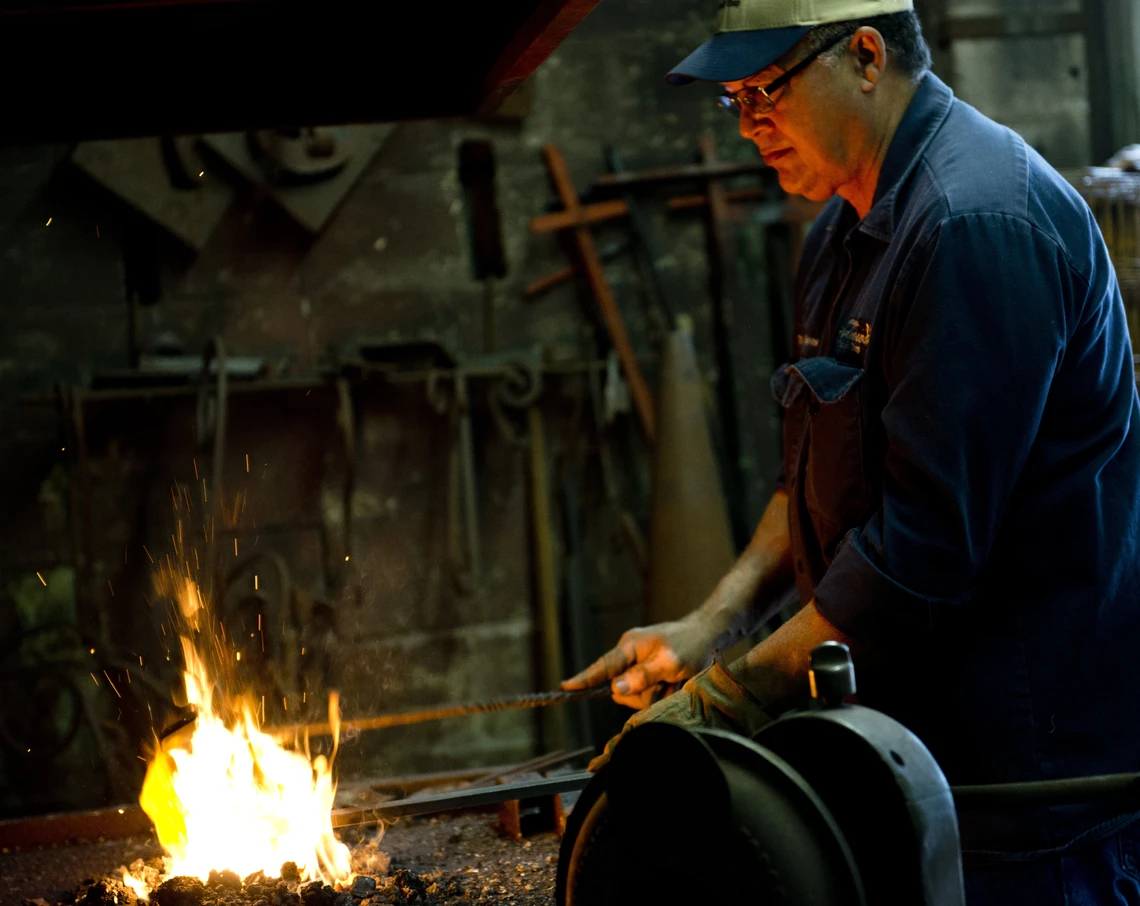
“I had to take these pieces apart, understand how they worked together, and recreate the whole so that the finished piece was exactly as it was when it was first forged,” Reeves said of his work on the Presbytère’s ornate gates. “When I’m doing a restoration job, I make it a point to use every bit of the original parts to the piece as possible. So working on something old gives me a personal connection to it.”
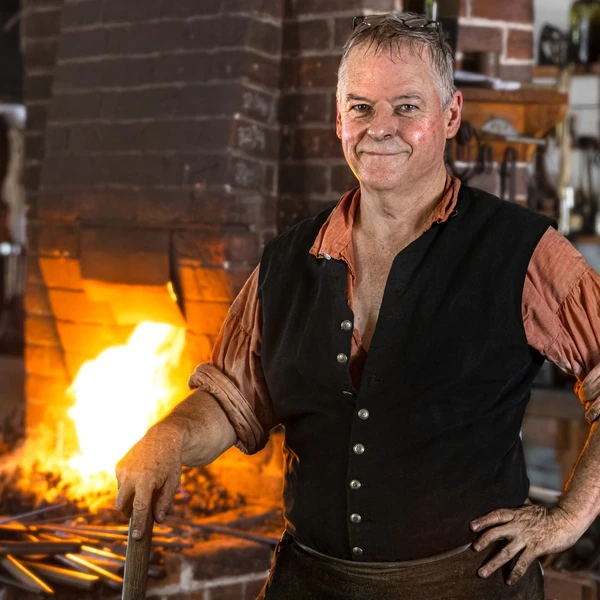
Every trade boasts its own set of traditional methods and tools, and blacksmithing is no exception. Reeves shares that the most fundamental principle is having an intimate familiarity with the key properties and characteristics of different metals and the ability to judge the temperature of each metal by eye as it’s heated in the forge. He makes his own tools to suit the unique needs and shapes of the endless variety of projects that come his way.
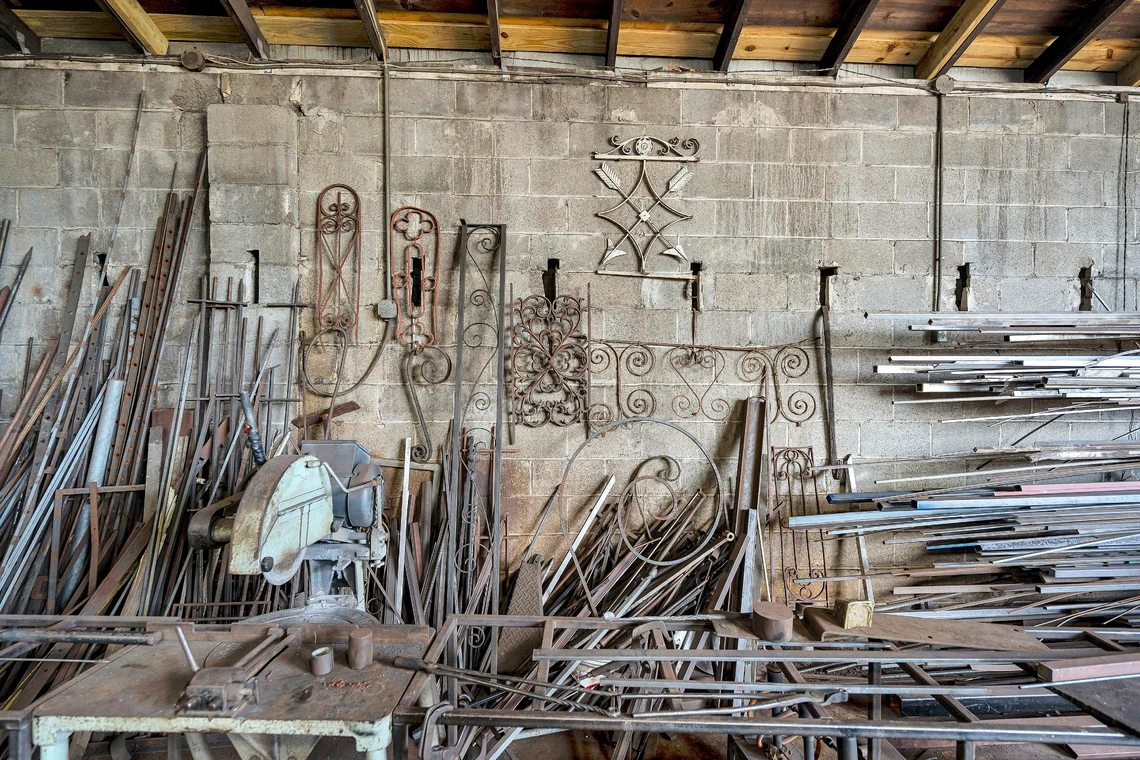
“We make all types of jigs, any type of clamp, the tongs that we use,” he says. “You got to remember, we’re working on top of a forge that’s kicking out a temperature of 2,500 to 3,500 degrees. If we don’t have the tools that can handle these temperatures, you can’t do your job.” He seeks out the best materials he can find, often salvaging metal parts from old automobiles because he values their strength. “I just happen to be partial to Chevrolet car and truck springs.”
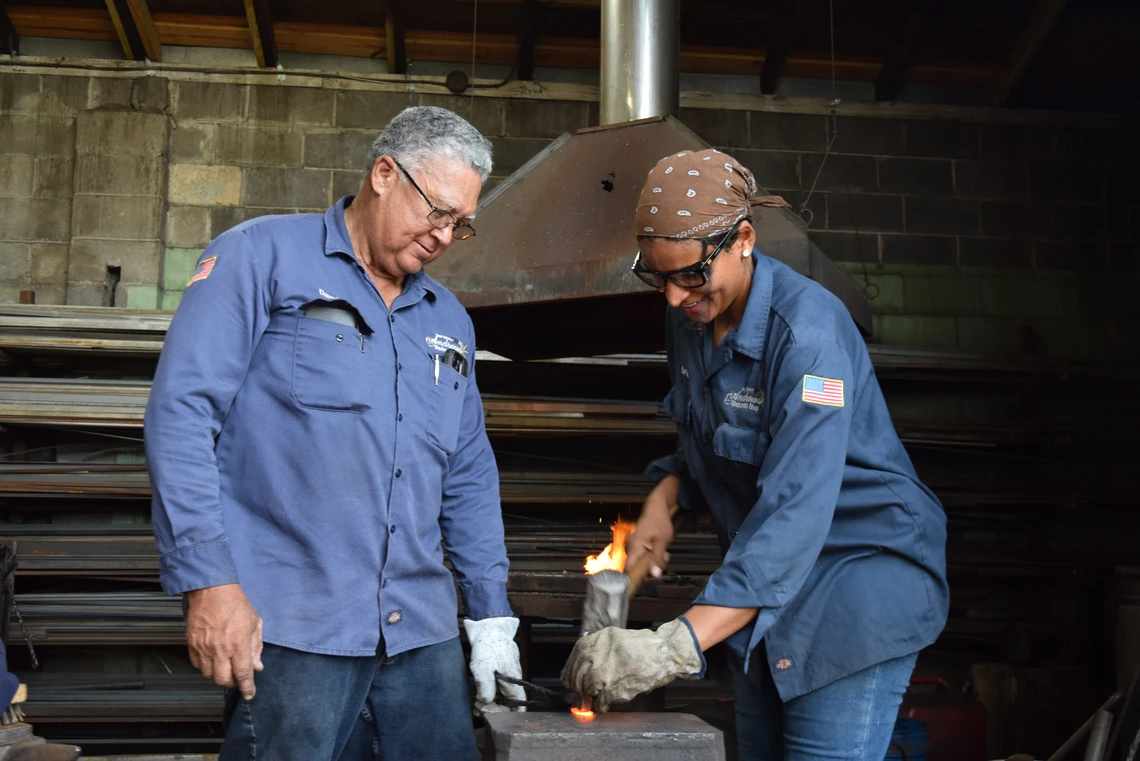
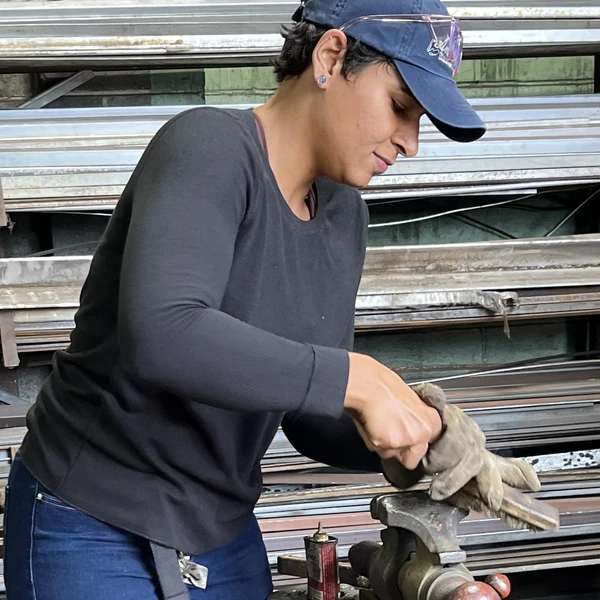
Reeves is determined to preserve the trade he went to such great lengths to learn. He recognizes ambition and invests in students who are equally passionate about metalwork. The apprenticeship program through the New Orleans Master Crafts Guild has been instrumental in giving young metalworkers, such as talented apprentice Karina Roca, the chance to fully engage with the craft under the mentorship of a master craftsman with over fifty years of experience under his belt. “I’ve been training apprentices my whole career,” he said. “The ones that want to learn, I train.”
Learn More
-
New Orleans Master Crafts Guild
-
“Artistry in Iron: Blacksmiths of New Orleans” (Hermann-Grima + Gallier Historic Houses)
-
More Than Just a Trade: Master Craftsmen of the Building Arts (Folklife in Louisiana)
-
Ancestral Artistry: The Influence of Africans and Creoles of Color on Louisiana Architecture (film)
-
2024 Louisiana Tradition Bearer (Louisiana Public Broadcasting)
-
Darryl Reeves Louisiana Tradition Bearer Award Video (64 Parishes Magazine)
-
“Top Blacksmith Forges Metal Masterpiece for Disney’s Tiana’s Bayou Adventure” (Disney Parks Blog)