
Jacqueline Canning Riccio

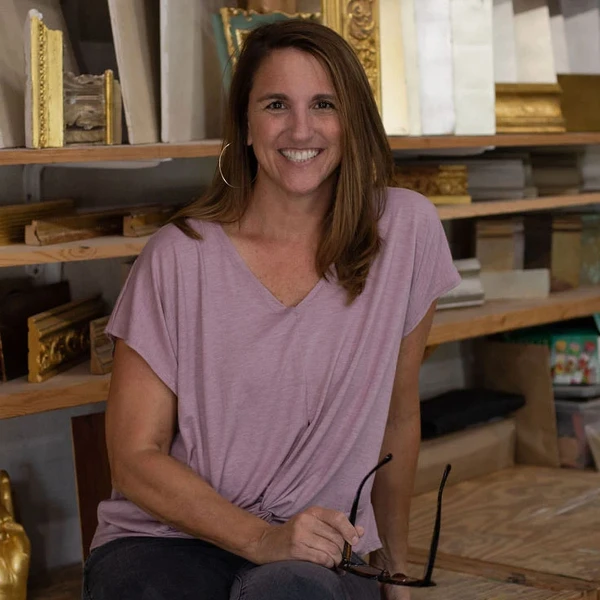
Jacqueline Canning Riccio serves as the studio design director at John Canning & Co., an award-winning decorative painting and architectural arts restoration company based in Cheshire, Connecticut, where she has worked for more than thirty years. Highly skilled in all aspects of her trade, Riccio is dedicated to preserving the vitality of historic spaces in the United States. In addition to overseeing design production in the studio, her work involves employing traditional decorative painting techniques and tools to emulate original decorative finishes.
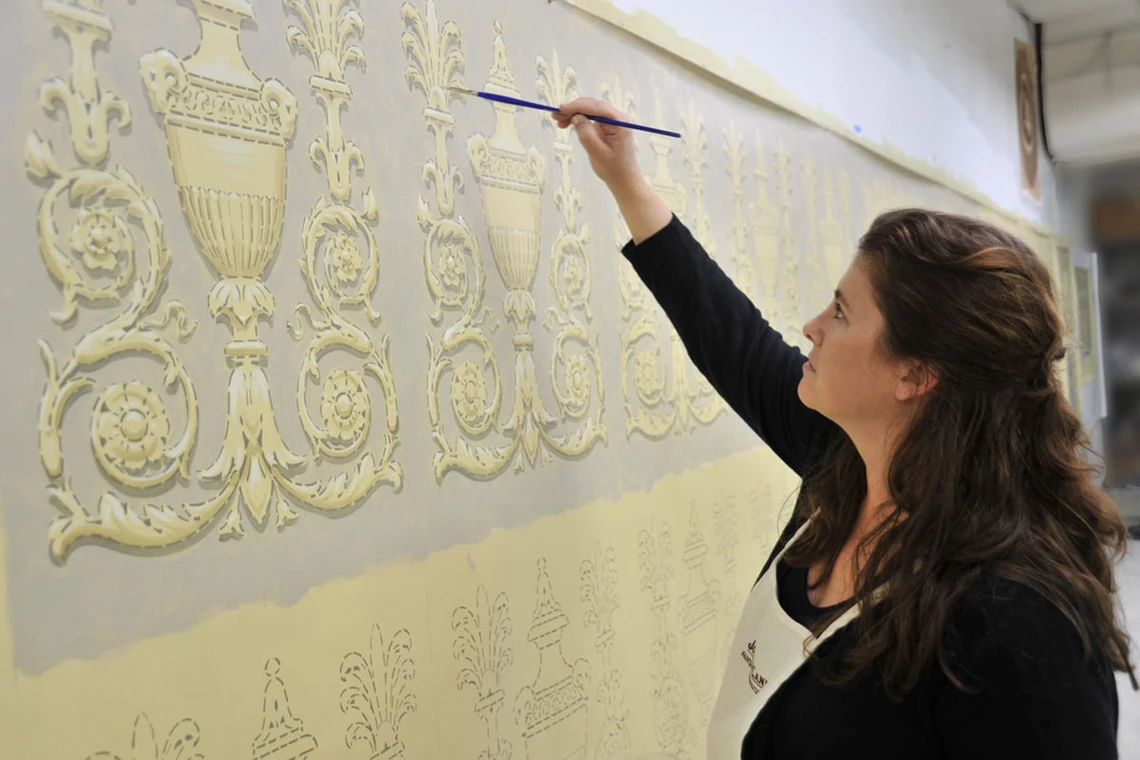
Riccio grew up surrounded by architectural arts restoration projects. Her father, John Canning, a master decorative painter and the company’s founder, began taking her on jobs with him when she was young. Both in the studio and on site, she observed talented craftspeople working to preserve the legacies of some of the country’s most historic buildings, restoring them using traditional methods and materials. Riccio was instantly drawn to the work and spent many hours of her childhood hand-cutting stencils and helping her father in his basement shop. “I just couldn’t help myself,” she says. “I wanted to spend all my weekends and summers there.”
To complement these informal learning experiences, Riccio served an intensive three-year decorative arts apprenticeship established by her father for the State of Connecticut, gaining hands-on knowledge of a broad range of decorative painting techniques, including layout, stenciling, gold leafing, mixing custom paint colors, striping, trompe l’oeil, and woodgraining.

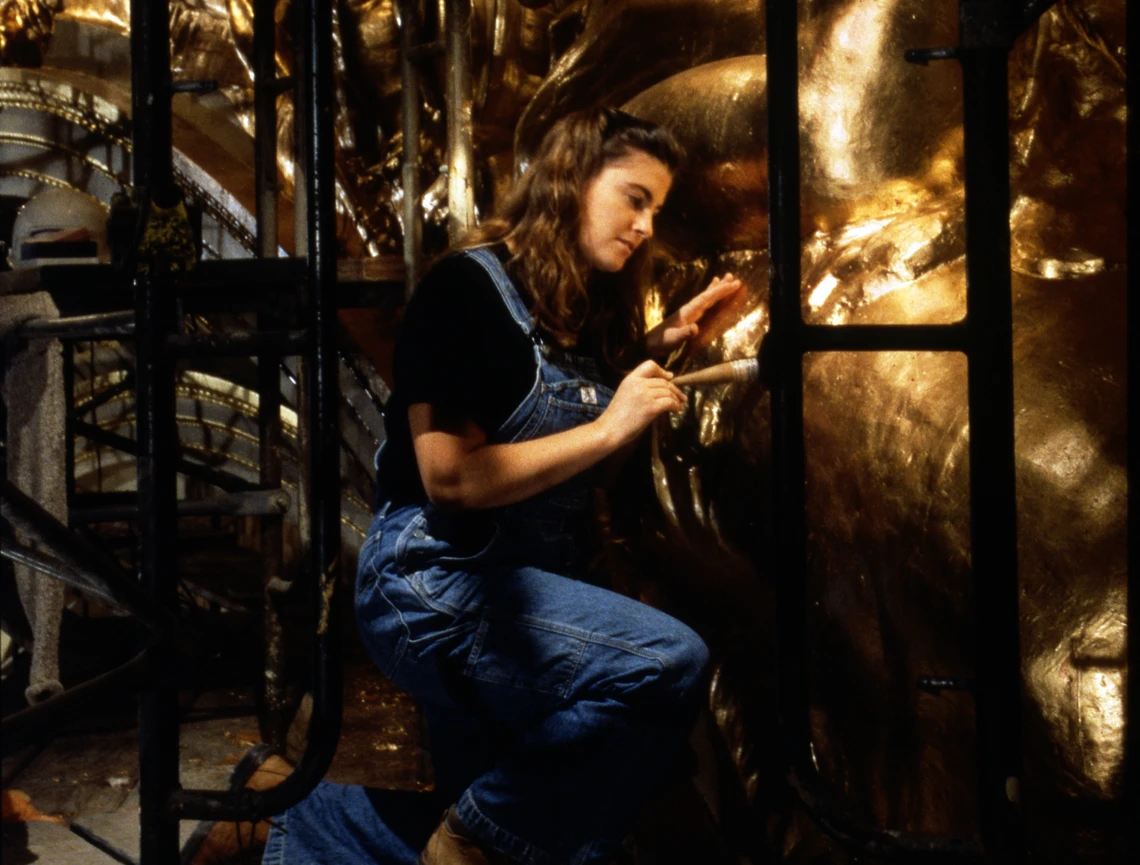
In Riccio’s view, one of the most effective teachers is experience. “You’re not getting the education you need unless it’s hands-on,” she asserts. One of her most influential learning experiences was her first major project with John Canning & Co.: helping to restore the Connecticut State Capitol. A pivotal moment in her development as an artisan, it cemented her interest in pursuing decorative painting as a career. “I really grew up in there, learning the trade, learning from our crews, and working in one of the most beautiful buildings in the country,” she says.
Since then, Riccio has continued to lend her expertise toward preserving many of the nation’s most significant buildings, including six state capitols. Her portfolio includes the U.S. Capitol, Grand Central Terminal, Michigan State Capitol, War Memorial Opera House in San Francisco, Boston Public Library, and numerous historic churches. “We’re chosen because we do good work,” Riccio says with pride.
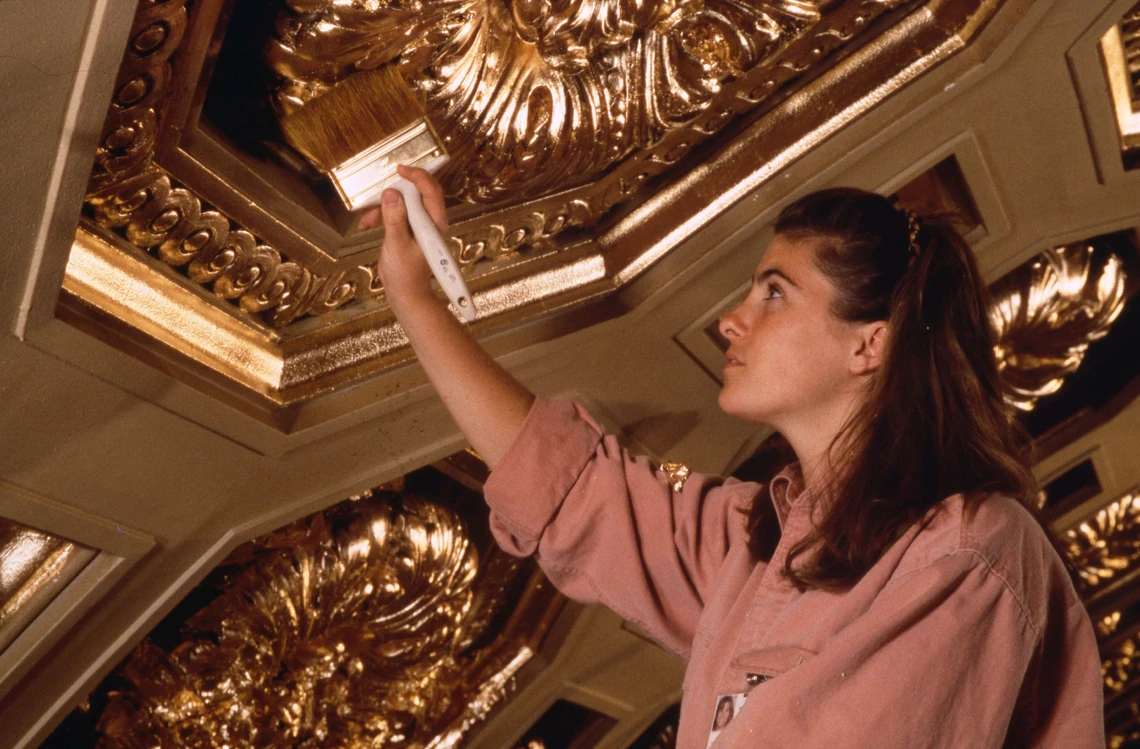
Like many others in the traditional trades, Riccio strives to balance the ways her team can incorporate new technology to increase efficiency without compromising quality, authenticity, and the human touch. For her, continuing to use traditional decorative painting tools and techniques from the past is non-negotiable. “My strong sense of doing things traditionally comes from my father,” she notes. “That’s what I know, that’s what I’ve been trained, and that’s how I approach things now.”
One of her favorite traditional techniques is striping, which she did extensively for a recent project at the First Church of Christ in Woodbridge, Connecticut. To perform this task, Riccio uses a beveled-edge stick and an angled brush to paint completely straight lines. While it sounds straightforward, striping requires a high degree of skill and practice. “It looks so easy, but it’s not,” she says. “It takes a long time to master.”
Just as her father passed his decorative painting knowledge to her, Riccio is committed to sharing these traditions. She has taught her skills to her daughters, Isabella and Zoe Riccio, who are both dedicated artisans at John Canning & Co., along with her husband, David Riccio. She is also integrally involved in training new employees. “When you see them enjoying their work, and doing a really good job of it, that’s where it’s at,” she says.
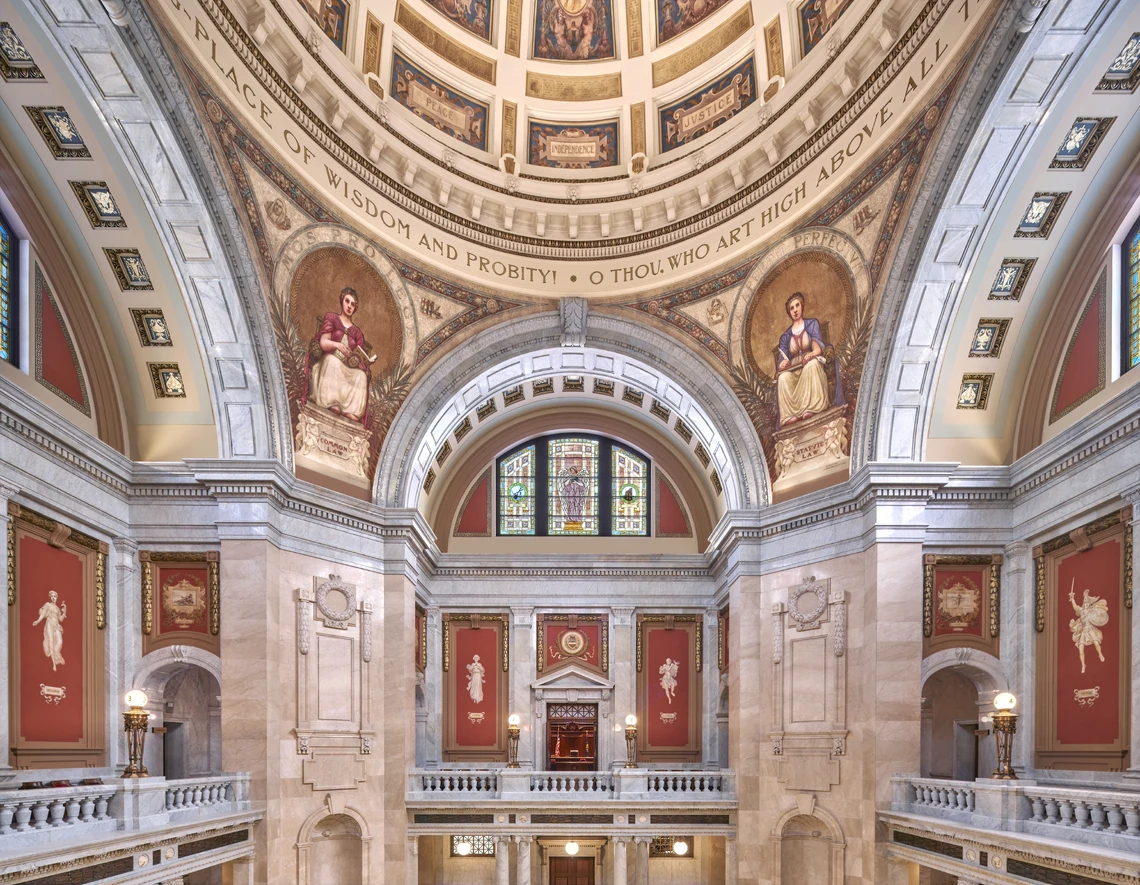
Riccio loves that her trade gives her the opportunity to work with her hands, but her appreciation for the craft runs deeper. What she values most is the ability to contribute to the preservation of structures that embody the nation’s history. “It’s an honor to be part of something bigger than us,” she says. “This work is demanding, but it is incredibly rewarding to see your work in these beautiful buildings and know that you had a hand in returning these historic interiors to the original masterpieces that they are.”